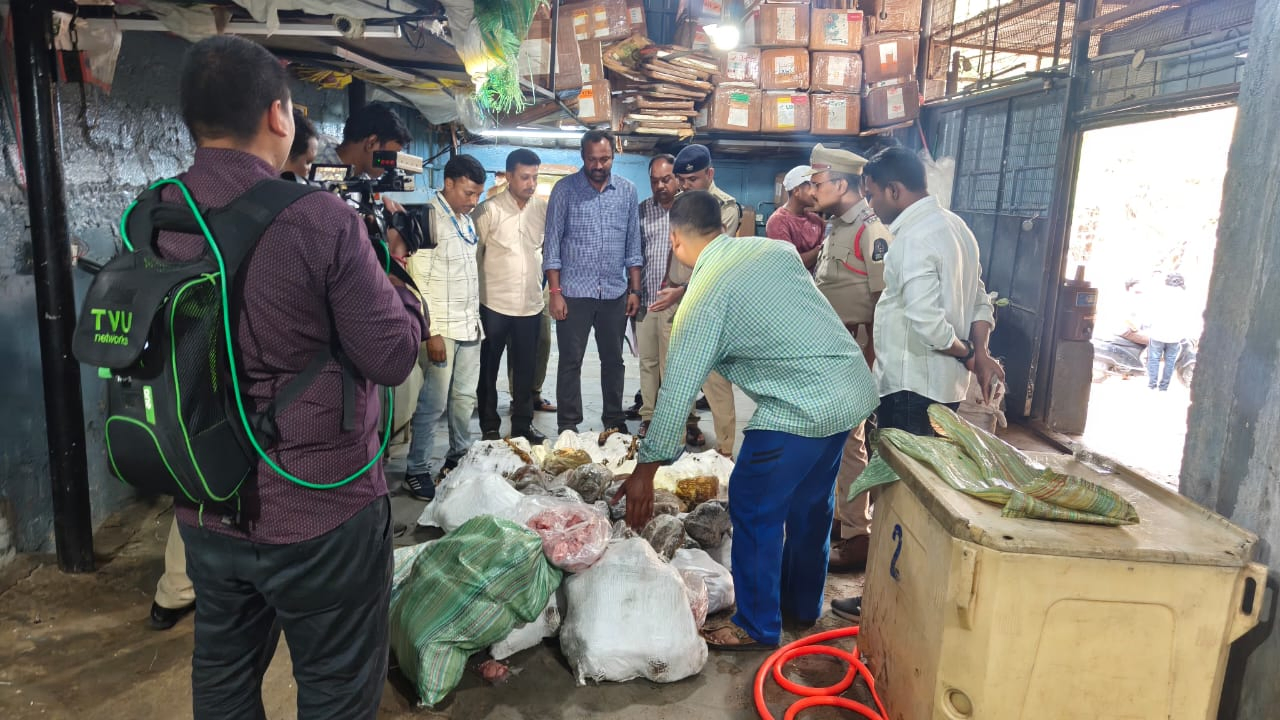
New Delhi, April 7 A NHRC core group on the Right to Food and Nutrition has recommended setting up a multi-sectoral surveillance system and a robust framework to investigate food samples in a time-bound manner, and developing cost-effective AI tools to enable "real-time monitoring" of its quality.
The establishment of a dedicated consumer helpline, setting standards for public and private food storage godowns, and encouraging vendors not to use colors to enhance the appearance of fruits and vegetables are among other suggestions by the group, the National Human Rights Commission (NHRC) said on Tuesday.
The rights panel hosted a meeting of the Core Group on Right to Food and Nutrition on the theme 'Tackling Food Adulteration in India: Understanding the Scale, Challenges and Reforms' at its premises in Delhi, along with some participants joining it virtually.
In his address, NHRC Chairperson Justice V Ramasubramanian (retd) provided a comprehensive overview of India's legal framework to combat food adulteration, tracing its evolution from the Madras Prevention of Adulteration Act 1918 to the Food Safety and Standards Act 2006.
He underscored that consistent efforts have been made over the decades to curb adulteration at multiple levels.
The NHRC chief said an increase in life expectancy should also translate into improved quality of life, as guaranteed under the Constitution.
He said that every individual has the right to live a healthy, disease-free life, and urged stakeholders to reflect on the deeper impact of adulterated food rather than relying solely on statistics.
Some of the suggestions that emanated from the discussion included adopting a system-wide reform approach, involving "mapping of the entire lifecycle of food products", identification of contamination points at each stage and integration of scientific monitoring, including bio monitoring, into regulatory frameworks, according to a statement issued by the NHRC.
Other recommendations include encouraging citizen participation to ensure transparency and accountability in food safety systems; undertaking public awareness campaigns to address misconceptions regarding food safety and reduce wastage driven by cosmetic preferences; educating consumers on scientifically valid indicators of safe food; and developing cost-effective AI tools to enable real-time monitoring of food quality and ensure traceability through tamper-proof records.
Encouraging vendors not to use colors to enhance the appearance of fruits and vegetables; strengthening training and capacity-building initiatives across all stakeholders, including integration of food safety education at the school level, promotion of behavioural change and use of mobile and digital technologies for grievance redressal and reporting of violations, are among other recommendations.
Besides, the core group has also urged to ensure greater transparency by making food safety data, inspection reports and vendor compliance status publicly accessible to build consumer trust; strengthen testing facilities and promote greater transparency in food testing processes, along with the establishment of a dedicated consumer helpline.
Connecting Food Safety and Standards Authority of India (FSSAI) and concerned authorities in states with laboratories; creating a central coordinating body to align efforts across stakeholders, with the primary objective of preventing food adulteration; and strict implementation of the National Food Security Act (NFSA), 2013; demystifying technical terminologies related to food adulteration, particularly for those involved in food preparation; developing a multi-sectoral surveillance system and a robust framework to investigate food samples in a time-bound manner, have also been recommended.
The Commission said it will further deliberate upon various suggestions from different stakeholders before finalising its recommendations.
Justice Ramasubramanian chaired the meeting, which was attended by various members of the NHRC, along with senior government functionaries from the Centre and state governments, statutory bodies, human rights defenders, consumer activists, members of academia, civil society and domain experts, the statement said.
Referring to the idea that 'food should be medicine', the NHRC chief remarked that this principle has "eroded over time".
He also expressed concern that some food adulteration cases under the Prevention of Food Adulteration Act 1954 continued to be brought before the court even today, often based on reports as old as 15 years, which render the evidence obsolete and the prosecution weak.
While noting the rise in food production and the existence of testing infrastructure, including mobile labs, he raised concerns about their effectiveness and maintenance. Highlighting "consumer indifference" as a key issue, he urged participants to propose concrete, actionable recommendations for government intervention.