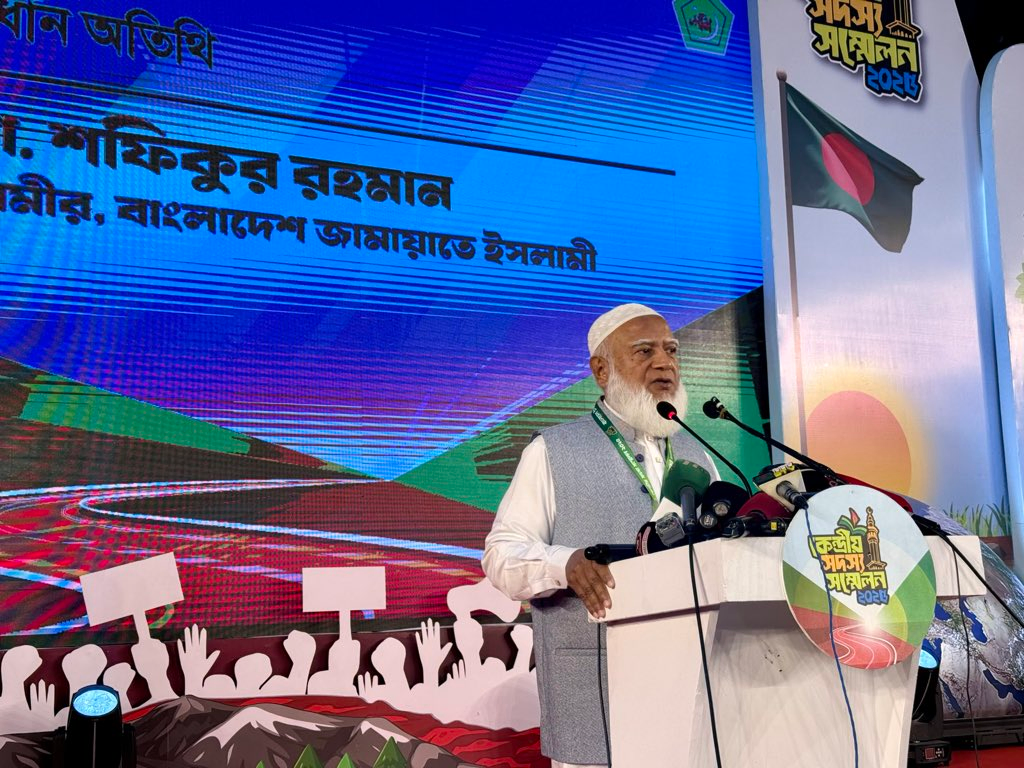
Dhaka, April 7 – Pakistan and its former collaborator, the radical Islamist party Jamaat-e-Islami of Bangladesh, have refused to offer a clear, unconditional apology for the atrocities committed during the 1971 Bangladesh Liberation War. This reflects not only a historical failure but also a deliberate "ongoing act of obfuscation."
More than five decades later, the issue is not limited to the past but points to a conscious unwillingness, masked by carefully chosen language and political convenience, as a report mentioned.
According to the 'Times of Bangladesh', Pakistan's stance has long illustrated how accountability for war crimes can be avoided, often relying on the calculated use of the word "regret" to serve its own interests.
"Saying 'regret' is cheap because it implies you feel bad without actually saying you're sorry. It's intended to make people less responsible while avoiding the moral and legal implications of the word 'genocide'. This is not genuine regret; it's a planned ambiguity, a failure to state what needs to be said because the consequences would be too real," the report detailed.
"Pakistan's denial may be based on distance, but Jamaat-e-Islami's stance is much more open and offensive. This is not a foreign state trying to forget its past; it's a political party operating in Bangladesh that will not take responsibility for its role in one of the darkest periods in the country's history," it added.
The report noted that Jamaat did not merely oppose Bangladesh's independence in 1971; they sided with the Pakistani military ruler and became complicit in the machinery that brutalized millions of civilians. This is not a historical footnote; it's a central part of their political legacy.
"Instead of dealing with this past, Jamaat has perfected the art of changing its political stance. They make vague, ambiguous remarks that seem like apologies but don't hold up when you look at them closely. These aren't confessions of guilt; they're lines intended to mislead and make people doubt enough to avoid taking responsibility. It's not about being sorry; it's about public relations," it mentioned.
Emphasising that Jamaat's hypocrisy becomes more apparent in its symbolic politics, the report said that the party's recent tribute to the martyrs of the Liberation War at the National Martyr's Memorial in Dhaka rings hollow.
This is because Jamaat stood on the "wrong side of history" when they aligned with Pakistan during the killings of those martyrs, and the gesture therefore reflects "appropriation," not tribute.
The report further said, "Pakistan needs to stop hiding behind empty words, and Jamaat-e-Islami needs to stop pretending to be sad and face its past honestly. Until then, their gestures – whether they are meant to show sorrow or respect – will always be what they really are: calculated performances."