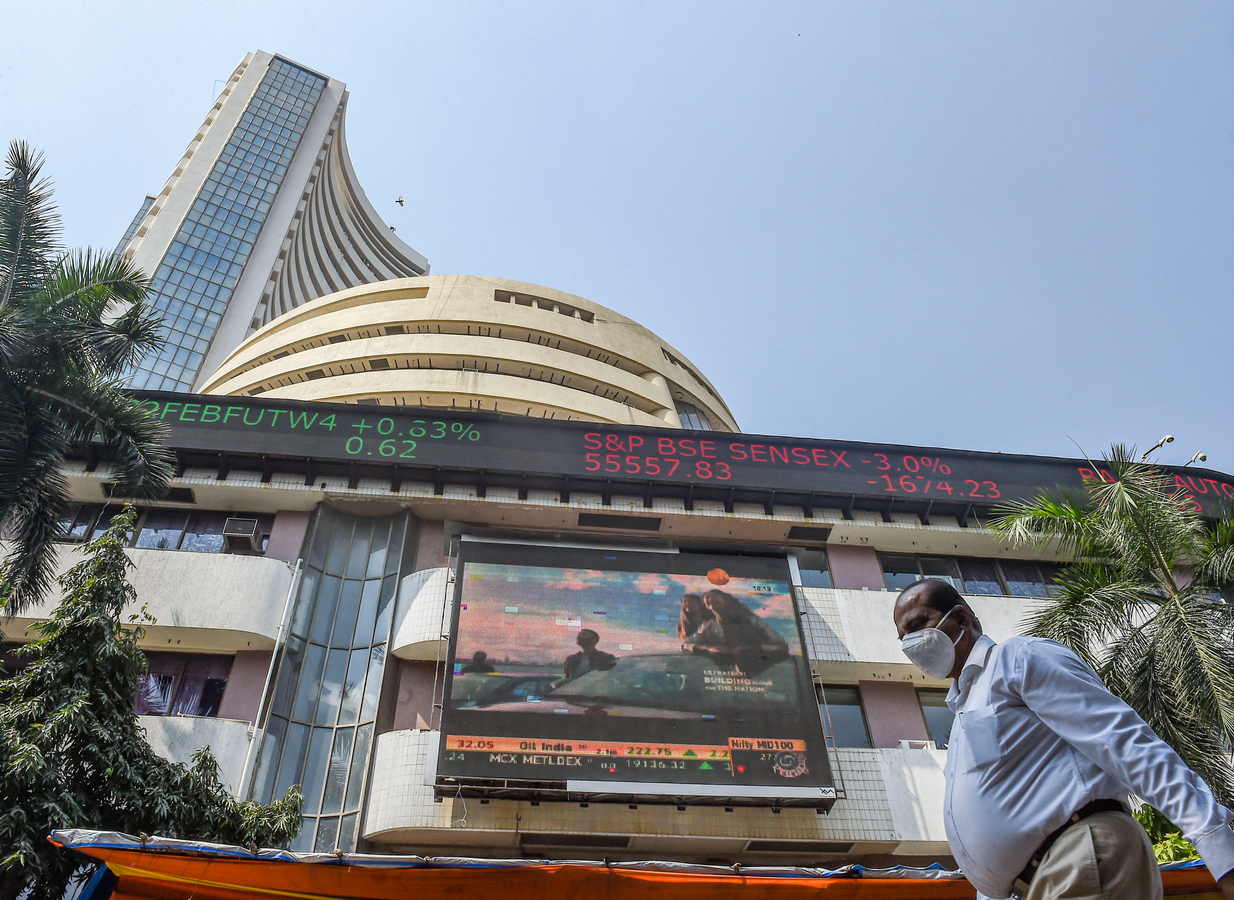
New Delhi, March 15 Foreign investors withdrew ₹52,704 crore (approximately USD 5.73 billion) from domestic equities in the first fortnight of March amid escalating tensions in West Asia, the depreciation of the rupee, and concerns over the impact of high crude oil prices on India's growth and corporate earnings.
The latest divestment comes after foreign portfolio investors (FPIs) injected ₹22,615 crore into Indian equities in February, the highest monthly inflow in 17 months.
Prior to that, FPIs were net sellers for three consecutive months, withdrawing ₹35,962 crore in January, ₹22,611 crore in December, and ₹3,765 crore in November, according to depository data.
So far in March (until March 13), FPIs have sold equities worth about ₹52,704 crore in the cash market and remained net sellers on all trading days during the month.
Market experts attributed the pullout mainly to rising geopolitical tensions in West Asia.
Vaqarjaved Khan, Senior Fundamental Analyst at Angel One, said escalating tensions in the region and fears of prolonged conflict disrupting the Strait of Hormuz pushed Brent crude above USD 100 a barrel, triggering a risk-off move. This was compounded by persistent rupee weakness near the ₹92 level, elevated US bond yields, and profit-booking after earlier inflows.
Echoing similar views, VK Vijayakumar, Chief Investment Strategist at Geojit Investments, said weakness in global equities following the conflict in West Asia, the depreciating rupee, and concerns over high crude prices affecting India's growth and corporate earnings have weighed on FPI sentiment.
He added that weaker returns from India compared to developed and emerging markets over the past 18 months have also led to FPI indifference.
According to him, South Korea, Taiwan, and China are currently seen as more attractive markets as they remain relatively cheaper than India even after the recent correction, with better corporate earnings prospects. Therefore, further FPI selling in India is likely in the short term.
On the positive side, heavy FPI selling in financial stocks has made valuations attractive for domestic investors.
For the second half of March, Khan said the outlook remains cautious. Outflows could moderate if geopolitical tensions ease or if Q4 earnings from banking and consumption sectors surprise positively. However, any further spike in oil prices or renewed global uncertainty could extend the selling pressure.
Sector-wise, IT has seen the largest outflows so far, with FPIs pulling out about ₹74,700 crore amid subdued revenue growth, tariff-related uncertainty, and weaker global tech spending. FMCG followed with nearly ₹36,800 crore in outflows due to slowing urban consumption and margin pressures, said Aditya Shankar, Co-founder of Centricity WealthTech.
Power and healthcare also saw significant selling, with outflows of over ₹24,000-26,000 crore, largely due to stretched valuations relative to earnings delivery.
Meanwhile, FPIs increased exposure to telecom, oil and gas, metals and chemicals, signalling a rotation toward domestic value and commodity-linked plays, he added.