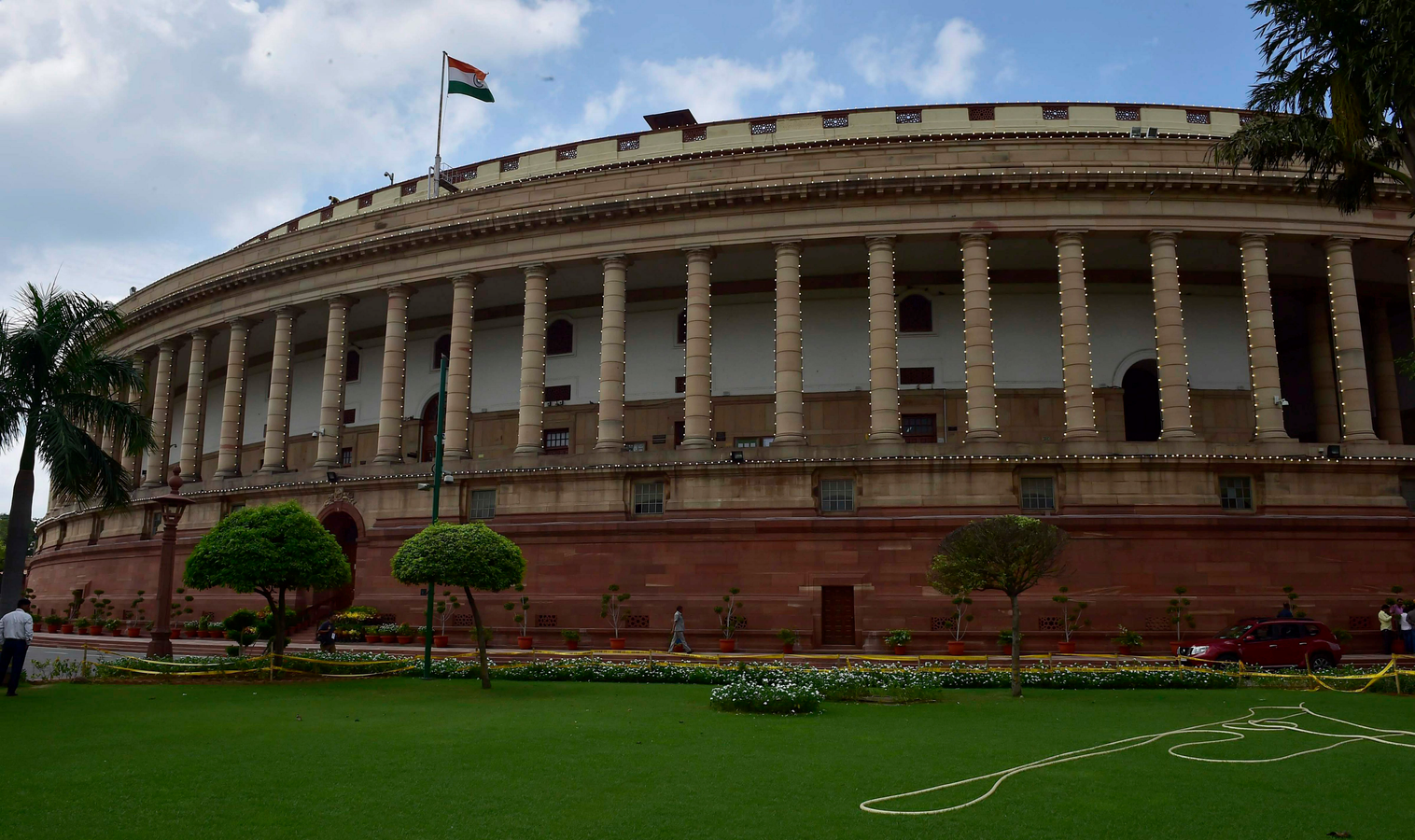
New Delhi, March 27 Pointing to the "demolition" of various old district collectorate buildings, a parliamentary panel has called for the preservation of British-era heritage sites that do not fall under the purview of the Archaeological Survey of India (ASI), while also recommending the preparation of an inventory of "non-ASI heritage structures at risk," in coordination with state governments.
The Parliamentary Standing Committee on Transport, Tourism and Culture suggested to the Ministry of Culture to coordinate with the railways, shipping, defence, and civil aviation ministries for the preservation of heritage assets such as "rail engines, ships, and aircraft."
The Archaeological Survey of India (ASI) maintains 3,685 centrally protected monuments through 38 circles, according to the panel's report, "Demands for Grants (2026-27) of the Ministry of Culture," presented in Parliament on Wednesday.
India is home to a variety of historic properties and sites, from ancient temples and other monuments to medieval structures, and up to colonial-era buildings, including those built during the British rule, the Dutch era, or by the French, Danish, and Portuguese colonial rulers.
While ASI-protected sites include monuments and archaeological remains, largely from the ancient era or the medieval period, various states also have their own archaeology departments, which cover many old sites that are not protected by the ASI.
A large number of colonial-era buildings, mainly constructed during the British era and characterized by iconic architecture, continue to be used as government offices such as district collectorates, district boards, and municipal offices, as well as museums, libraries, and railway stations, across the country.
However, several of these old buildings, despite their historic value and architectural character, are not protected by any authorities, leaving them vulnerable to decay or demolition, heritage experts have previously pointed out.
Under the sub-heading "Heritage Preservation Beyond ASI Jurisdiction," the report states that the "committee raised the issue of British-era heritage sites requiring preservation" and "specific examples cited included: the demolition of 74 district collectorate buildings; the DG post building in Darbhanga (150 years old); and the Patna clock tower."
The Patna Collectorate complex, featuring iconic structures dating back to the Dutch and British periods, was razed by the Bihar government in April 2022 amid protests from various heritage lovers and appeals by experts to preserve this unprotected landmark.
The over-century-old collectorate building of Bhojpur district (formerly Shahbad district) in Bihar was also demolished by the state government a few years ago to build a modern complex for the collectorate.
Various other colonial-era unprotected buildings in other states have also been demolished over the decades.
The standing committee also noted the need for the preservation of churches and chapels in Goa and nationwide.
It further raised concerns about unmanned forts, including Sasaram Fort (linked with Sher Shah Suri) in Bihar, it adds.
The committee has recommended that the Ministry of Culture "prepare an inventory of non-ASI heritage structures at risk, in coordination with state governments," and also ensure the protection of the architectural heritage component, under the proposed new infrastructure scheme, specifically addressing 100-200 year-old facades and structures, the report says.
It has also asked the ministry to coordinate with the Ministries of Defence, Railways, Ports, Shipping, and Civil Aviation for the preservation of heritage assets, adding that the need for "penal provisions for defacing or destroying cultural property" should be examined, and a legal note should be submitted to the committee within one year.
The panel also noted that state archaeological sites are often "poorly maintained, with contractor-driven repairs that alter the original character of structures." The need for a "formal Centre-state coordination mechanism for archives and heritage" was also emphasized, it said.
The ministry should develop and issue "standard operating procedures for conservation intervention" at state-level archaeological sites, the committee said.
A formal mechanism for Centre-state coordination on archives and heritage preservation should be established, and the functioning and coordination of zonal cultural centres should be reviewed, with findings presented to the committee within 90 days, the report adds.
Headed by JD(U) MP Sanjay Kumar Jha, the standing committee also raised specific concerns regarding "lack of maintenance" at Kumhrar in Patna – the site of the ancient Pataliputra in Bihar.
"Bodh Gaya Temple Management Committee Restoration Project: The Committee takes note of the fact that Rs 1.68 crore was deposited in 2014 for a restoration project, but work has not been initiated, and materials are lying unused," it said.
The committee also noted that the historically important site of Vaishali in Bihar has seen "limited excavation work."
The panel further flagged that the area behind the Charminar in Hyderabad is "being used as a urinal."