New Delhi, March 27 Union Home Minister Amit Shah had stated that the Narendra Modi government is committed to eradicating Naxalism from the country. He said that the Naxal threat will end by March 31, 2026. With just days remaining, the promise of ending the threat is set to be fulfilled.
The year 2025 was a particularly challenging one for the Naxal movement, and the operations carried out laid the groundwork for the eradication of the problem that has plagued the country for so long.
An official stated that the Home Minister had made it clear that he wants the movement to end at any cost.
While, Home Minister Shah gave the security forces a free hand to deal with the problem, he also ensured that there was proper coordination between the state and central forces, the official also added.
Another key area of focus by the Union and State Governments was development.
The Centre invested heavily to ensure that the Naxal-affected states and regions were adequately developed. This resulted in a change in the mindset of the people.
The Naxalites, who had thrived on local support, citing that the governments were being unfair to them, lost this support due to extensive development, another official pointed out.
In the operations that took place in 2025, 256 Naxalites were killed and 884 were arrested.
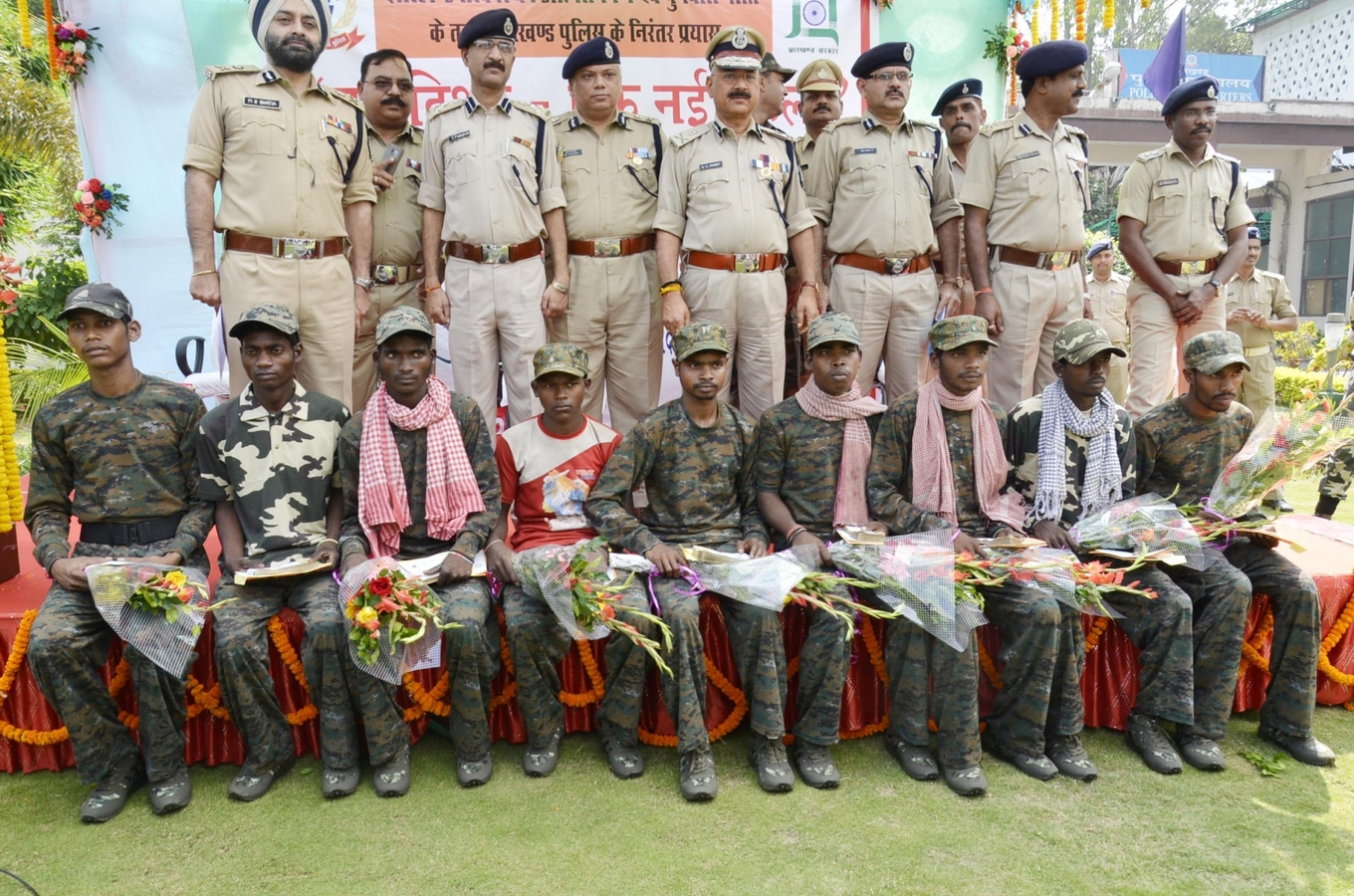
However, the important part of this operation is that many Naxalites laid down their arms and chose to get rehabilitated and join the mainstream.
As many as 1,562 Naxalites surrendered, and security agencies recovered 645 weapons and 875 Improvised Explosive Devices (IEDs).
Another official said that the surrenders are key. This sent out a strong signal that the Naxalites themselves realized that joining the mainstream is a better option than fighting a lost cause.
This also sends a message to future generations that such movements are not worth it.
Data shows that 23 security personnel laid down their lives to achieve this. Furthermore, in 2025, 46 innocent civilians were killed by Naxalites in retaliation.
Speaking about the surrenders, an official said that those who laid down their arms were not just foot soldiers. They were top leaders who laid down their arms, which sent a strong message to the cadres who were still on the ground.
Some of the top leaders who surrendered include Madvi Hidma, Baswaraju, Jayaram Vivek, Narsimha Chalam, Gajarala Ravi, Modhem Balkrishna, Sahdev Soren, Raju Kadri Satyanarayana Reddy, and Ganesh.
These surrenders made a significant difference, as all of them were members of the central committee.
Many of them even spoke and wrote about the futility of continuing with the movement, which sent a strong message to the existing cadres and those who were planning to join the movement.
An Intelligence Bureau official said that, while the movement is dead on the ground, one must keep a close watch on attempts to revive it.
Although it is difficult, efforts will be made, the official added. Security officials are confident that the Naxalite movement will never be revived again.
However, the ideology in urban centers is causing some concern. Attempts will be made to romanticize the movement and spread its ideology.
The battle may not be fought on the ground, but those sympathetic to the movement may infiltrate protests and try to spread their agenda.
Recently, a group of people sympathetic to the movement joined a protest on pollution and attempted to discuss the Naxalites who had been killed.
Such incidents are likely to occur, and Intelligence agencies warn that they must be stopped immediately, or else they could spiral out of control.