Kathmandu, March 6 Balendra Shah 'Balen', the rapper-turned-politician who won Kathmandu's 2022 mayoral election as an independent, has become a symbol of generational change, representing a break from Nepal's traditional political parties.
Popularly known as 'Balen', the prime ministerial candidate of the Rastriya Swatantra Party (RSP), defeated four-time prime minister K P Sharma Oli, the chairman of Nepal's Communist Party of Nepal (Unified Marxist–Leninist) -- CPN-UML -- by a significant margin of approximately 50,000 votes in the Jhapa-5 constituency on Saturday.
The 35-year-old engineer emerged as a popular choice to lead the interim government after Gen Z youth ousted the K P Sharma Oli-led coalition government in September last year, following widespread violent protests against corruption and a ban on social media.
However, Balen declined to lead the interim government, stating that he preferred to contest the parliamentary election for a full term.
In January, he joined the newly formed Rastriya Swatantra Party (RSP), led by Ravi Lamichhane, and was quickly appointed as the party's prime ministerial candidate.
As the Mayor of Kathmandu, Balen is credited with implementing sweeping reforms and beautifying the city.
In his resignation letter, Balen stated, "As the Mayor of Kathmandu, I have performed my duty honestly, striving for the welfare of the metropolis and its inhabitants."
Born in Kathmandu to a family originally from the Madhesh province, Balen is the youngest son of Ram Narayan Shah, an Ayurved practitioner, and Dhruvadevi Shah, a homemaker. He developed a passion for music and poetry from a young age and pursued rap music during his education.
After completing his Civil Engineering degree from Kathmandu, Balen pursued a Masters in Structural Engineering from the Visvesvaraya Technological University (VTU) in Karnataka.
He married Sabina Kafle in 2018, and they have a daughter born in 2023.
Balen's official YouTube page (@BalenShah with 'Rapper, Lyricist, Music Composer' as his description) has over a million subscribers.
Balen released his first single song, 'Sadak Balak', in 2012, a year before he was eligible to take matriculation exams. The very next year, he participated in a YouTube battle rap series, gaining widespread recognition across Nepal's music scene.
"His songs consistently reflect the struggles of ordinary people, address social issues, and highlight issues like corruption and inequality that are important to the common Nepali," said a college student.
He leveraged this popularity to enter politics and successfully contested the 2022 mayoral elections with his campaign slogan for 'change', targeting young voters, many of whom were his followers on social media and were disillusioned with the traditional parties' political maneuvering.
No wonder, when K P Sharma Oli banned social media in Nepal in 2025, Balen was one of the prominent voices protesting the move.
Previously, months after winning as an independent, Balen was featured in the 'Top 100 Emerging Leaders of 2023' by Time magazine, which highlighted his campaign strategies using multiple social media platforms to "harness voter anger over the status quo."
"In a city still recovering from the devastating 2015 earthquake, Shah's campaign promises were simple yet offered much-needed solutions: better waste disposal and sanitation, safe drinking water, clean roads, and the preservation of cultural heritage alongside urban development," the magazine stated.
However, his tenure as mayor was not without controversy. "He faced criticism when there were widespread demolitions in the capital. He was also accused of not deploying the fire brigade when Gen Z protesters resorted to arson," said a critique.
Balen chose the Jhapa-5 constituency in eastern Nepal's Koshi province to challenge the four-time prime minister Oli, who is also the chairman of the Communist Party of Nepal (Unified Marxist–Leninist). While Balen represented the emerging youth force of Nepal, Oli represented the conservative old guard.
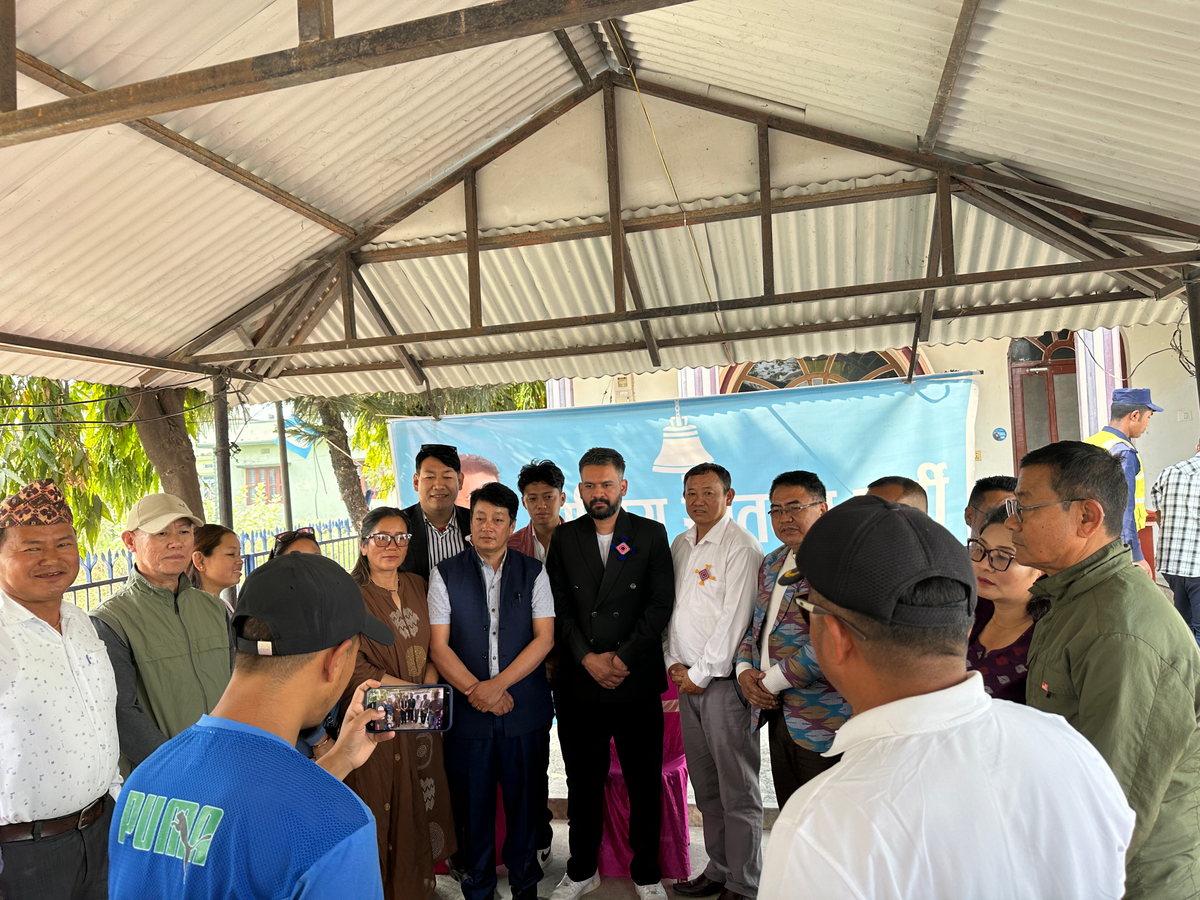
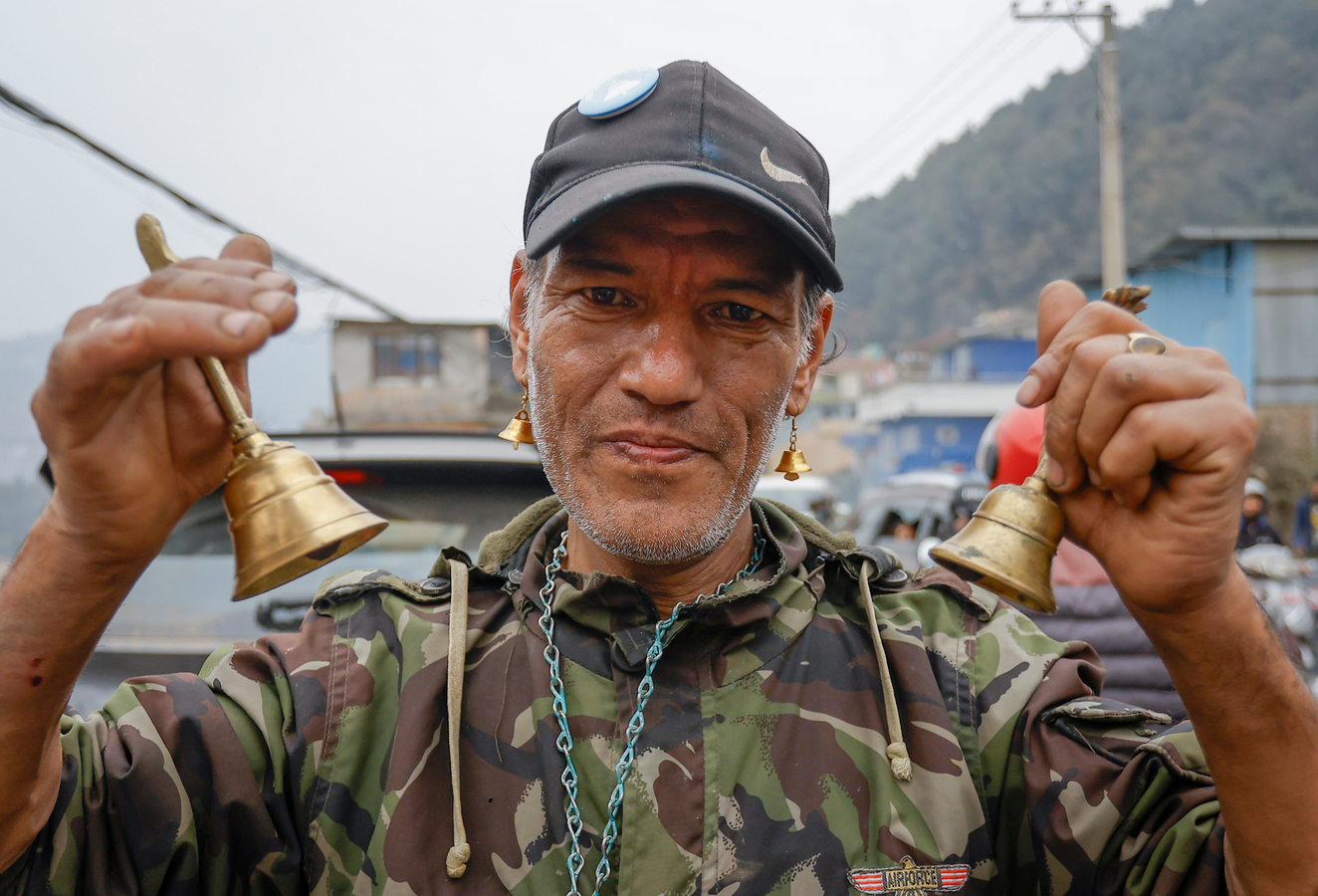
People often identified Balen with his signature dark goggles and black blazer, but a small metal bell, the RSP symbol, was carried to his political rallies and used during his speeches to caution the opposition.
Immediately after joining the RSP, Balen addressed a public meeting, calling it a 'Parivartan Udghosh Sabha' (Change Declaration Gathering) in Janakpur and spoke in Maithili to highlight his personal connection with the Madhesh province.
Expressing dissatisfaction with the continued centralization of power in Kathmandu, even after the introduction of federalism, Balen said, "You should be travelling to Kathmandu to visit Lord Pashupatinath or Swoyambhu Stupa, but not for government work."
This sentiment was reflected in the RSP's manifesto, the 100-point commitment paper, which promised online government service delivery to the people and a professional, accountable public service system by separating bureaucracy from politics.