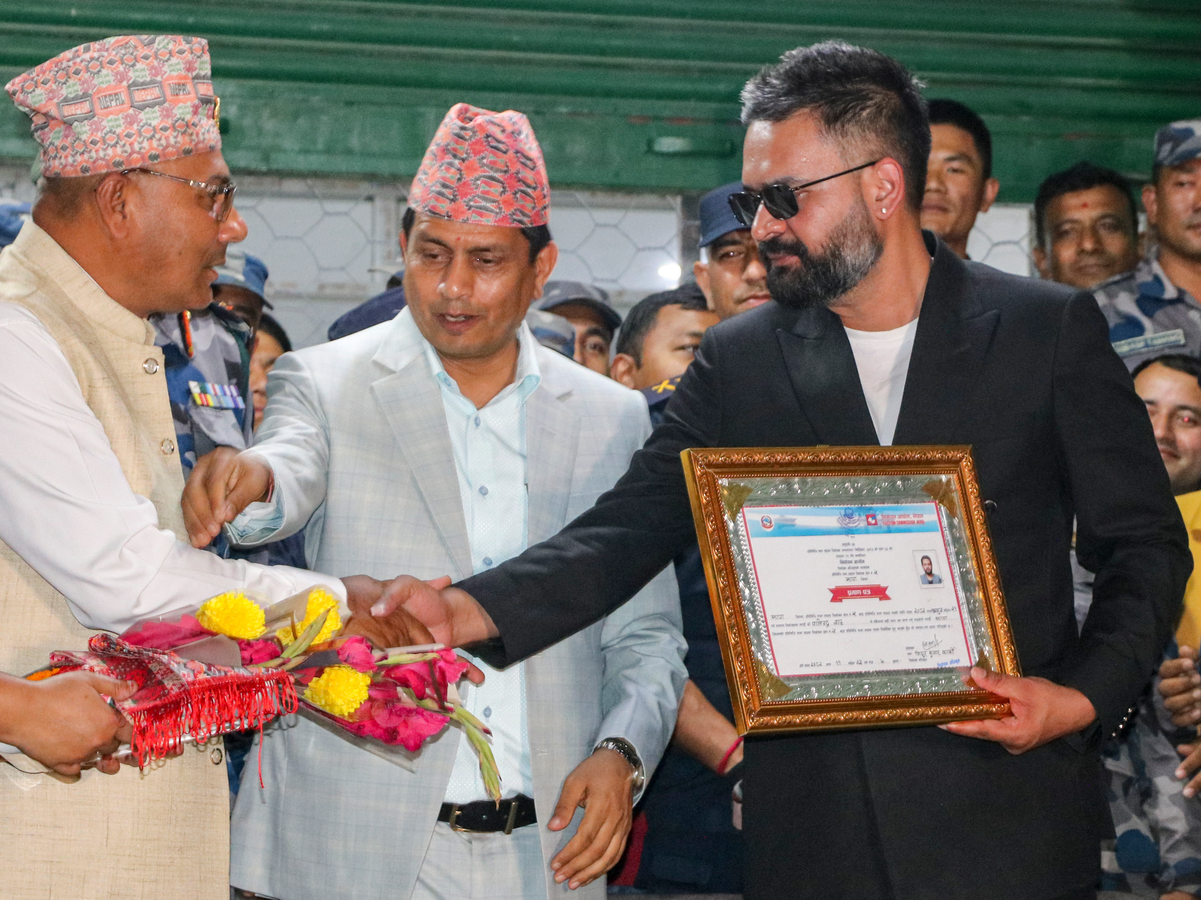
Kathmandu, March 7 – Balendra Shah, a rapper turned politician, and his Rastriya Swatantra Party (RSP) are poised to form the next government in Nepal after securing a decisive victory in the recent general elections. This victory has significantly weakened established parties in the politically fragile nation.
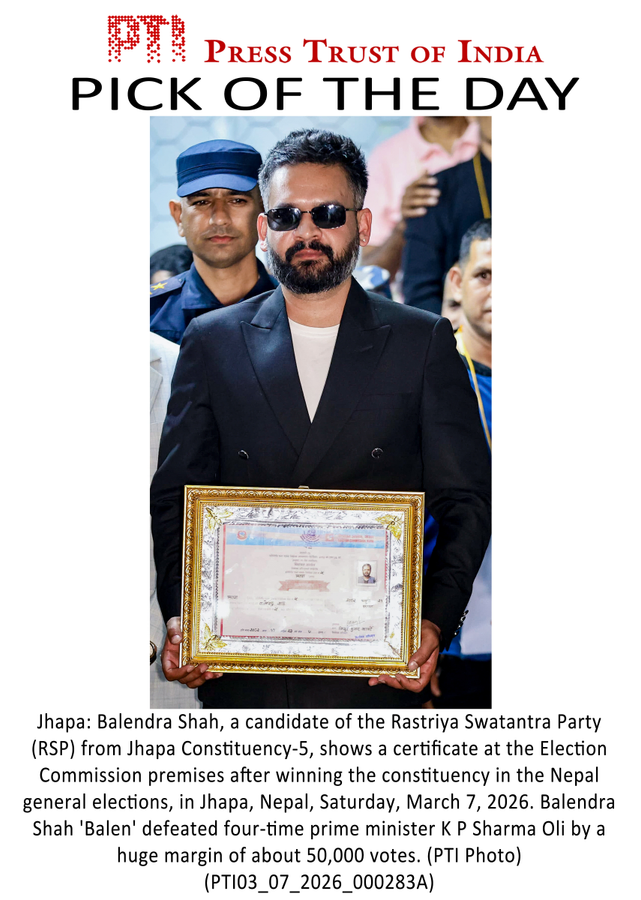
Balen, the 35-year-old RSP candidate, defeated four-time Prime Minister KP Sharma Oli, head of the Communist Party of Nepal (Unified Marxist–Leninist) -- CPN-UML -- by a substantial margin of approximately 50,000 votes in the Jhapa-5 constituency.
According to the Election Commission, Balen received 68,348 votes compared to Oli's 18,734.
This victory reflects a public desire for change and a rejection of established political forces. The RSP, formed in 2022 by Ravi Lamichhane, has won 72 out of the 90 seats declared, according to the Election Commission.
The RSP's strong performance includes a clean sweep in all 10 constituencies of Kathmandu district, and it is also leading in 52 constituencies across the country.
The established parties struggled to address key issues such as corruption and nepotism, along with generational changes in political leadership within the Himalayan nation.
The Nepali Congress (NC) secured 10 seats and is leading in eight; the CPN-UML won just four and is leading in eight; the Nepali Communist Party (NCP) won two and is leading in five; the Shrama Shakti Party (SSP) is leading in three, and the Rastriya Prajatantra Party (RPP) won one seat.
Approximately 60% of eligible voters participated in the March 5 elections for the House of Representatives. Counting of votes began late Thursday night, and as of 9:30 pm on Saturday, counting was ongoing for the remaining 165 constituencies, according to the Election Commission.
India is closely monitoring the elections, hoping for a stable government in Nepal to facilitate ongoing developmental partnerships between the two countries.
Prime Minister Narendra Modi congratulated the people and government of Nepal on Saturday, saying, "It is heartening to see my Nepali sisters and brothers exercising their democratic rights. This historic milestone is a proud moment in Nepal's democratic journey."
Modi also expressed India's commitment to working closely with the people and government of Nepal to achieve shared peace, progress, and prosperity.
Oli, who was also a leading candidate for the CPN-UML, congratulated Balen on his victory and wished him a successful and trouble-free five-year term.
Balen, who was elected as an independent mayor of Kathmandu in 2022, received a tabla from Oli after his election victory.
The RSP, led by Ravi Lamichhane, is on track to secure a majority in the Madhesh province, winning eight out of the 32 seats. The party is also leading in 22 other constituencies across the province.
The RSP is also leading in the Kathmandu Valley, winning all 10 seats in Kathmandu district, as well as two in Bhaktapur and two in Lalitpur districts.
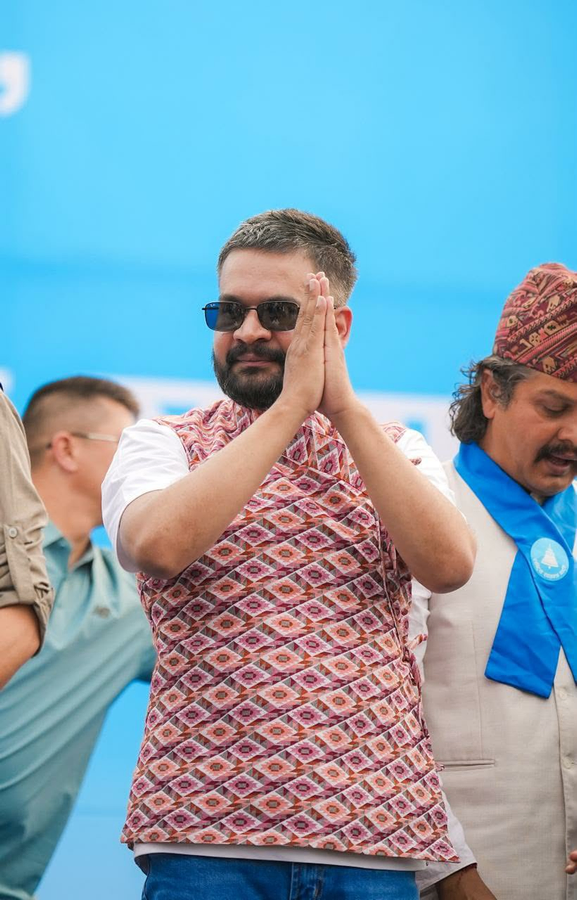
Balen's campaign, which included a massive roadshow on the last day of the election, is believed to have contributed to the RSP's strong performance.
The RSP chairman, Ravi Lamichhane, won with a significant margin in Chitwan-2 constituency, securing 54,402 votes against Mina Kumari Kharel of the Nepali Congress, who received 14,564 votes.
Pushpa Kamal Dahal Prachanda, leader of the NCP and former prime minister, won from Rukum Purba district by securing 10,240 votes against Lilamani Gautam of the CPN-UML, who received 3,462 votes.
Gyanendra Shahi of the RPP won from the Jumla constituency of Karnali province, defeating Naresh Bhandari of the NCP, and became the sole pro-monarchist candidate to secure a seat in the House of Representatives.
The elections also saw 10 female candidates win, nine from the RSP and one from the NC.
The RSP is also leading in the proportional voting system, securing 474,266 votes, followed by the Nepali Congress with 160,384 votes. The CPN-UML received 127,841, the Nepali Communist Party 65,363, the RPP 34,154, and the Shrama Shakti Party 17,437 votes.
Out of a total of 275 members of Parliament, 165 are being elected through direct voting, while the remaining 110 are being elected through a proportional system.
Around 3,400 candidates were vying for 165 seats under direct voting, and 3,135 candidates for 110 seats through proportional voting.
The Gen Z youth, through their two-day intensified protests on September 8 and 9 last year, ousted Prime Minister Oli of the CPN-UML, who was heading a coalition government with the backing of the Nepali Congress that enjoyed nearly two-thirds majority support.
Balen declined to lead the interim government after Oli's ouster, opting to contest the parliamentary election for a full term.
He joined the RSP and was soon declared the party's prime ministerial candidate.
The major issues raised by Gen Z before and during the election campaign were anti-corruption, good governance, an end to nepotism, generational change in political leadership, etc.
Sunil Babu Pant, former MP and a political analyst, said, “The victory of Rastriya Swatantra Party in the March 5 elections and the expectation that Balen Shah could emerge as Nepal's next Prime Minister reflects the people's deep rooted frustration with the old political order and their hope for a new direction.”
“As Balen assumes the country's leadership, his first responsibility must be to demonstrate that corruption will not be tolerated under any circumstances,” he said.
Pant also added that Balen will face a complex geopolitical challenge, adding, “He must prove that he is not a puppet of any external power, western or otherwise. Nepal's leadership must carefully balance relations with all global actors and pursue an independent foreign policy that prioritises the national interest.”