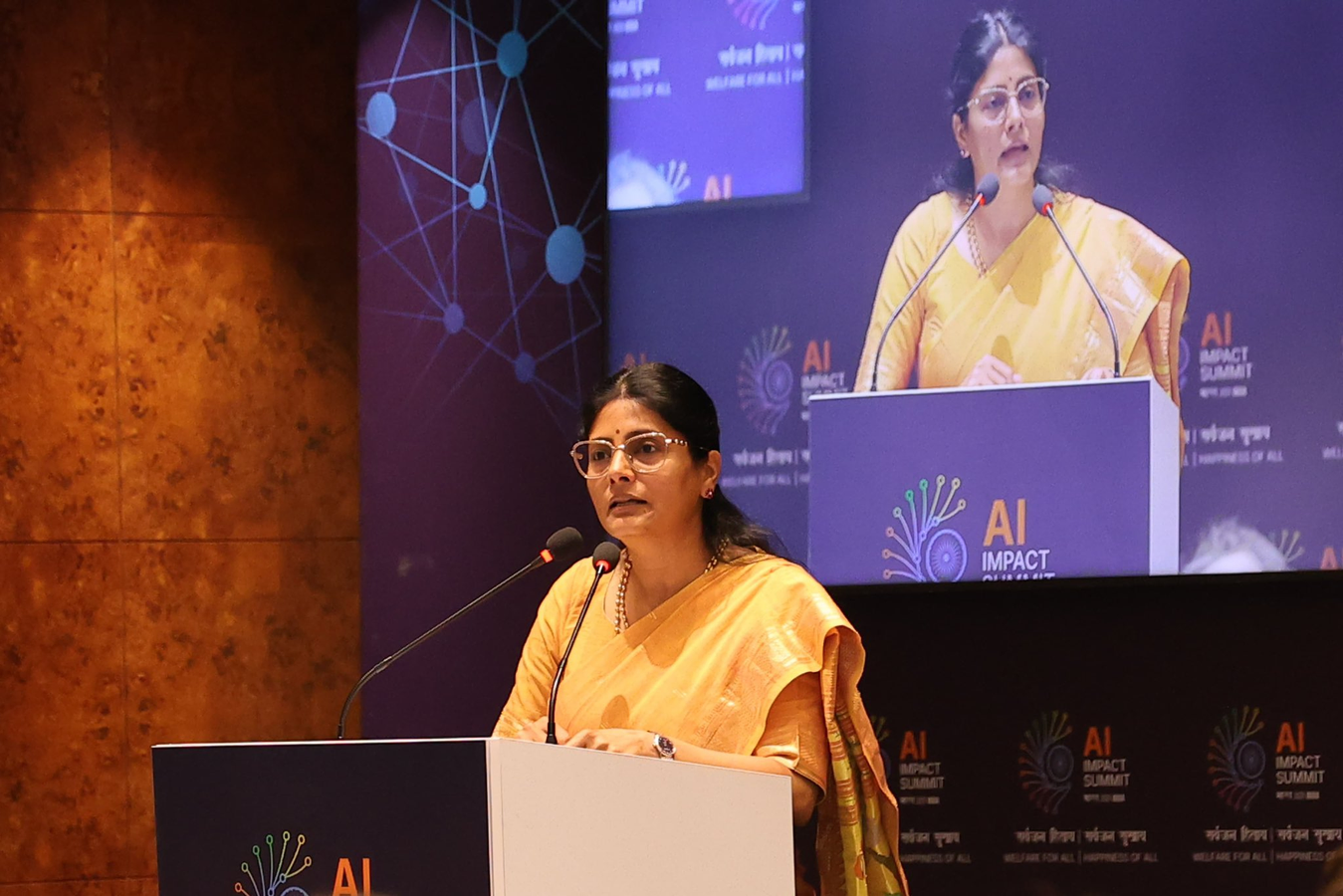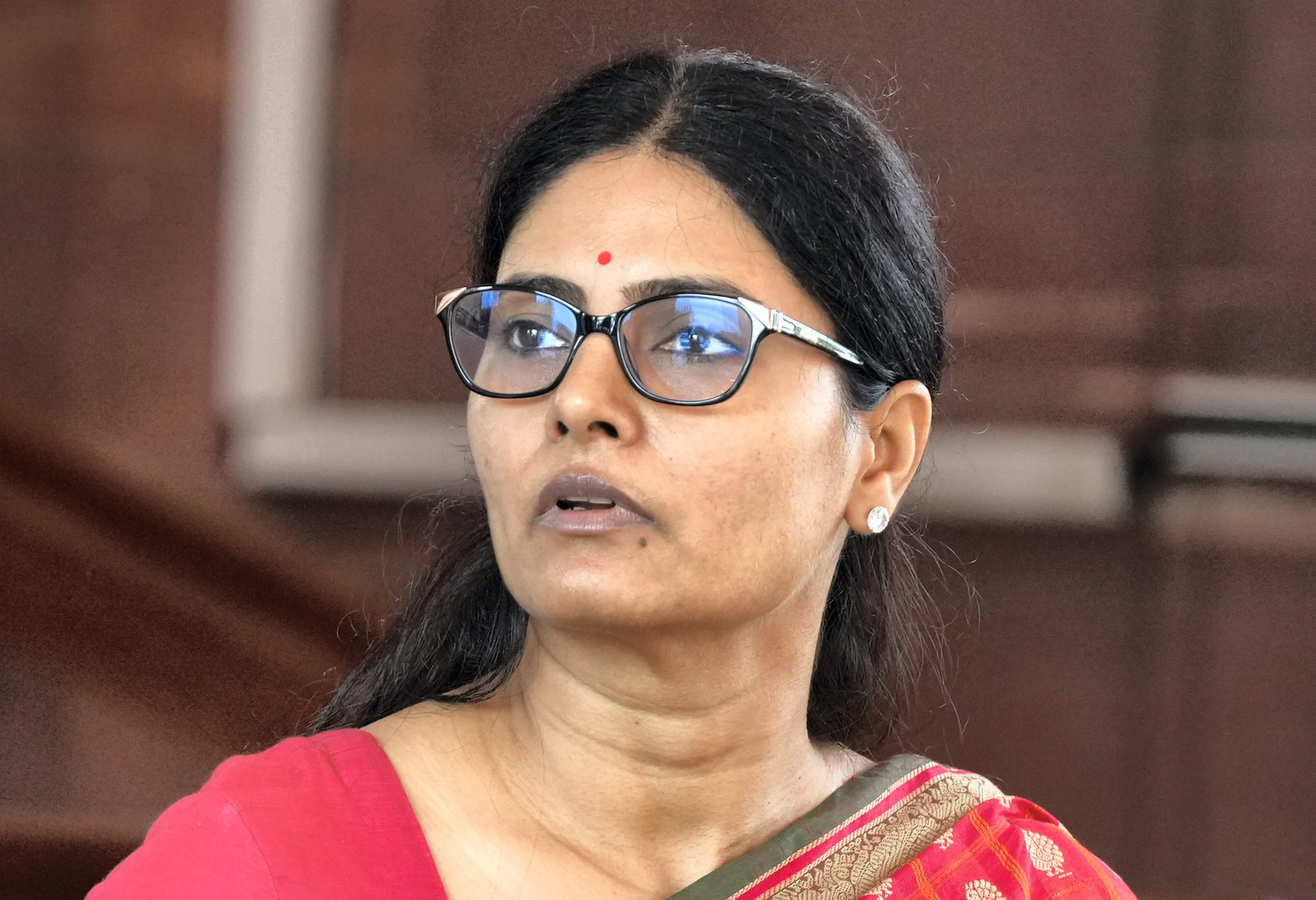
New Delhi, February 18 When India speaks of AI in healthcare, it is not limited to sophisticated algorithms or the promise of precision alone, but is measured by the extent to which technology touches lives and addresses health inequities across the country, said Minister of State for Health, Anupriya Patel, on Tuesday.
Patel made the remarks while addressing a session on ‘Innovation to Impact: AI as a Public Health Game-Changer’ at the India AI Impact Summit 2026 at the Bharat Mandapam here.
The session highlighted the transformative role of Artificial Intelligence (AI) in advancing public health outcomes and strengthening India's healthcare delivery systems.
"AI for India, as our Prime Minister Narendra Modi envisions, is not merely Artificial Intelligence but All-Inclusive Intelligence," Patel said.
As India advances towards the vision of a Viksit Bharat by 2047, health forms one of the most critical pillars of development, she said.
India's vast and diverse population, the rural-urban divide, and the dual burden of communicable and non-communicable diseases present unique challenges, the minister said.
In such a context, she underscored, technology, particularly AI, becomes an indispensable enabler.
Patel also noted that AI has been integrated across the entire continuum of healthcare – from disease surveillance and prevention to diagnosis and treatment.
She highlighted how the Media Disease Surveillance System, an AI-enabled tool that monitors disease trends in 13 languages, generates real-time alerts, and strengthens outbreak preparedness.
This system, she said, showcases the power of AI in augmenting India's disease control efforts and enhancing its surveillance capacity.
Under the One Health Mission, she said, the Indian Council of Medical Research has launched AI-based tools for genomic surveillance, capable of predicting potential zoonotic outbreaks even before transmission from animals to humans occurs.
Such predictive capabilities, the minister emphasised, represent a paradigm shift in preventive public health.
She also highlighted the deployment of AI-enabled handheld X-ray machines and computer-aided detection tools for tuberculosis (CA-TB), which brought advanced diagnostics closer to communities.
These innovations have contributed to approximately 16 per cent additional TB case detection, she said.
Also, AI-based tools predicting adverse TB treatment outcomes have helped achieve a 27 per cent decline in negative treatment results, strengthening India's fight against tuberculosis, Patel said.
Emphasising scalability and affordability, Patel said that in a resource-constrained setting like India, which has a large population, solutions must be scalable, frugal and capable of addressing systemic gaps.
She noted that the government has actively worked towards building a strong AI ecosystem in healthcare, including the establishment of three centres of excellence for AI at AIIMS Delhi, PGIMER Chandigarh, and AIIMS Rishikesh to integrate world-class AI expertise into public healthcare delivery.
Clarifying the role of technology, Patel asserted that AI is here to augment and assist, not to replace clinicians.
By reducing the burden of routine and high-intensity tasks, AI enables doctors to devote more time to complex cases and critical clinical decision-making, the minister said.
"Medicine is not only a science; it is also an art," she said.
Healthcare thrives not merely on algorithms but on human touch, empathy, compassion and communication – qualities that cannot be replicated by machines and will always remain the domain of clinicians, the minister said.
Stressing that future-ready healthcare professionals must be AI-literate, Patel noted that the National Board of Examinations in Medical Sciences recently launched an online training programme on AI in healthcare to equip doctors with essential digital competencies, ensuring that India's medical workforce remains prepared for a technology-driven future.