Gulmarg, March 1 – The medals shone in the faint mountain sunlight, but when asked where the true gold was made, the athletes indicated the podium, not the slopes. Instead, they pointed upward to the snow-covered ridges of Gulmarg and the rigorous environment of the High Altitude Warfare School (HAWS).
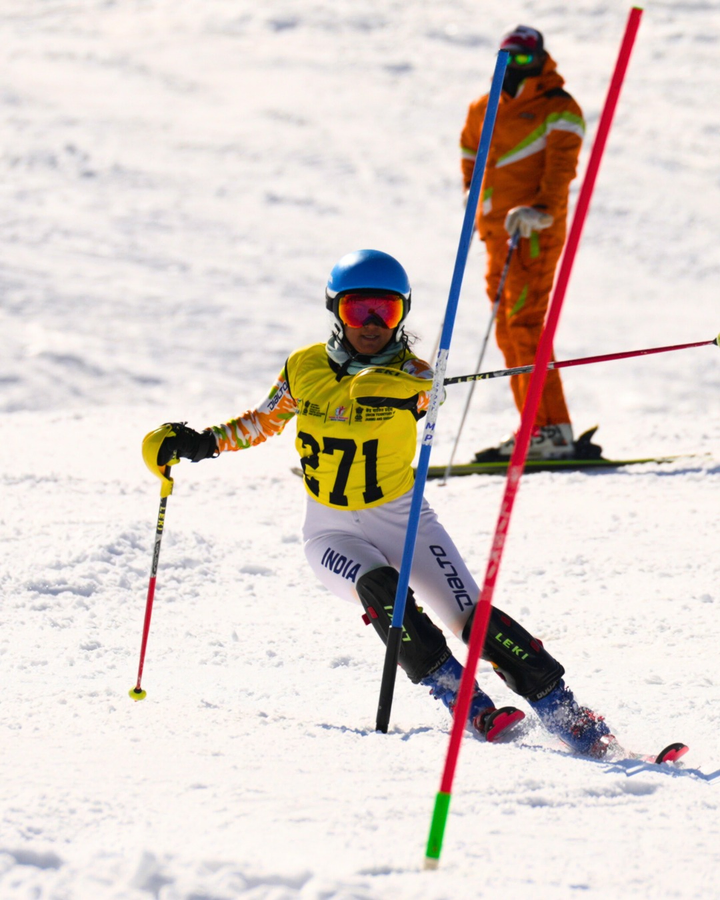
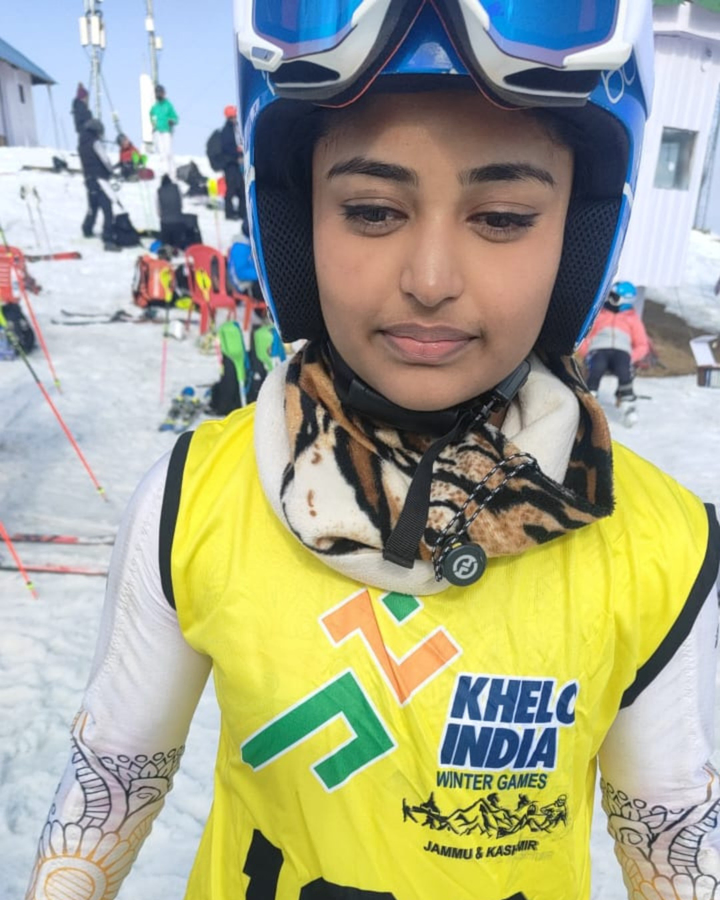
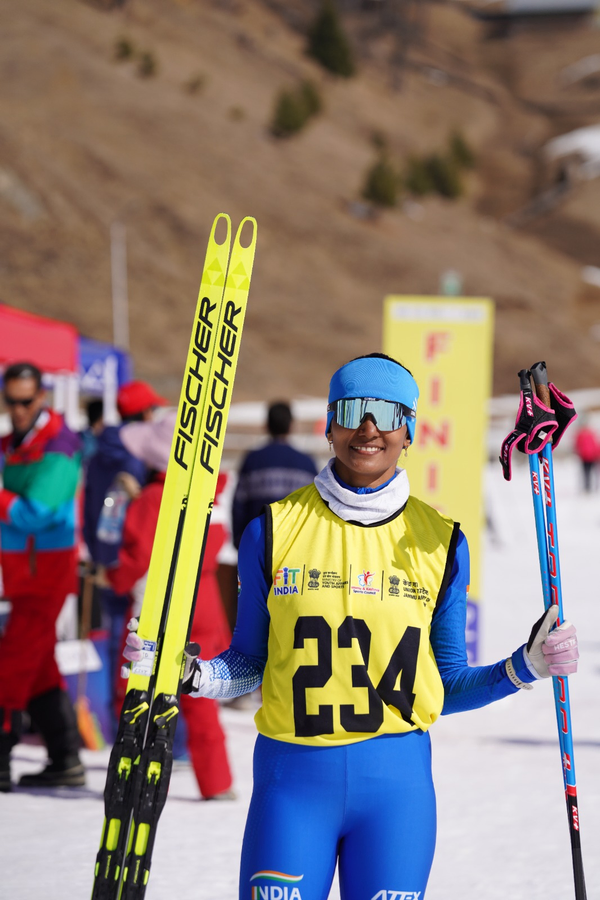
At the sixth Khelo India Winter Games, held here from February 23 to 26, athletes from across India, representing states, Union Territories, and major institutions like the Indian Army, CRPF, and ITBP, shared a common sentiment: HAWS was the key to their success.
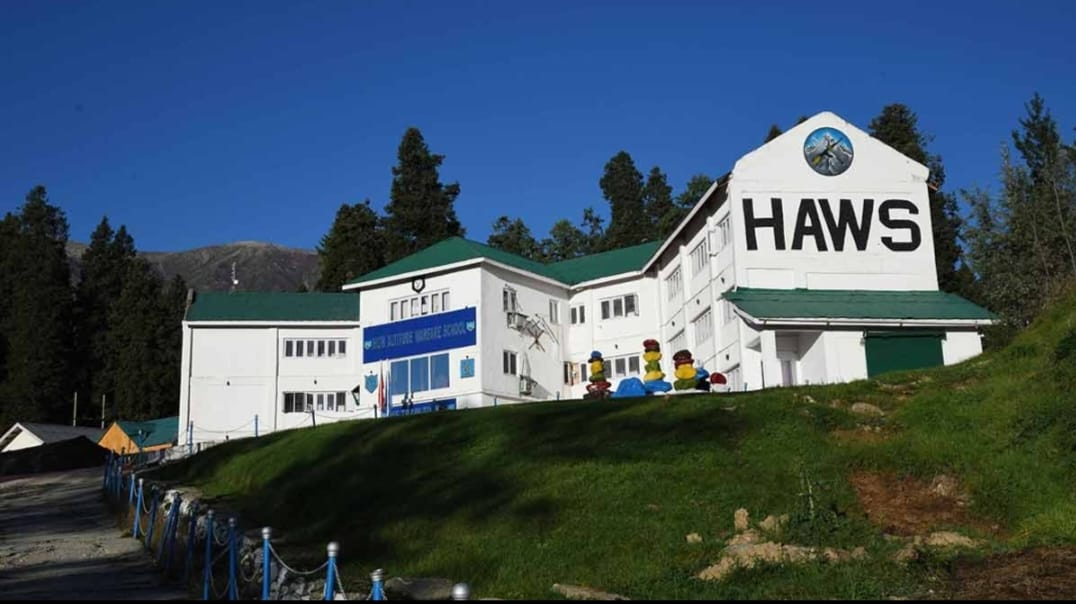
Founded in December 1948 by Brigadier General K S Thimayya as the 19th Infantry Division Ski School, the institution was established out of necessity. Located in avalanche-prone terrain, it later became the Winter Warfare School. On April 8, 1962, it was upgraded to a Category A Training Establishment and received its current name, with a renewed focus on mountain mastery.
HAWS specializes in snowcraft and winter warfare, offering elite Mountain Warfare and Winter Warfare courses that combine high-altitude combat skills with survival tactics and intelligence training. However, over time, a new presence emerged on its slopes – the athletes. These are not casual skiers or tourists, but serious competitors.
Kajal Kumari Rai, a 25-year-old from Shillong, had never seen snow before 2024. By the end of that year, she was a champion, winning gold in the Nordic women's 15 km and 10 km sprints, an incredible and inspiring story. She attributes her transformation to a 15-day skiing immersion at HAWS that changed her path.
“Joining the CRPF gave me direction,” Kajal said. “HAWS and the Army gave me the confidence to succeed.”
Confidence is a valuable asset here, forged through demanding climbs and icy conditions, and during quiet moments before a downhill run.
Bhavani T N, who won gold in the Nordic women's 1.5 km sprint and earned bronze medals in the 15 km and 10 km events this season, also experienced snow late in her life. At 23, she had never touched it before. She learned her edges, balance, and grip at the Indian Institute of Skiing and Mountaineering (IISM) and HAWS, where the Khelo India Winter Games veteran from Karnataka's coffee hills honed her skills.
In the men's Nordic 10 km event, the Army dominated the podium, with Padma Namgail taking gold, Aman securing silver, and Manjeet earning bronze. In the 1.5 km sprint, Sunny Singh, Shubam Parihar, and Majeet repeated their medal sweep. They all credited HAWS not merely as a facility, but as a crucible that shaped their success.
“HAWS plays a vital role in training winter sports athletes, not just from the Army, but also from other forces and states,” Namgail said. “There are no issues with funding, training, coaching, or competition. The best athletes are even sent to Europe. The tracks are challenging, and the ice is hard, but we are always prepared thanks to HAWS.”
This preparedness is carefully engineered. Indian Army team manager Col. Kumar Singh Negi calls it a systematic approach. “Expert trainers from Italy, Norway, Sweden and Kazakhstan refine technique to international standards,” he said.
Indian Army team coach Rameez Ahmad stated that HAWS manages a pipeline of 250 to 300 Army winter athletes annually, in addition to five to ten civilian trainees.
“Currently, 24 athletes train in Alpine skiing, 16 in snowboarding, and 20 in Nordic skiing. Some double down in mountain skiing. They log a minimum of 600 training hours annually,” Ahmad said.
“There are ski simulators for Alpine skiing, the only ones in India, roller skis for summer cross-training, a state-of-the-art gymnasium, and an indoor sports complex that hums with basketball, volleyball, and badminton even when Gulmarg is blanketed in white silence. It is continuous conditioning. Nutrition is carefully calibrated, with a dietician charting protein and carbohydrate intake, energy bars and gels are standard issue. The equipment mirrors those seen at the Olympics.”
Physio Vivek Kaktwan calls the infrastructure “world-class.” “Funding is stable, and the altitude itself provides a significant advantage. By staying in Gulmarg, our athletes train more effectively,” he said.
The influence extends beyond the Army. CRPF team manager Magesh K recognized HAWS’ contribution in advancing his team from providing equipment support to becoming elite coaches.
“Army coach Nadeem Iqbal, himself an Olympian, worked closely with CRPF athletes over the past three years, refining technique and raising performance thresholds. The results are becoming evident,” Magesh said.
These results are undeniable. In Gulmarg, medals may hang around individual necks, but their success is rooted in the unique environment and training provided by HAWS, a place where military training intersected with winter sports, and ultimately, fostered champions.