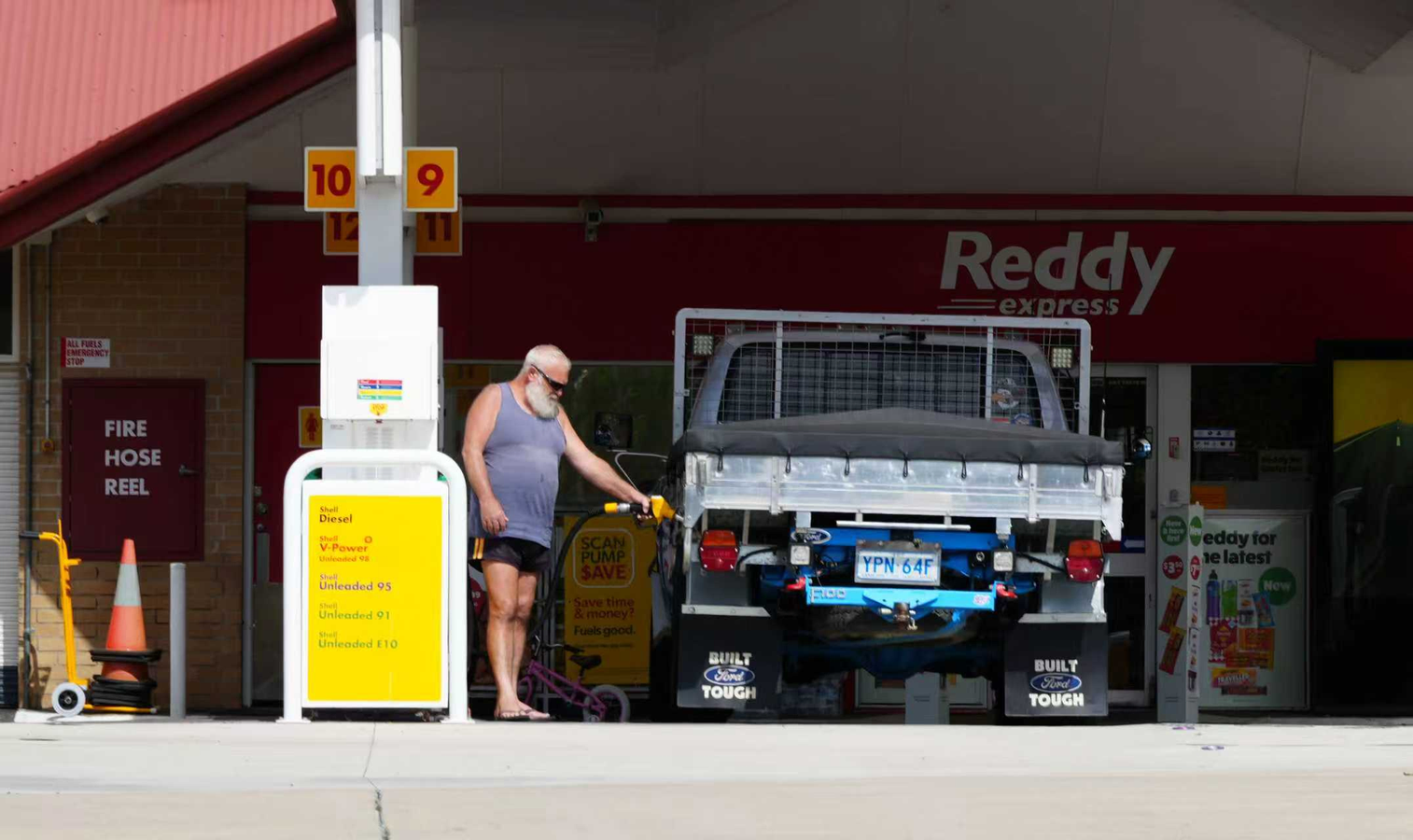
Sydney, April 4 – Australian Energy Minister Chris Bowen said on Saturday that Australia's fuel supply "remains strong," and more petrol is reaching service stations across the country.
Providing a weekly update on fuel supply, Bowen told reporters in Sydney that Australia had approximately 39 days' worth of petrol, 29 days of diesel, and 30 days of jet fuel in reserve.
"The fact that these figures are essentially stable means that fuel is being supplied to service stations and farmers, and fuel is also being imported into Australia's import terminals and refineries," said Bowen.
He said the number of petrol stations experiencing fuel shortages was declining, and efforts to replenish supplies were ongoing, with 50 shipments on their way to Australia.
"Australia's fuel supply remains strong, with over 50 ships still en route," Bowen said, adding that six orders had been cancelled but had been replaced by new orders.
He also stated that out of the approximately 8,000 service stations in Australia, around 312 were without diesel, which is where the main pressure has been.
He reiterated the Australian government's call for people to stick to their Easter holiday plans, but to buy only the amount of fuel they need and to buy it in the city to help maintain fuel supplies across the country.
Earlier this week, the leader of Australia's most populous state said that the country must have more control over its energy to reduce its vulnerability to future oil price shocks.
Chris Minns, the Premier of New South Wales (NSW), said that Australia must consider how it can reduce its reliance on oil from the Middle East amid the ongoing supply crisis caused by the conflict in the region.
"We need more sovereignty and control over our energy, and we need to be able to drive our economy independently of what happens in the Middle East," he said on Tuesday.
He said that policymakers in Australia must start making decisions now so that the country is not continuously affected by conflicts in the Middle East.
Minns said that his government would use the upcoming state budget for the 2026-27 financial year and the campaign for the 2027 state election to announce long-term measures to electrify NSW's economy.
"That means more electric vehicles, it means more charging stations, and it means more practical ways that we can look to the future of our economy," he said.
In response to concerns about fuel supply, the NSW government announced on Tuesday that it would adjust freight load limits to allow longer trucks to travel on the state's road network and lift curfews to allow more freight to travel, load, and unload at night.
According to the NSW government, longer trucks will use at least 18 percent less diesel per ton of payload and carry 33 percent more freight.