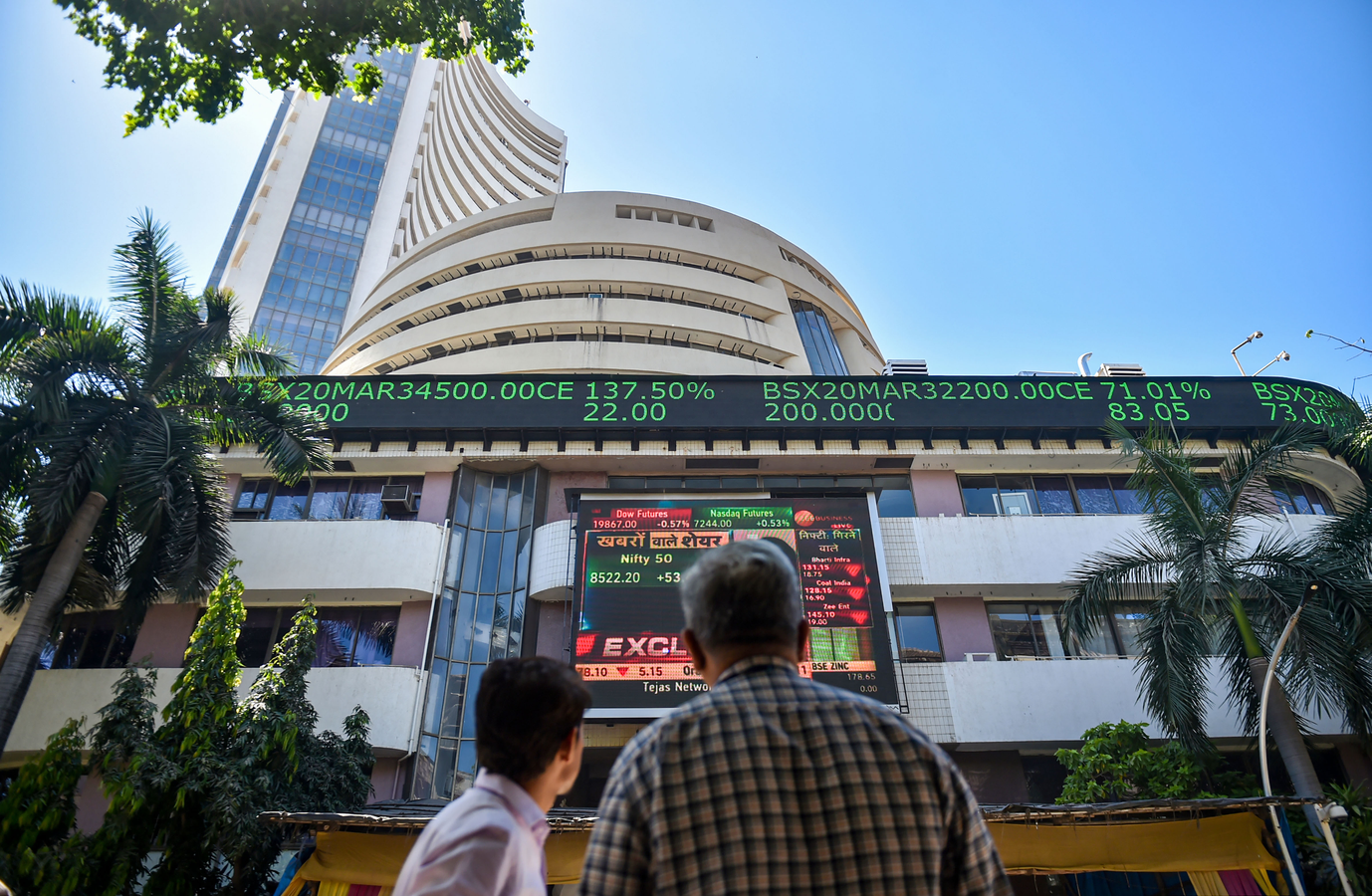
New Delhi, March 31 – Analysts say that the outlook for Indian markets in the next fiscal year remains optimistic, provided geopolitical tensions subside and crude oil prices stabilize, even though domestic equities ended FY26 on a bearish note, with the Sensex falling by 7%.
In 2025-26, the BSE benchmark fell by 5,467.37 points, or 7%, and the NSE Nifty dropped by 1,187.95 points, or 5%.
According to an expert, this year was characterized by global macroeconomic uncertainty, persistent geopolitical tensions, high crude prices, and aggressive outflows from Foreign Institutional Investors (FIIs), which collectively limited upside momentum.
Since the conflict in West Asia began, markets have been under significant pressure, creating chaos in global energy markets and fostering a risk-averse environment.
In just this month, the BSE benchmark has fallen by 9,339.64 points, or 11.48%, since February 28, when the West Asia conflict began.
Ponmudi R, CEO of Enrich Money, said that the current bearish trend is largely driven by external factors rather than fundamental weaknesses. Elevated crude oil prices, geopolitical risks in the Middle East, and sustained selling by FIIs have created a risk-averse environment. At the same time, high valuations at the start of the fiscal year have made markets vulnerable to corrections.
Brent crude, the global oil benchmark, rose to $115 per barrel on Friday's trading.
Looking ahead to the next fiscal year, the outlook for Indian markets remains optimistic, provided the immediate geopolitical situation stabilizes. The first half of FY27 is likely to see continued sideways movement and increased volatility as inflation and interest rates adjust to the recent energy shock.
Santosh Meena, Head of Research at Swastika Investmart Ltd, said that robust domestic institutional inflows and a strong corporate earnings pipeline provide a solid foundation for further recovery in the latter half of the year.
The current bearish trend in domestic equities is undoubtedly concerning, but it represents a predictable reaction to severe macroeconomic shocks rather than a failure of India's core corporate fundamentals, Meena said.
Foreign investors have pulled out over Rs 1 lakh crore from domestic equities in March, making it the worst monthly outflow, weighed down by escalating tensions in West Asia and a weakening rupee.
Meena said that FIIs are expected to return to Indian equities, but a significant reversal of the recent exodus hinges heavily on the stabilization of global macroeconomic headwinds.
"For foreign capital to flow back aggressively, there must be a definitive de-escalation of the West Asia conflict, a cooling of Brent crude prices, and a stabilization of the Indian Rupee against the dollar," Meena noted.
FY26 has been marked by two distinct phases for Indian equities, Hariprasad K, Research Analyst and Founder, Livelong Wealth, said.
"The first half reflected strength and optimism, while the closing quarter exposed the market’s vulnerability to global disruptions," he noted.
He explained that markets entered the fiscal year on a strong footing, supported by domestic liquidity, steady earnings, and retail participation, and indices even scaled record highs towards the end of the calendar year 2025.
"However, the final quarter saw a sharp reversal, driven largely by external shocks. Escalating geopolitical tensions in West Asia, a spike in crude oil prices, and persistent global uncertainty triggered a significant risk-off sentiment," Hariprasad added.
Looking ahead to the next fiscal, the outlook remains cautiously optimistic, with recovery likely to be earnings-driven rather than sentiment-led, he said.
The BSE benchmark index hit its record high of 86,159.02 on December 1, last year.
Ravi Singh, Chief Research Officer, Master Capital Services Limited, said, "Looking ahead, the outlook remains cautiously positive. If global factors, like crude prices and lower interest rates, ease, markets can stabilize and regain momentum. Earnings growth will be the key driver. In the near term, volatility may continue, but over time, the market is likely to find its footing again".
Echoing a similar sentiment, Ponmudi said, "Going into the next fiscal, expect markets to remain volatile in the near term but gradually transition into a recovery phase, especially once global uncertainties ease and earnings visibility improves".
The Sensex and Nifty indices ended the last trading session of the 2025-26 fiscal year over 2% lower on Monday. The market capitalization of BSE-listed companies stood at Rs 4,12,41,172.45 crore on the last trading day of FY26.