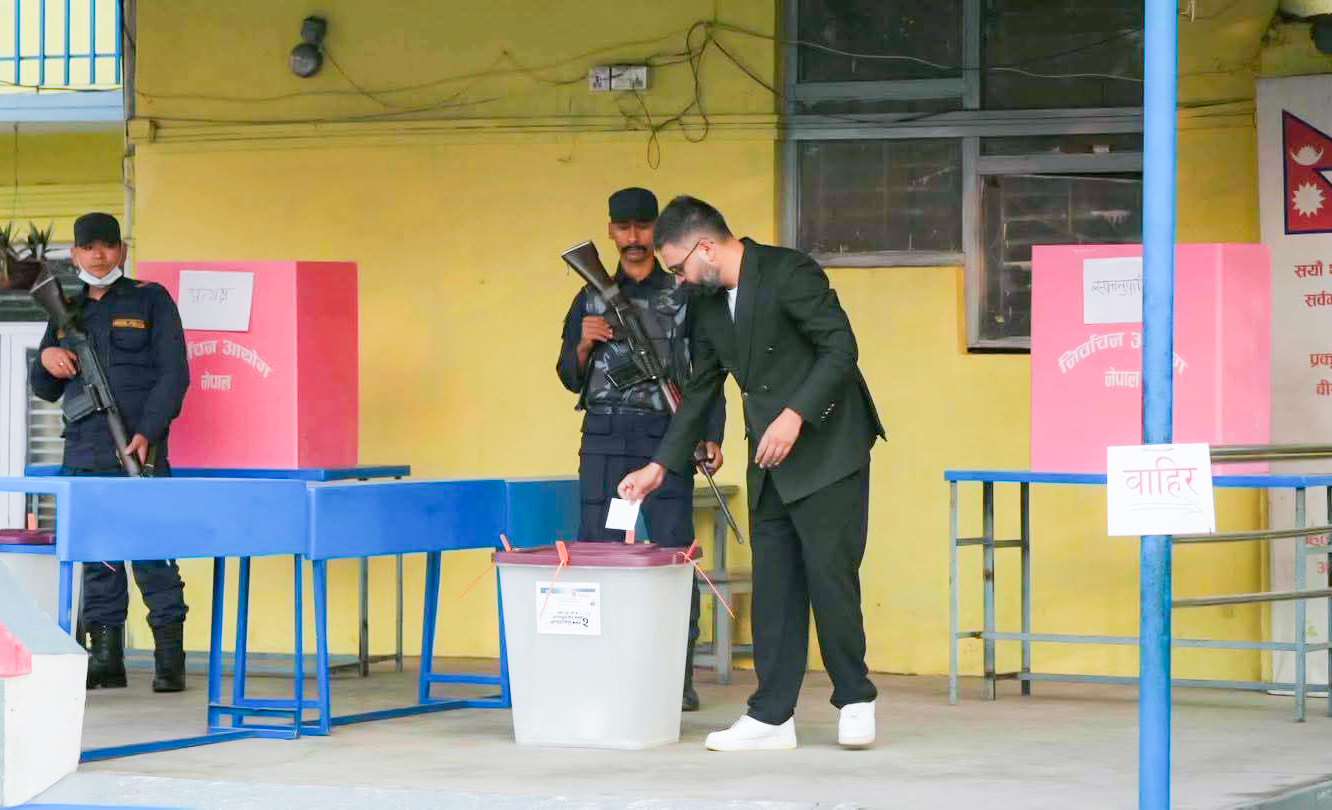
New Delhi/Kathmandu, March 18 – While the Gen-Z movement has emerged worldwide, Nepal is the only country to have undergone rapid political transformation. The recent election results in Nepal have defied expectations, leaving observers questioning whether they underestimated the rise of Balendra Shah and his party, the Rashtriya Swatantra Party (RSP) – which entered the country's political arena only in 2022 – winning close to a two-thirds majority.
"Since the advent of democracy in 2008, it has been the traditional parties – the Nepali Congress, the Maoist Centre (now the Nepali Communist Party or CNP), and the Communist Party of Nepal-UML (or CPN-UML) – and their respective leaders, Sher Bahadur Deuba, Pushpa Kamal Dahal (alias Prachanda), and K P Sharma Oli, who have dominated Nepal's political landscape for decades," a report in India Narrative detailed.
"Balendra Shah, popularly known as Balen, an engineer and rapper, entered politics in 2022 by running for the Kathmandu mayoral race and won as an independent candidate, defeating established figures from various parties. However, with just three years of experience as an administrator and politician, no family lineage in politics, and no party backing, he became the prime ministerial candidate of a party he joined just two months before the elections and made history by winning such a significant mandate and being on track to become the youngest Prime Minister in Nepal's electoral history," it added.
According to the report, in a country shaped by "strong regional loyalties, ethnicities, and religious communities," such a mandate demonstrates how well-crafted policies can "dismantle divisions and unite the electorate around issue-based politics."
This marked a historical mandate, as in the past, no party has won an outright majority, and coalition governments have often led to instability and frequent changes of the Prime Minister in Nepal.
"This will also be the first time that opposition parties will have no choice but to sit in the opposition, and the possibility of mid-term bargaining to form governments will disappear. The compulsion of coalitions will no longer be a part of the policy-making process and will no longer enforce biases and interests in national development planning," it noted.
The report further said, "Nepal's movement and election outcomes are also closely watched by countries of the subcontinent, as the growing gap between youth and traditional leadership and parties makes a compelling case for change. While countries like Bangladesh and Sri Lanka have already witnessed this, countries like Pakistan and the Maldives could be next."