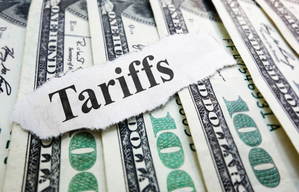
New Delhi, February 24 – In just over a year since he took office as the 47th President of the United States on January 20 last year, Donald Trump has managed to disrupt the global order several times through frequent changes made using two of his favorite words: trade and tariffs.
First, he introduced a set of "reciprocal tariffs" last year, which forced several countries to rush to strike trade deals with Washington or agree to negotiations, as it appeared that the odds were stacked against them.
"After President Trump disrupted the global economic order in 2025, Japan was one of the countries scrambling to reach a deal. They pledged to significantly increase investment in the US in exchange for lower US tariffs on Japanese exports," observed the UK's liberal-leaning newspaper, 'The Guardian'.
"However, just two days after Trump's declared victory, his attempt to reshape international trade suffered a major setback at the US Supreme Court," it added.
On February 20, the US Supreme Court, in a 6-3 ruling, ruled that President Trump overstepped his authority when he imposed global tariffs using the International Emergency Economic Powers Act (IEEPA). The court clarified that IEEPA was designed for national security emergencies, not for broad trade measures. This effectively invalidated many of Trump's earlier "reciprocal tariffs".
True to his style, with contempt for judges who ruled that much of his tariff regime was illegal, Trump soon announced a 10 per cent global tariff, and then quickly raised it to 15 per cent by invoking Section 122 of the Trade Act of 1974.
While this allows the US President to impose this import duty, it is a temporary measure for a maximum of 150 days. This provision is intended to address balance-of-payments deficits, and needs to be extended by Congress.
With mid-term elections looming ahead this year, the House may not be in a hurry to vote.
Meanwhile, businesses and trading partners are facing confusion about which tariffs apply, making long-term planning difficult. But the dynamics have shifted, with allies feeling confident that they can renegotiate some clauses.
India, Brazil, and China have been given significant tariff cuts without making any compromises, according to 'The Guardian', adding that at the same time, countries like the UK may now face higher tariffs, despite making concessions.
New Delhi has put a hold on the ongoing negotiations before the imminent closure of a trade deal. Exporters in India are particularly alarmed, especially in the textiles, chemicals, and auto parts sectors.
The European Union is also seeking clarifications after the European Commission had reached an understanding in an initial trade deal with Washington. According to reports, Brussels wants to consult the WTO and has warned of possible countermeasures.
Agricultural exporters in Brazil are reportedly worried about higher costs, where President Luiz Inacio Lula da Silva, while in Delhi, urged countries to unite and form collective negotiating blocs for talks with the US.
Meanwhile, President Xi Jinping of China will have greater leverage when he sits at the negotiating table with his US counterpart during the latter's visit to Beijing from March 31 to April 2. China's Ministry of Commerce this week said that it has noted the US Supreme Court's ruling and is conducting a comprehensive assessment of its relevant content and impact.
The unilateral measures, such as the imposition of reciprocal tariffs and fentanyl tariffs, not only violate international economic and trade rules but also contravene domestic laws of the United States, and are not in the interests of any party.
Trump may not now be able to pressure Xi for larger purchases of American soybeans, Boeing aircraft, and energy.
China may slow down on allowing a steady flow of rare earth minerals, a crucial component of American hi-tech and AI-based manufacturing. Some reports are already hinting at Beijing attempting retaliation. But that may wait till the Xi-Trump Beijing summit.