New Delhi, February 26 The carbon trading platform is likely to be functional in India by September, which will be a driver for the transition to renewable energy, a senior official said on Thursday.
This is significant in light of India's ambitious target of having 500 GW of renewable energy by 2030. This may also help make renewable energy more viable in the context of the slow pace of signing of power purchase agreements (PPAs) in the country.
"The carbon trading platform is on track, and it is likely that it will also be operational in the country by September. This will likely be another driver for renewable energy to pick up, particularly in the commercial and industrial (C&I) sectors," said Central Electricity Authority Chairman Ghanshyam Prasad, addressing the India Energy Summit.
He noted that PPAs (for renewable energy projects) are not happening.
"We have found that PPAs are not happening, and if PPAs are not happening, that means we need to have some other mechanism to do it, and that's how we are trying to explore some kind of a market mechanism where more and larger capacity can come, and the market can support that," he said.
He also talked about a new scheme which will incentivize reduction of plant load factor or capacity utilisation by thermal power plants so that renewable energy can be fed or balanced in the national electricity grid.
He said, "We are now at a stage where if all (power producers) say that we cannot adjust (flex) power production, then who will adjust it? So even if you store that energy, somewhere it has to be balanced."
He stated that it is technically possible, and the only thing is, we need to train the people properly.
"We are also thinking that we can give them some more incentives for the coal-based generators because they are the big players and they have been supporting so far... So we are trying to think some kind of an incentive scheme."
Prasad said that one such scheme has been suggested to the Power Ministry, and hopefully that will go through. That will address some of their concerns and people in the thermal sector as well. They would like to do their flex (adjust PLF) on their own.
On this occasion, Minister of State for Power and New & Renewable Energy Shripad Yesso Naik stated that India’s energy transition is not just an aspiration but is an ongoing transformation, anchored with clear targets and decisive decisions.
"Under the Prime Minister, Mr Modi's vision, India has set an ambitious goal of 500 GW of non-fossil fuel capacity by 2030 and progressing towards Net Zero by 2070," he added.
Naik stated that today, the total installed power capacity has crossed 520 GW, with more than half coming from non-fossil sources.
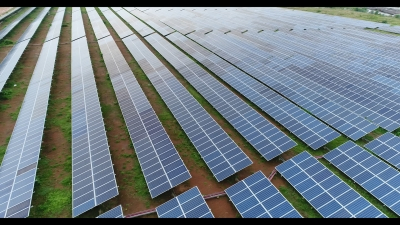
Solar capacity has more than tripled in recent years, and renewable energy is now mainstream and not marginal.
"This progress reflects policy clarity, transparent competitive bidding, expansion of green energy corridors, promotion of ultra mega renewable energy parks, rooftop solar through PM Surya Ghar Yojana, agricultural solarisation through PM KUSUM Yojana, along with a strong push for domestic manufacturing," he noted.
The Minister further stated that through the National Green Hydrogen Mission, the government is creating the next growth frontier, enabling industrial decarbonization, reducing import dependence, and strengthening India's position in the emerging global value chain.
"Sustaining this momentum requires moving beyond capacity addition and system integration. We must strengthen the transmission network, scale up storage solutions, improve grid flexibility, and ensure the financial sustainability of distribution companies. Energy security, affordability, and inclusivity must remain at the core of the approach," Naik said.