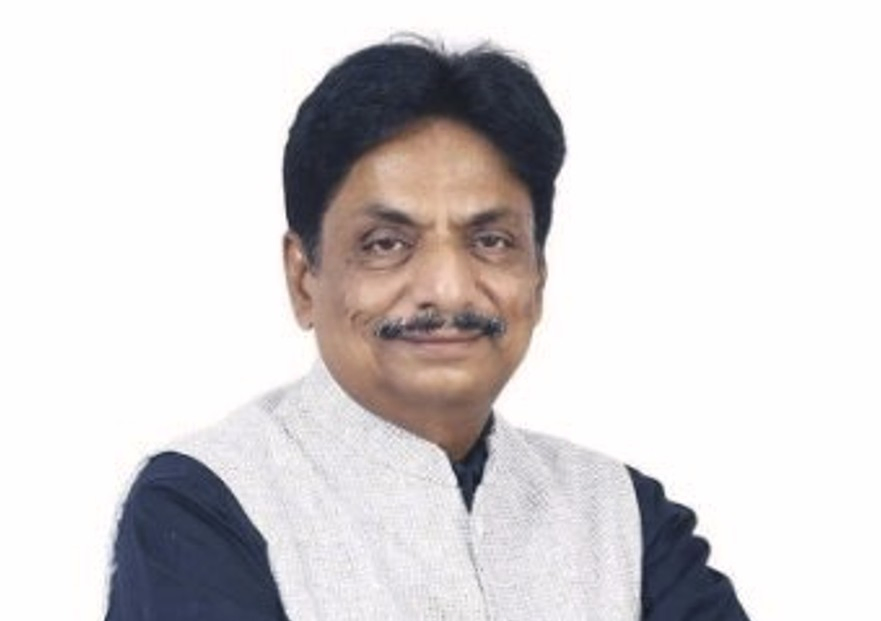
Gandhinagar, March 17 – The Gujarat government has introduced a “direct allotment” system, allowing small farmers and private landowners to obtain quarry leases without e-auctions, as part of a broader effort to simplify administrative processes in the mining sector, Minister Rushikesh Patel told the state Assembly.
Speaking during discussions on budgetary demands for the Mines and Minerals sector on Tuesday, Patel said: "The reform, introduced through an amendment on October 12, 2022, enables landowners to secure quarry leases of up to four hectares through direct application."
He said 1,024 applications had been received under the system, of which 738 had been granted in-principle approval.
Patel said the state government, under the vision of Prime Minister Narendra Modi and the leadership of Chief Minister Bhupendra Patel, was managing Gujarat's mineral resources in a "transparent and scientific manner".
"Earlier practices had been replaced with an e-auction system under the Mineral Auction Rules-2015 and the Gujarat Minor Mineral Concession Rules-2017 to improve transparency in mineral allocation," he said.
According to the minister, 2,622 blocks of minor minerals and 57 blocks of major minerals have been auctioned so far, generating revenue of Rs 66.84 crore.
"The state expects to earn Rs 4,704.47 crore in royalty and Rs 10,088.43 crore in auction premiums over the next 30 years," he noted.
Patel also outlined ongoing and planned exploration activities, stating that work was underway to identify new vanadium and titanium mineral deposits in the Valsad and Navsari districts.
He said exploration of critical minerals and rare earth elements had begun in Ambadungar in Chhota Udepur, as well as in Dahod and Panchmahal, to support clean energy and high-technology sectors.
A core library is being constructed in Gandhinagar to preserve mineral samples obtained during drilling, and work has begun on establishing a dedicated laboratory for the separation of rare earth elements, he added.
The minister said 189 new mineral blocks had been prepared for auction over the next five years, covering eight key minerals.
Funding of Rs 22.53 crore has been approved for the exploration of bauxite, limestone and lithium in Gir Somnath, Dwarka, Jamnagar and Kutch.
He added that Rs 12.78 crore had been collected under the Gujarat Mineral Exploration Trust by February this year for further exploration activities.
On enforcement, Patel said the government had adopted a “zero tolerance” approach to mineral theft, with penalties for illegal transportation increased from Rs 2,500 to Rs 5,000 per metric tonne and compounding fees ranging from Rs 25,000 to Rs 2,00,000 depending on vehicle type.
He said more than 1,04,000 vehicles were being monitored through GPS tracking.
He added that 8,406 cases had been registered through the GeoMine app, resulting in recoveries of Rs 107.89 crore.
Vehicles seized in cases involving serious irregularities would be held for up to 30 days before any immediate penal action.
Patel said recoveries from mineral theft had risen from Rs 1.71 crore in 2003-04 to Rs 252.09 crore in 2026, attributing the increase to stricter enforcement and greater transparency.
The Assembly subsequently approved the department’s budgetary demands of Rs 366.89 crore.