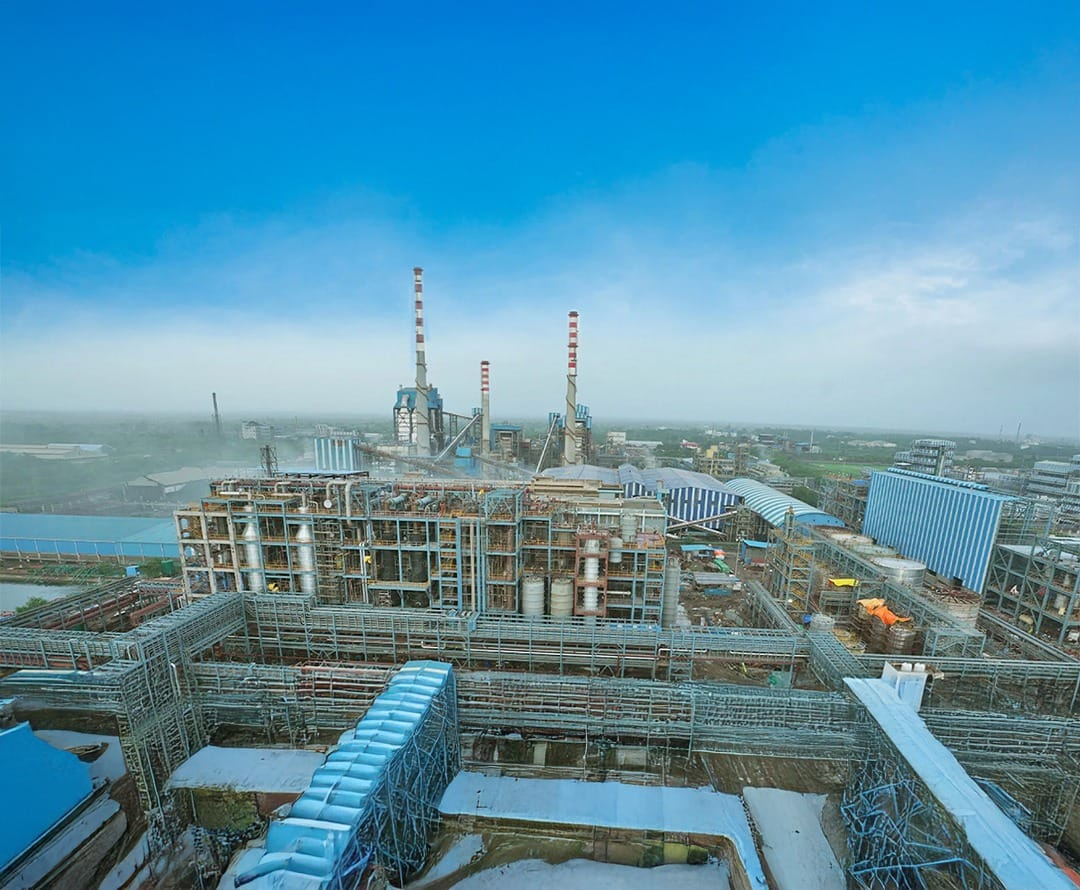
Gandhinagar/Bharuch, March 25: The Bharuch district in Gujarat has further strengthened its position as a leading center for the chemical and petrochemical industry in the country, with approximately 1,394 industrial units operating across the region.
According to state officials, more than 45 per cent of these units are chemical manufacturers, providing direct and indirect employment to nearly 2 lakh people.
The district's industrial growth has been driven by clusters in Ankleshwar, Panoli, Jhagadia, Dahej, Saykha, and Vilayat, which together form a sophisticated chemical ecosystem.
These clusters comprise small, medium, and large enterprises, enabling advanced production capabilities and establishing Bharuch as the "Chemical Capital of India".
Officials highlighted that Bharuch's exports of chemicals exceeded USD 986 million last year, contributing over 23.5 per cent to India's total chemical exports.
"Bharuch's industrial base is a significant contributor to both Gujarat's and India's economy. The district alone accounts for approximately 19 per cent of national chemical exports, while Gujarat as a state provides nearly 45 per cent of India's total chemical exports," officials said.
To further expand industrial opportunities, the Vibrant Gujarat Regional Conference (VGRC) South Gujarat 2026 will be held in Surat.
The conference will provide a platform for investors, entrepreneurs, and policymakers to explore technological collaboration, global partnerships, and expanded investment.
Organizers said the VGRC will include special sessions for the chemical and petrochemical sector, investment summits, start-up pitches, and innovation dialogues.
Bharuch hosts industries across several sub-sectors, including chemicals and petrochemicals, drugs and pharmaceutical intermediates, dyes and pigments, agrochemicals and pesticides, textiles, and fibers.
Industrial growth in Bharuch has been supported by advanced infrastructure and government policies.
Facilities such as power, water, transportation, and a skilled workforce, combined with state incentives including subsidies, electricity relief, and simplified land allotment, have strengthened the district's industrial environment.
Digital initiatives such as single-window approval systems and online portals have further streamlined processes for industries. Environmental compliance has also been a focus in the region.
Authorities report that common effluent treatment plants, air pollution control machinery, and zero liquid discharge systems are operational across the district.
Industrial waste is treated and discharged according to standards established by the National Environmental Engineering Research Institute, and monitoring data is provided to the Gujarat Pollution Control Board and the Central Pollution Control Board.
The state government highlighted that the Petroleum, Chemicals, and Petrochemical Investment Region (PCPIR), covering 452.98 square kilometers, is expected to attract further large-scale investments.
Officials said world-class logistics and manufacturing infrastructure are under development in the region, which will benefit chemical and petrochemical industries and support the district's growing global footprint.
According to state authorities, initiatives such as VGRC and the PCPIR aim to connect local industries with global markets, modern technologies, and new investors, offering opportunities for young entrepreneurs while promoting economic self-reliance.