Jaipur, March 1 Lac-made 'gulal gota', once a symbol of royal Holi celebrations in the former state of Jaipur, are witnessing a surge in demand not only in India but also abroad, largely driven by the impact of reels and posts on social media.
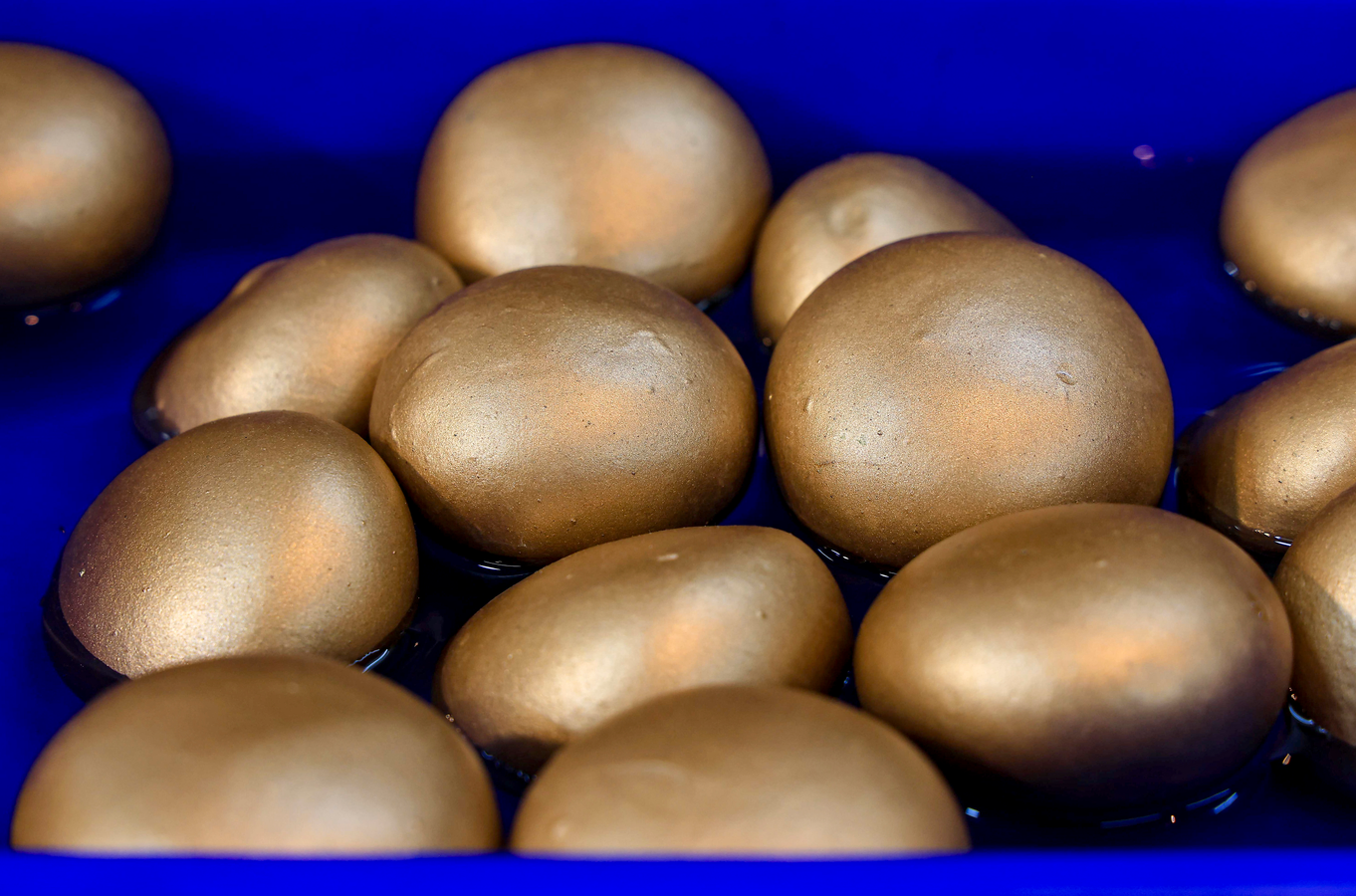
'Gulal gota' are made of lac. Each shell weighs around 10 grams and is filled with 30 to 40 grams of gulal. A box containing six pieces is available in the market for around Rs 300.
Unlike loose 'gulal' that is smeared directly on the face or thrown by hand, 'gulal gota' are tossed at a person. Upon impact, the fragile lac shell breaks and releases a burst of color, creating a softer and more festive effect.
Lac is a natural resinous substance secreted by the female lac insect (Kerria lacca), which lives as a parasite on specific host trees like Palash, Ber, and Kusum.
Around 15 families engaged in making 'gulal gota' (colour shells) in Maniharon Ka Rasta in the Pink City are now gaining nationwide recognition through online platforms.
Artisans said that earlier, the product's sales were largely limited to the Holi festival, but now it is being used in wedding ceremonies and even in temple events.
They said that people from various states are placing bulk orders after watching reels of Holi celebrations played with it.
"Several young entrepreneurs are also selling them on e-commerce platforms with improved packaging," said artisan Mohammad Amjad.
He said sharing videos and photographs on social media has not only increased employment but also given fresh recognition to the traditional craft.
"Orders are being received from Bengaluru, Hyderabad, Surat, Mumbai and Delhi," he said.
Amjad said that the demand is no longer confined to Rajasthan. 'Gulal gota' are now being ordered from places ranging from Mathura-Vrindavan to countries such as Australia, the United States, London, Singapore and England.
He said foreign tourists visiting Jaipur often carry it back with them and later place repeat orders through their local guides after returning to their countries.
Another artisan, Anjum, said that production begins nearly two months before Holi.
"Earlier, a family would prepare at least 500 boxes for the festival, of which only 200 to 300 were sold. However, following social media promotion, demand has risen sharply, and families are now preparing between 5,000 and 10,000 boxes," he said.
He said there is now a shortage of artisans as existing workers are struggling to meet the growing orders.
Artisan Rehana Khan said work continues around the clock to meet the rising demand.
"Earlier, we continued this craft only to keep the tradition alive. But since 'gulal gota' surfaced on social media and incomes increased, the younger generation has started taking interest," she said.
She said that the younger generation earlier avoided the craft due to high labour and low income, but is now learning the skill.
Historically, 'gulal gota' were associated with royal Holi celebrations in the former state of Jaipur.
Members of the royal family are said to have played Holi using these lac shells in palace courtyards, where attendants would prepare the 'gota' in advance.
The use of colour shells was considered refined and in keeping with courtly decorum, as it avoided the rough smearing and excessive splashing often seen in common festival gatherings.
In contrast, the more common form of Holi celebration involves applying loose gulal by hand or using coloured water through 'pichkaris'.
While loose colour is widely available, 'gulal gota' require skilled craftsmanship and preparation, making it relatively premium and distinctive.