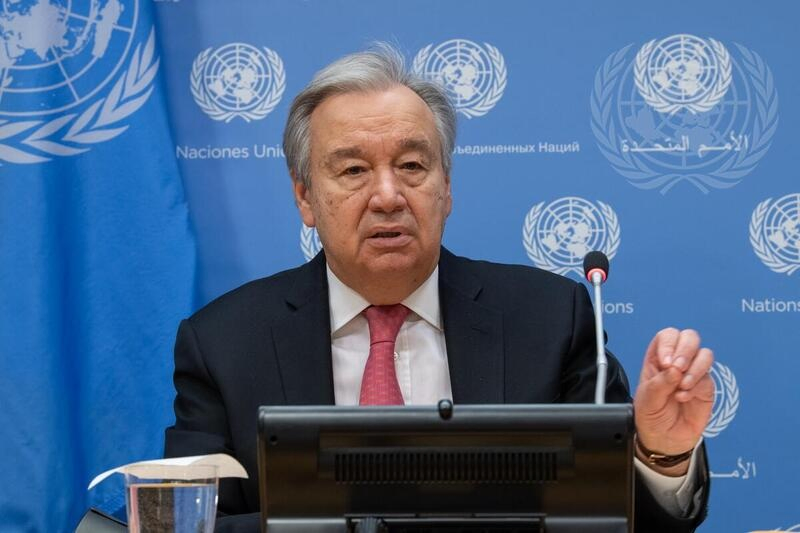
United Nations, April 7 UN Secretary-General Antonio Guterres is "concerned" by the social media post from US President Donald Trump that threatened American attacks on power plants, bridges, and other infrastructure if Iran does not agree to open the Strait of Hormuz, his spokesperson has said.
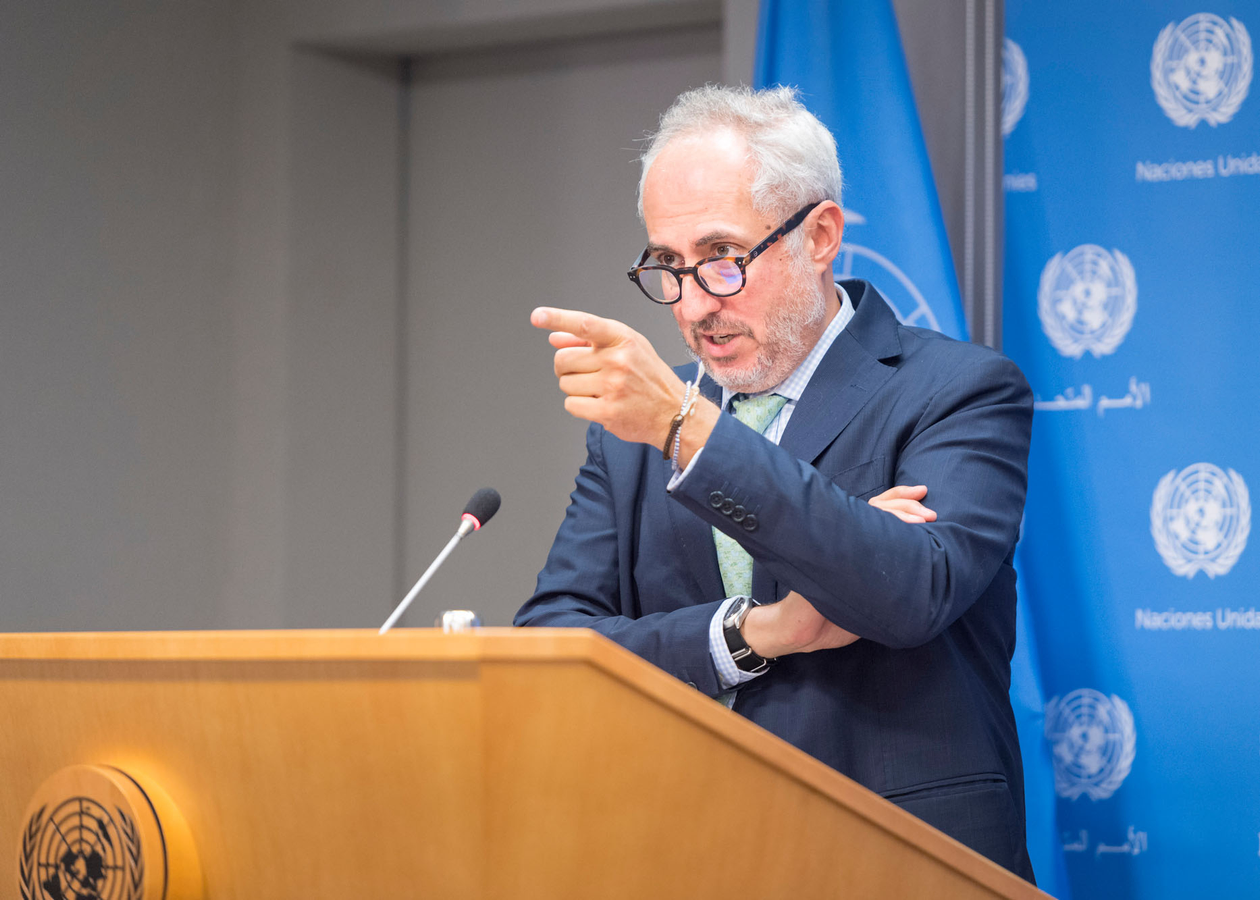
"Yes. We were alarmed by the rhetoric seen in that social media post that threatened American attacks on power plants, bridges, and other infrastructure, should Iran not agree to a deal," Stephane Dujarric, Spokesman for the Secretary-General, said at the daily press briefing here Monday.
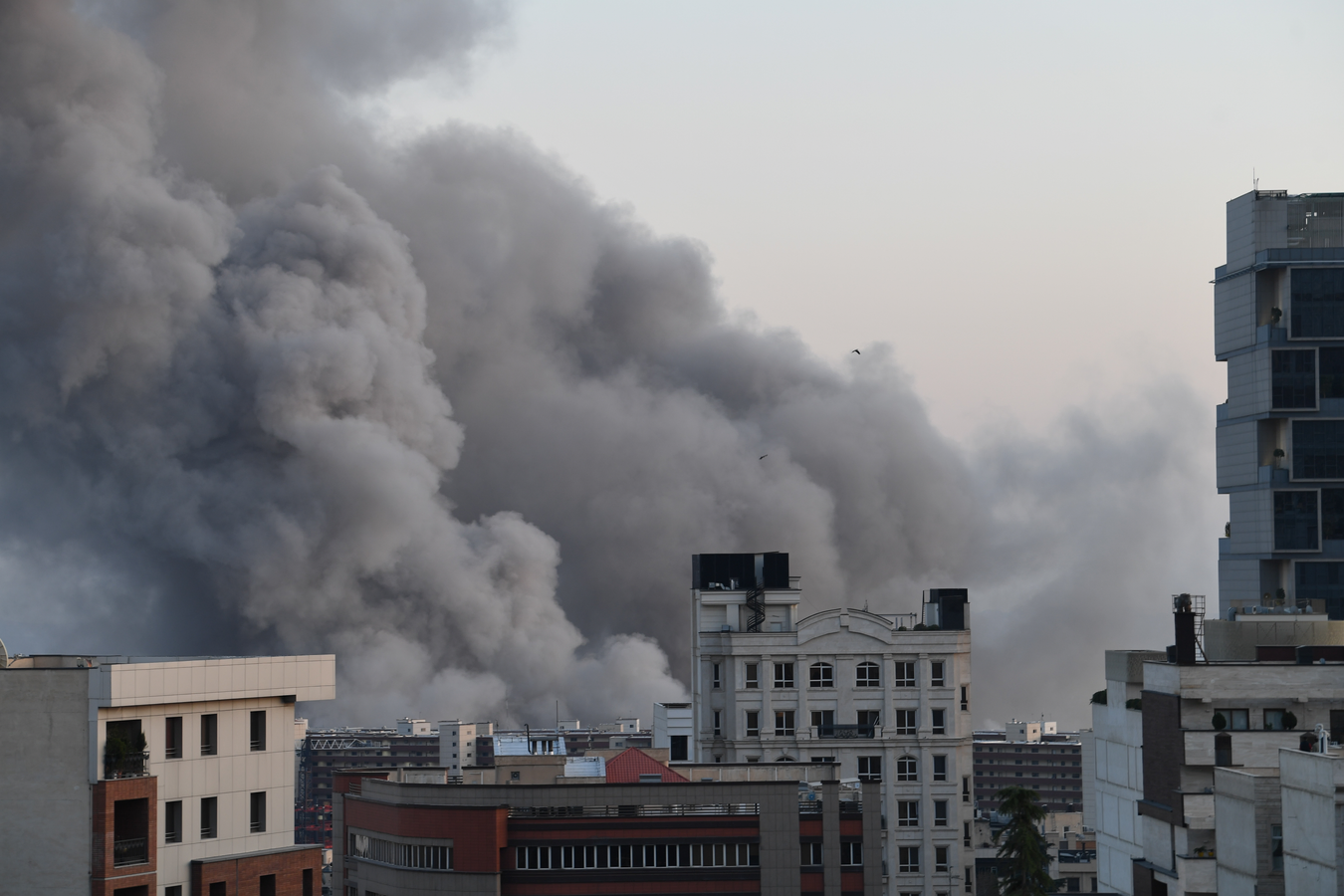
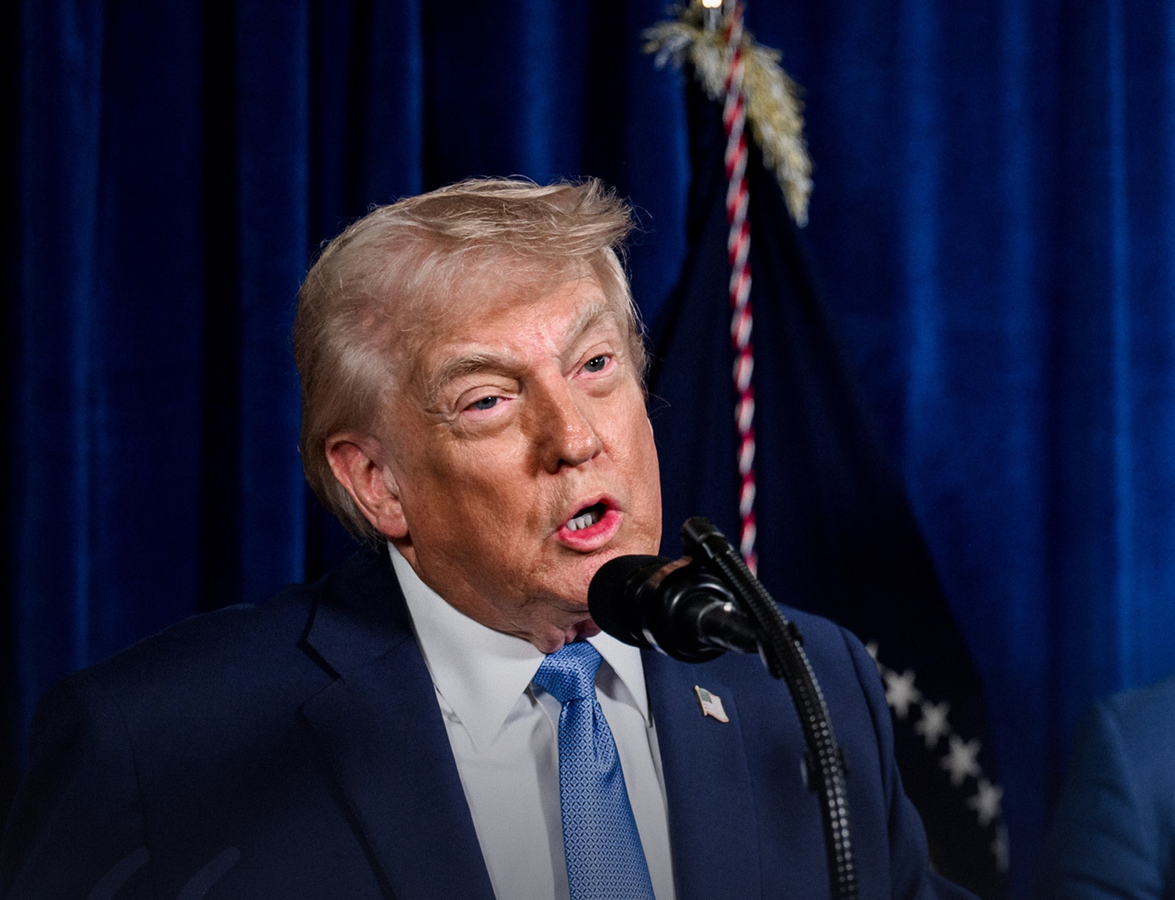
Dujarric was responding to a question on the Secretary-General's reaction to the threat issued by Trump in a post on Truth Social on Sunday to blow up power plants, bridges, and other infrastructure if the Strait of Hormuz was not opened up by Iran by Tuesday.
In a profanity-laden post, Trump had said “Tuesday will be Power Plant Day, and Bridge Day, all wrapped up in one, in Iran. There will be nothing like it”, threatening that “you’ll be living in Hell.”
Dujarric said the Secretary-General has been very clear on issues regarding international law, and he urges all parties to abide by their obligations regarding the conduct of these hostilities.
Guterres recalls that civilian infrastructure, including energy infrastructure, may not be attacked; “even if specific civilian infrastructure were to qualify as a military objective, international humanitarian law would still prohibit attacks against them if they may be expected to cause excessive incidental civilian harm.
“Once again, the Secretary-General reaffirms that it's high time for the parties to stop this conflict, as there is no viable alternative to the peaceful settlement of international disputes,” Dujarric said.
When asked if the Secretary-General thought such attacks could constitute war crimes, Dujarric said they would constitute violations of international law, and “whether something is a crime or not a crime would have to be decided by a court, but any attack on civilian infrastructure is a violation of international law and a very clear one."
Last week, in a clear message to the US, Israel and Iran, Guterres called for dialogue to end the West Asia conflict that has now entered its second month.
"My message is clear. To the United States and Israel, it is high time to stop the war that is inflicting immense human suffering and already triggering devastating economic consequences. To Iran, to stop attacking their neighbours," Guterres had said.
As the West Asia conflict entered its second month, causing economic and humanitarian hardships in the region and beyond, Guterres had stressed dialogue and diplomacy to find a peaceful resolution to the conflict.
"Conflicts do not end on their own. They end when leaders choose dialogue over destruction. That choice still exists. And it must be made -- now," he said.
"We are on the edge of a wider war that would engulf the whole Middle East with dramatic impacts around the globe," the UN chief had said.
The Strait of Hormuz is a 55-kilometre-wide narrows between Iran and Oman, separating the Persian Gulf from the Arabian Sea.
It is a particularly important piece of global real estate in terms of the energy sector and one of the busiest and most strategically significant shipping routes in the world.