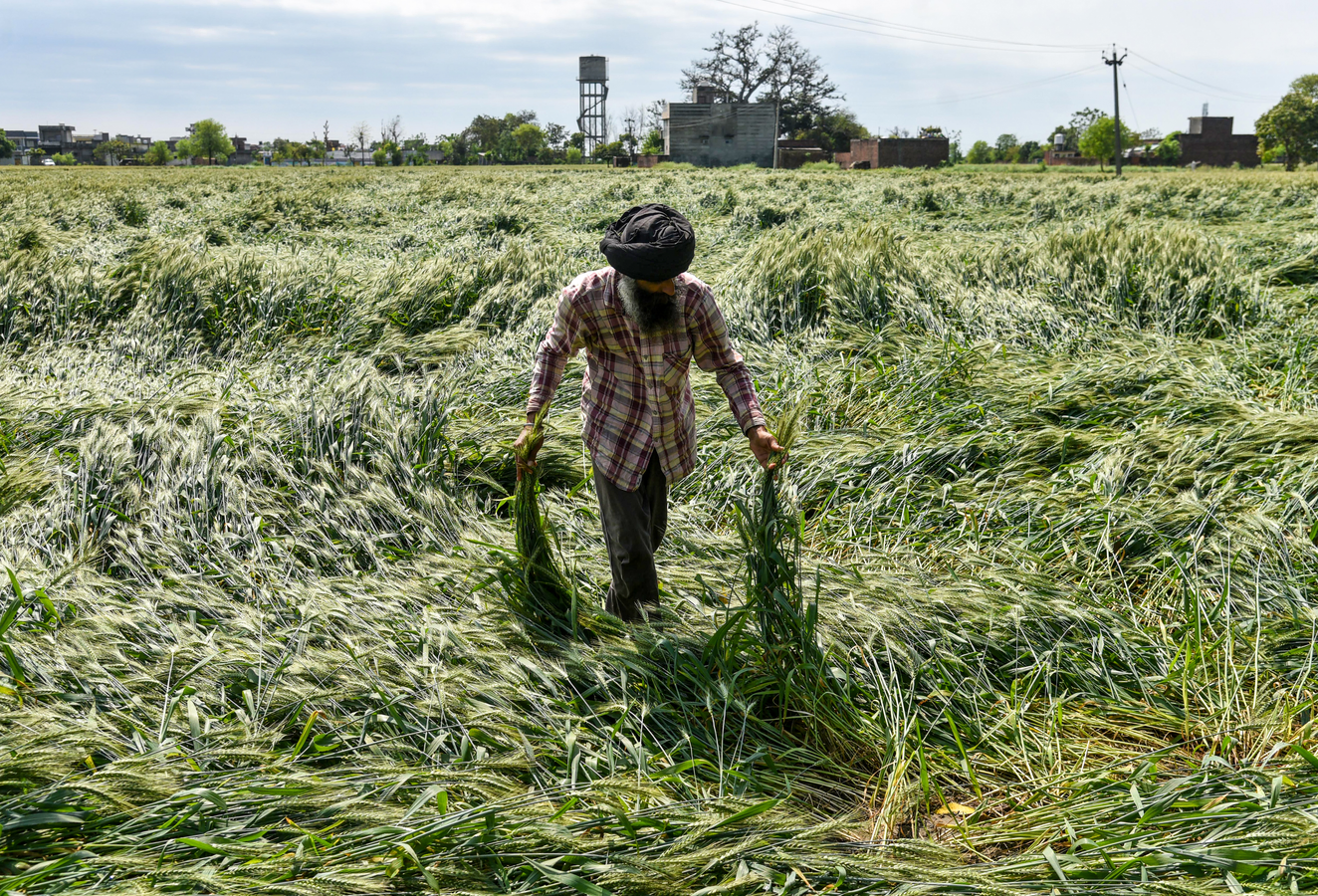
Dhule (Maharashtra), April 1 – Unseasonal rains and hailstorms have caused widespread damage to agricultural land in the Dhule district of Maharashtra, severely impacting the farming community.
According to official estimates, crops spread across 8,145.60 hectares in the district have suffered extensive damage due to the sudden weather disturbance.
The talukas of Dhule and Sakri have been the worst affected, leaving thousands of farmers grappling with heavy financial losses. The situation has triggered distress across rural areas, with standing crops destroyed at a critical stage of cultivation.
Officials said the impact has been particularly severe in Sakri taluka, where more than 9,000 farmers have been directly affected by the hailstorms and unseasonal rains.
In Dhule taluka, onion growers have also incurred losses amounting to lakhs of rupees, further compounding the agrarian crisis.
Preliminary assessments conducted by the Agriculture Department indicate large-scale damage in both unirrigated and irrigated farming zones across the district.
In unirrigated areas, crops such as maize, cultivated over 1,422 hectares and summer millet spread across 186 hectares have been completely destroyed.
In irrigated areas, onion crops have borne the maximum impact, with damage reported across 4,741 hectares. Additionally, vegetable crops cultivated over 321 hectares have also suffered heavy losses due to the hailstorms.
Fruit orchards have not been spared either. Strong winds accompanied by hail have caused significant damage to papaya and pomegranate plantations, while mango orchards have been adversely affected as blossoms were knocked off trees, raising concerns over future yields.
The current devastation follows an earlier spell of unseasonal rain on March 19 that had already damaged crops in parts of the district. However, officials noted that the situation worsened significantly after the hailstorm on March 30, which intensified the scale of destruction manifold.
Compared to the earlier weather event, the latest spell has caused far more severe damage, particularly to irrigated crops such as onions and to fruit orchards including papaya, banana and mango. Authorities also observed a sharp increase in the number of affected villages and farmers in comparison to the previous incident.
In the wake of the widespread losses, farmers have appealed to the government to conduct a detailed damage assessment at the earliest and provide immediate financial assistance and compensation to those affected.