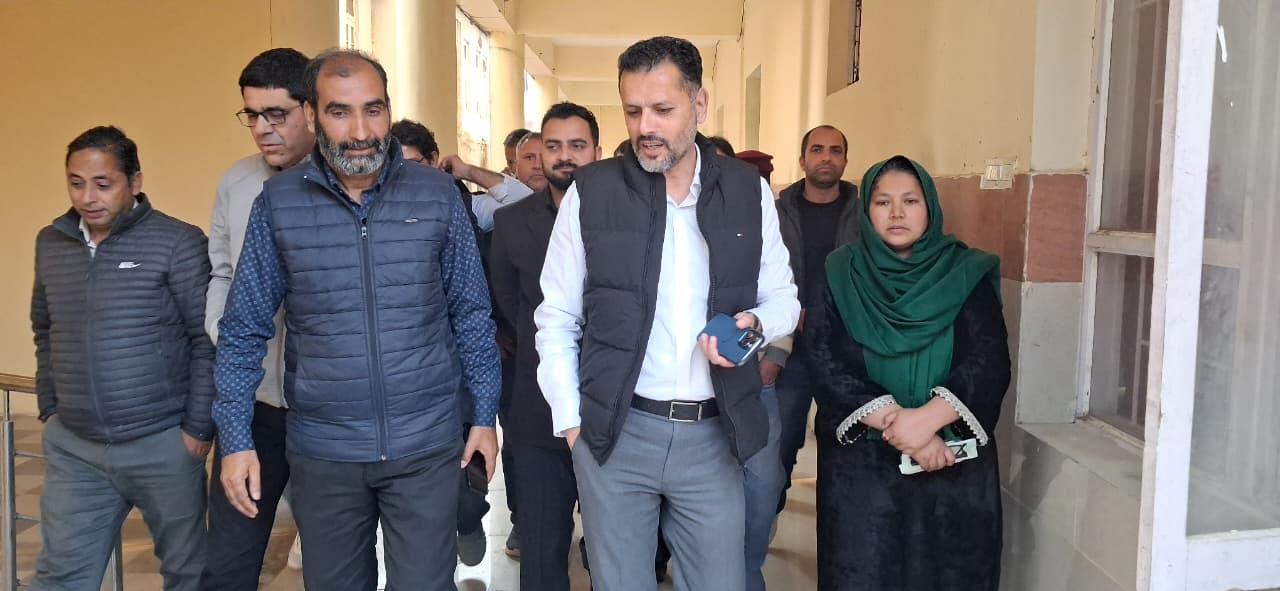
Chandigarh, March 12 Haryana Health Minister Arti Singh Rao said that four zonal skill laboratories have been established in the state to provide health workers with skill-based training and practical experience.
She said that the primary objective of these training programs is to achieve the targets of the United Nations Sustainable Development Goal 3.
The Rohtak Skill Lab covers the districts of Rohtak, Jhajjar, Sonipat, Panipat, and Karnal, while the Bhiwani Skill Lab covers Bhiwani, Charkhi Dadri, Hisar, Jind, Fatehabad, and Sirsa.
Similarly, the Panchkula Skill Lab includes Panchkula, Ambala, Yamunanagar, Kurukshetra, and Kaithal, while the Faridabad Skill Lab covers Faridabad, Mahendragarh (Narnaul), Rewari, Nuh, Palwal, and Gurugram.
According to an official statement, the goals include reducing the maternal mortality ratio to 70 per 100,000 live births, the neonatal mortality rate to 12 per 1,000 live births, and the mortality rate of children under five to 25 per 1,000 live births by 2030.
Rao said that the State Institute of Health and Family Welfare (SIHFW) in Panchkula, functioning under the Haryana Health Department, is playing a significant role in strengthening healthcare services in the state.
The institute regularly organizes training and capacity-building programs for doctors, nurses, and other health workers. Personnel from Primary Health Centres (PHCs), Community Health Centres (CHCs), and District Civil Hospitals participate in these programs.
In addition, training programs are also organized in the districts under the supervision of SIHFW.
During the current year, 1,211 health workers were trained by SIHFW, Panchkula, while 5,220 health workers were trained at the district level, she said.
Rao said that five Continuing Medical Education (CME) programs were organized on various subjects, including pediatric emergency and towards zero maternal deaths.
Furthermore, to promote health awareness and knowledge dissemination, around 18 online training programs were organized this year, which saw participation from 2,441 health workers.
Induction training programs are regularly held to familiarize newly appointed medical officers, dental surgeons, and nursing officers with the functioning of health services, hospital protocols, infection prevention, and patient-centered care, the statement added.
Mid-career training programs are organized for Senior Medical Officers (SMOs), focusing on administrative leadership, clinical governance, medico-legal responsibilities, and hospital management. A similar program is also organized for nursing staff.
To enhance the efficiency of health workers in emergency services, Accident and Emergency Care Services training and Basic Life Support (BLS) courses are also organized regularly, enabling doctors and healthcare workers to manage trauma, cardiac emergencies, and other critical situations.