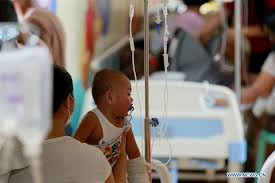
Dhaka, April 7 – As Bangladesh grapples with an outbreak of measles, a total of 118 people, mostly children, have died from suspected cases, local media reported on Tuesday, citing the country’s Directorate General of Health Services (DGHS).
According to the DGHS, the deaths have been recorded since March 15, including five deaths in the 24-hour period ending Monday morning.
The health agency stated that the 2006 suspected measles cases, primarily children, are currently receiving care at hospitals across the country.
Reports suggest that another two children died from symptoms of an infectious disease at Rajshahi Medical College Hospital (RMCH), bringing the total number of such deaths at the facility to 42.
Confirming the recent fatalities, hospital spokesperson Shankar Kumar Biswas confirmed that the deaths occurred over a 24-hour span, from Sunday to Monday morning, as reported by the Bangladeshi daily, Dhaka Tribune.
Experts warned that, in the absence of systemic reform, emergency measures taken to control the measles outbreak are unlikely to yield significant benefits.
Benazir Ahmed, a health expert and former director of disease control at the DGHS, said that the previous Muhammad Yunus-led interim government’s sudden cancellation of the sectoral programme, which provided funding for vaccination, sparked a measles vaccine crisis, resulting in the deaths of many children.
“When we are supposed to celebrate something positive on World Health Day, we have to deal with an outbreak, which is very unfortunate. We are supposed to eliminate measles-rubella by 2026, but we are struggling with the growing number of measles patients in hospitals,” Bangladesh’s leading newspaper, Daily Star, quoted Ahmed as saying.
Additionally, the special immunization campaign planned for late 2024 could not be carried out amid the political transition.
According to health officials, the interim government did not launch any such drive, while workers responsible for administering the shots went on strike three times in 2025, disrupting the regular vaccination programme.
Speaking to Daily Star on condition of anonymity, another official said that the Expanded Programme on Immunisation (EPI) was forced to ration vaccines in some regions since January due to a fund shortage.
Mushtaq Husain, another public health expert, said that although the government has undertaken an emergency vaccination campaign to control the spike in measles cases and deaths, the health sector requires reform to ensure sustainable progress.
Amid the rising fatalities, experts have also urged the government to take urgent action, warning that failure to act could lead to a widespread measles outbreak, as one patient can infect 16 to 18 people.