Washington, March 19 – A tense hearing in the US Senate for Homeland Security Secretary nominee Markwayne Mullin underscored growing concerns over domestic security, law enforcement powers, and rising threats – issues that have direct implications for Indian-American communities in the United States.
During Mullin’s confirmation hearing on Wednesday (local time), Senators repeatedly warned that “the threats to our nation have never been higher,” citing recent attacks, cyber intrusions, and foreign-linked activity.
The discussion gained urgency after references to a recent attack on a synagogue in Michigan and a cyber intrusion linked to an Iranian-backed group. Senators described a rapidly evolving threat environment, with both physical and digital risks.
For Indian-American communities, these concerns are not abstract.
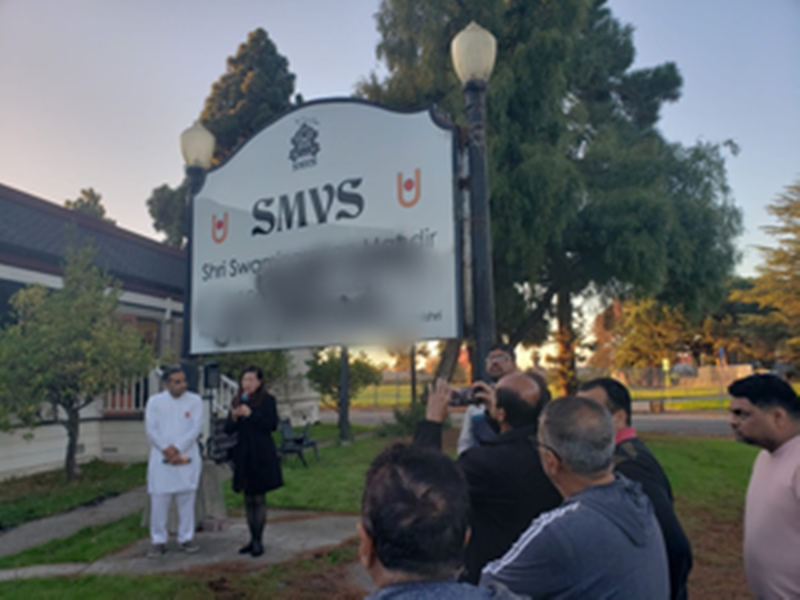
Places of worship, including Hindu temples and Sikh gurdwaras, have increasingly sought enhanced security in recent years. The hearing highlighted the role of federal programs designed to protect such institutions.
“We need to work together,” Mullin said, responding to concerns about attacks on religious sites. He agreed to engage with lawmakers on improving security grants meant for vulnerable communities.
Senators noted that religious institutions across the US are now spending significant resources on private security. This includes diaspora communities, which often rely on federal support for surveillance systems, barriers, and emergency preparedness.
The hearing also flagged broader concerns over cyber threats.
Cuts to cybersecurity personnel and resources at the Department of Homeland Security were sharply criticised. Lawmakers warned that adversaries were “accelerating their cyber attacks against the United States.”
This issue has a clear link to India.
Indian-origin professionals play a major role in the US technology and cybersecurity ecosystem. Any restructuring or staffing changes in federal cyber agencies could indirectly affect collaboration, hiring patterns, and bilateral cyber initiatives between Washington and New Delhi.
Mullin said the department would focus on recruiting “the best and brightest individuals” to address cyber risks. He stressed the need for a capable workforce to counter evolving threats.
The hearing also exposed deep divisions over the balance between security and civil liberties.
Democratic lawmakers raised concerns about the conduct of immigration enforcement agencies, including the use of force and operations in communities. Republicans, meanwhile, argued that stronger enforcement was essential to protect the homeland.
Mullin positioned himself between the two camps.
He said the department’s mission was “to protect the homeland”, but also emphasised restoring trust. “We want to bring peace of mind and confidence back to the agency,” he said.
This balance is particularly relevant for diaspora communities.
Indian-Americans, one of the fastest-growing and most economically influential immigrant groups in the US, are deeply integrated into sectors such as technology, healthcare and academia. At the same time, they remain sensitive to shifts in law enforcement practices and public safety concerns.
The hearing also highlighted operational challenges within DHS.
Mullin pointed to workforce strain, noting that tens of thousands of employees were working without pay during the current funding impasse. “They’re still showing up every single day to do their job,” he said.
Lawmakers warned that such conditions could weaken readiness at a time of heightened risk.
The debate also touched on emergency response and disaster management, areas where coordination between federal and local authorities is critical. Mullin said reforms were needed to speed up federal assistance and improve efficiency.
“Taking years to get reimbursed is not acceptable,” he said.