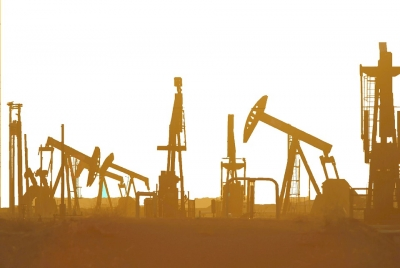
New Delhi, April 2 – The government has set a target of increasing domestic crude oil production to 35 million metric tonnes by 2030, from the current 29 million tonnes, to meet the rising demand for petroleum products in the country, Parliament was informed on Thursday.
The government has been taking various steps to boost domestic oil and gas production and reduce dependence on crude oil imports, which include the adoption of a policy under the Production Sharing Contract (PSC) regime for early monetization of hydrocarbon discoveries, the Small Field Policy, the Hydrocarbon Exploration and Licensing Policy (HELP), and the Policy for Extension of PSCs, Minister of Petroleum and Natural Gas Hardeep Singh Puri said in a written reply in the Lok Sabha.
The government has also released about 1 million sq km of "no-go" areas in offshore hydrocarbon basins, which had been blocked for exploration for decades. In addition, the government is also spending about Rs 7,500 crore on acquiring seismic data in onshore and offshore areas and drilling stratigraphic wells to make quality data of Indian sedimentary basins available to bidders, the minister said.
Furthermore, the government has approved the acquisition of an additional 2D seismic data of 20,000 LKM in the onshore area and 30,000 LKM in the offshore area beyond the country’s Exclusive Economic Zone (EEZ).
The government has also been promoting various alternative fuels in the petroleum sector, including Compressed Natural Gas (CNG), Piped Natural Gas (PNG), Compressed Bio Gas (CBG), and Ethanol blended Petrol. Under the Ethanol Blended Petrol (EBP) Programme, Oil Marketing Companies (OMCs) sell petrol blended with ethanol, and under the ‘Sustainable Alternative Towards Affordable Transportation’ (SATAT) initiative.
According to data published by the Petroleum Planning and Analysis Cell (PPAC), India’s import dependence on crude oil has remained broadly at approximately 88 per cent during the last three financial years, with marginal variations year to year.
The high dependence on crude oil imports is primarily driven by rapid growth in energy demand that is outstripping domestic production. India's energy consumption has increased steadily due to sustained economic growth, urbanization, and rising requirements across key sectors such as transport, petrochemicals, and other industries, the minister said.
According to the World Energy Outlook published by the International Energy Agency (IEA), India is set to be the largest contributor to incremental global energy demand growth in the coming decades, accounting for approximately 20-30 per cent of the increase in global energy demand by 2050, under various scenarios. Furthermore, the country's oil demand is projected to rise from the current level of around 5.5 million barrels per day (mb/d) to up to 8.5-10.5 mb/d over the same period, the minister added.