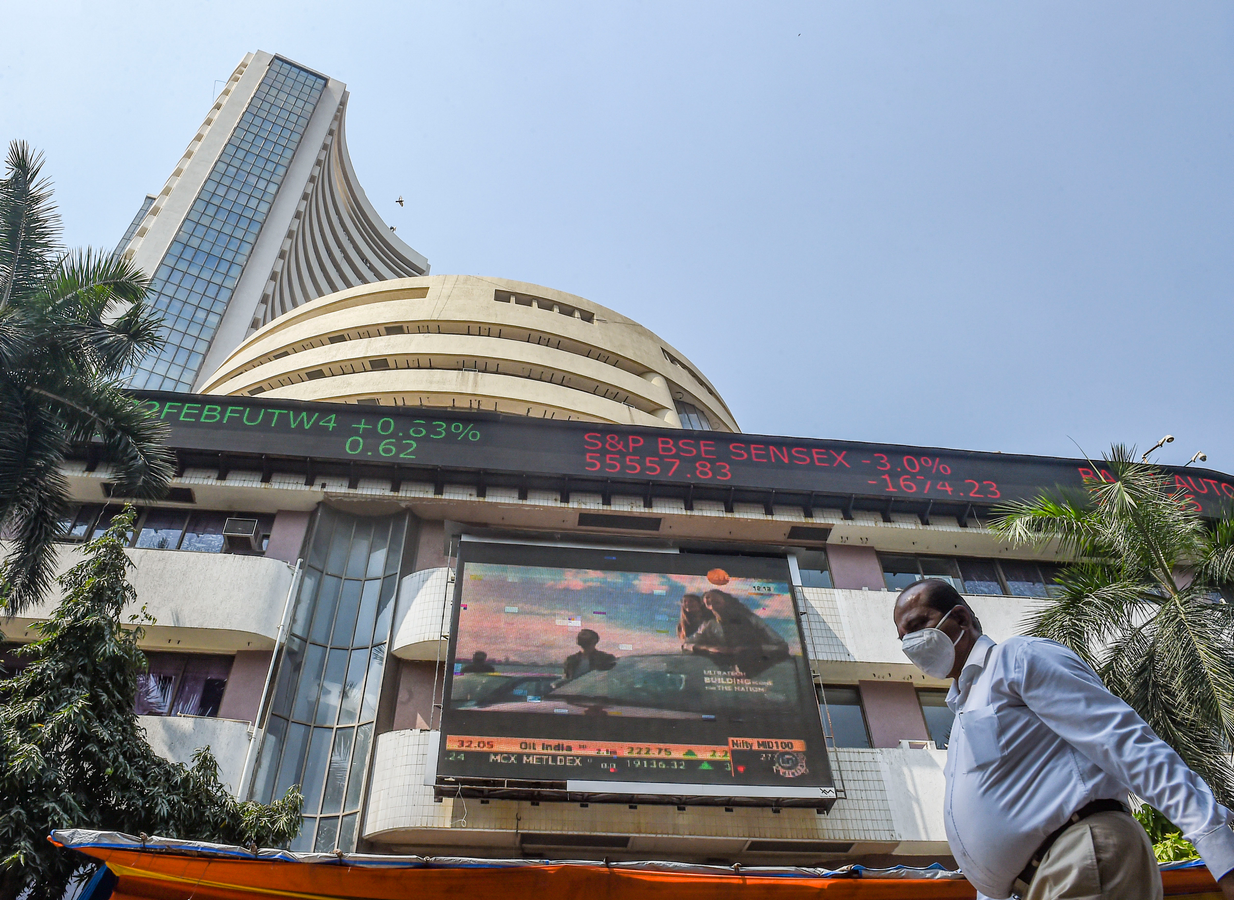
New Delhi, March 3 Fitch Group company BMI said on Tuesday that the ongoing conflict in the Middle East could discourage investment in India, and offset the positive effects of trade deals with the EU and the US on GDP.
A 10 per cent rise in crude prices could reduce India's GDP by -0.3 to -0.6 percentage points, BMI said, adding that net oil importers, especially in South Asia, would bear the brunt of the fallout from the US-Israel-Iran crisis.
In its India outlook report, BMI retained a 7 per cent GDP growth projection for FY27, in light of the evolving geopolitical situation, lower than the 7.9 per cent growth estimated in the current fiscal.
"From March onwards, we expect uncertainty to increase sharply due to the ongoing conflict in the Middle East. We believe this will discourage investment in India, offsetting the (EU and US) trade deals' positive effects on GDP," BMI said.
The US and Israel jointly launched military strikes on Iran on February 28. Iran responded by firing drones and missiles at Israeli and US military installations around the Gulf, as well as at Dubai, a global business hub.
Iran also targeted energy facilities in Qatar and Saudi Arabia, and on Tuesday announced the closure of the Strait of Hormuz, which could send global oil and natural gas prices soaring. The Strait is a narrow 33-kilometre passage connecting the Persian Gulf to the Arabian Sea.
Roughly a fifth of global seaborne crude transits through the Strait daily, and any sustained disruption would reverberate through the economies most exposed to imported energy, BMI said.
For India, high crude import dependence and fuel pass-through could squeeze households and firms; and a wider trade deficit and higher inflation would typically curb consumption and investment, making GDP hit relatively large, BMI said.
India imports 88 per cent of its crude oil needs, and any rise in prices will swell its import bill as well as fuel inflation.
BMI said that retail fuel pricing decisions – the speed and scale of pass-through – will determine whether the shock manifests as inflation or fiscal deterioration in India.
On the positive side, BMI said that the new India-US trade deal and the US Supreme Court's striking down of the Trump administration's reciprocal tariffs could boost India's economy.
India and the US, early last month, agreed on a framework to finalise an interim trade deal, under which Washington will cut down tariffs to 18 per cent. To sign and implement the first phase of the bilateral trade agreement, the framework has to be converted into a legal document.
However, in February, the US Supreme Court ruled that the tariffs imposed by Trump on nations around the world were illegal and that the president had exceeded his authority when he imposed the sweeping levies using the International Emergency Economic Powers Act (IEEPA) of 1977.
Following the court ruling, the US imposed 10 per cent tariffs on all countries for 150 days, effective from February 24. Trump has announced to increase it to 15 per cent, but there is no official order on that yet.
In January, India and the EU had agreed on a free trade agreement (FTA), which will be implemented within a year after legal ratification.