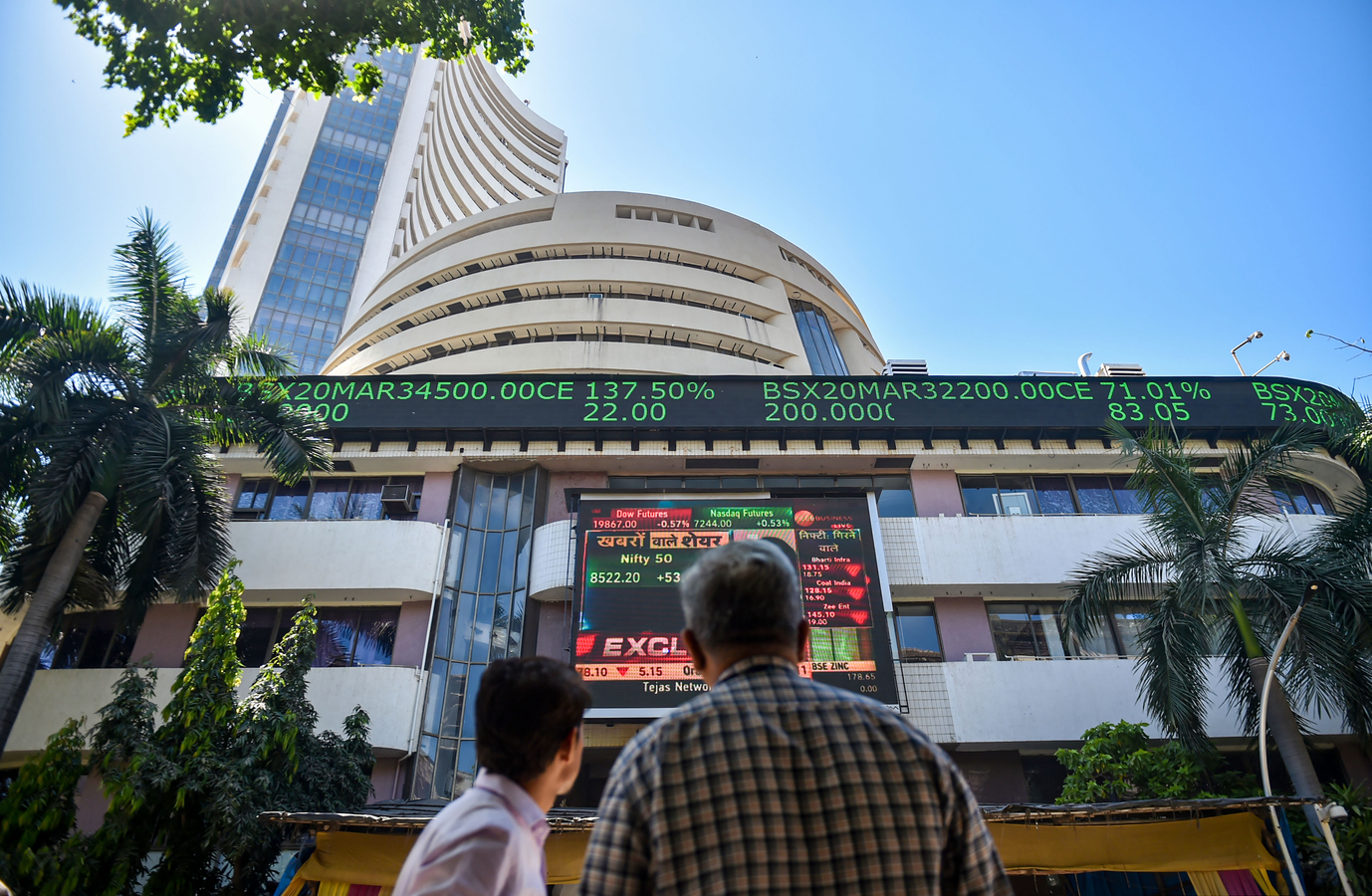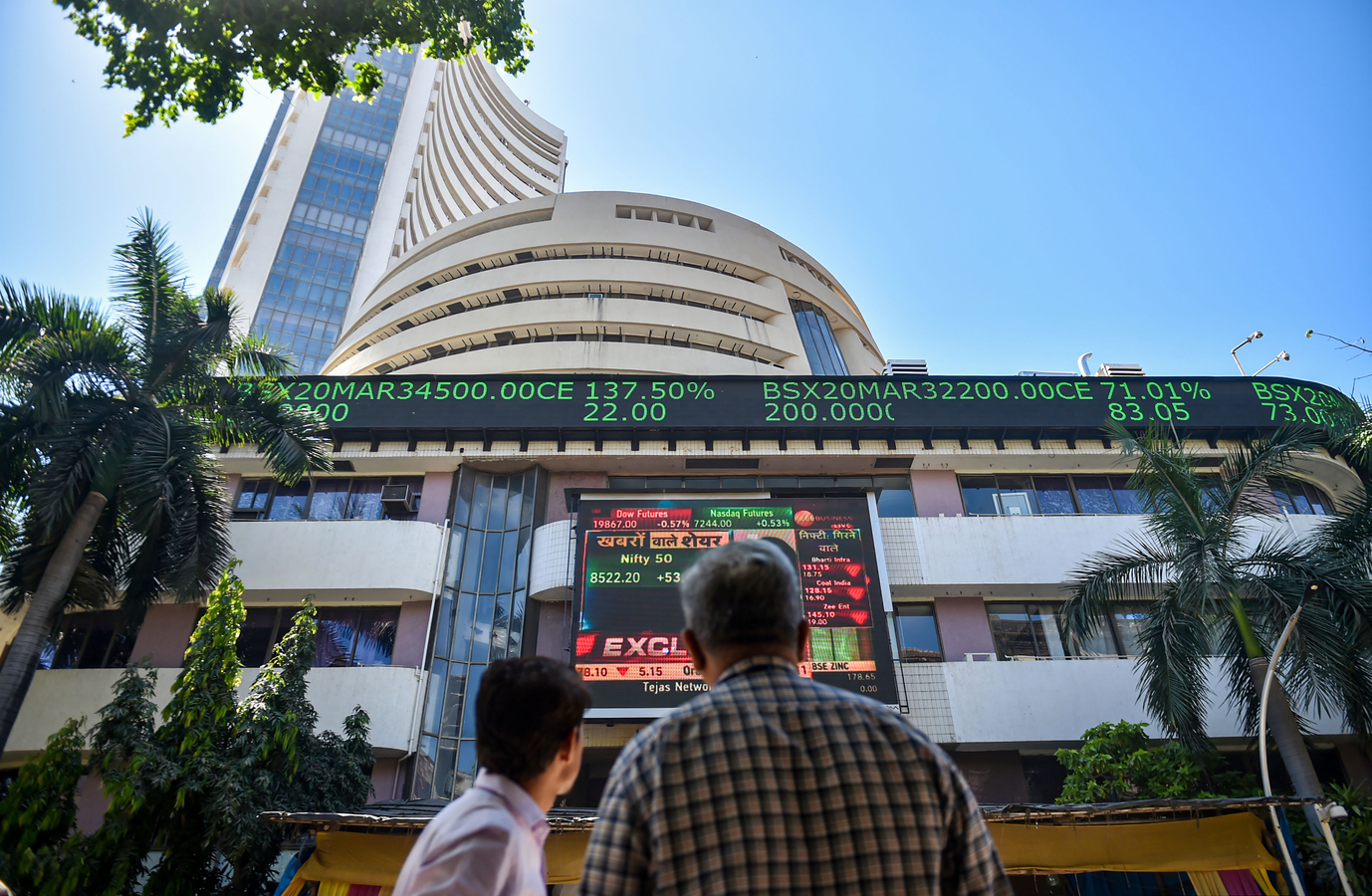
Mumbai, March 23 – The benchmark indices Sensex and Nifty plunged on Monday, in line with a very weak trend in global markets as the war in the Middle East showed no signs of slowing down.
Rising crude oil prices due to the war, coupled with relentless foreign fund outflows and weakness in the rupee, have also made investors risk-averse.
The 30-share BSE Sensex fell by 1,836.57 points, or 2.46 percent, to close at 72,696.39. During the day, it plunged by 1,974.52 points, or 2.64 percent, to 72,558.44.
The 50-share NSE Nifty fell by 601.85 points, or 2.60 percent, to end at 22,512.65.
Among the 30 Sensex companies, Titan fell the most by 6.24 percent. Trent, UltraTech Cement, Bharat Electronics, InterGlobe Aviation, Tata Steel, and HDFC Bank were also among the major laggards.
HCL Tech, Power Grid, Infosys, and Tech Mahindra were the gainers.
Brent crude, the global oil benchmark, rose by 0.97 percent to USD 113.3 per barrel.
"Markets witnessed a sharp sell-off on Monday, continuing the prevailing downtrend amid weak global cues and escalating geopolitical tensions. Investor sentiment remained extremely fragile amid escalating geopolitical tensions in West Asia, which have once again pushed crude oil prices sharply higher," said Ajit Mishra, SVP, Research, Religare Broking Ltd.
Rising oil prices, along with continued foreign institutional investor outflows and weakness in the rupee, significantly dented risk appetite, Mishra said.
In Asian markets, South Korea's benchmark Kospi, Japan's Nikkei 225 index, Shanghai's SSE Composite index and Hong Kong's Hang Seng index ended sharply lower. The Kospi fell the most by 6.49 percent.
Markets in Europe were trading with deep cuts. The US market ended significantly lower on Friday.
"Domestic markets witnessed a sharp decline, mirroring weakness across Asian markets amid escalating tensions in the Middle East and concerns over potential disruptions to global energy supplies. Investor sentiment turned cautious following Trump’s 48-hour ultimatum to Iran on the Strait of Hormuz," said Vinod Nair, Head of Research, Geojit Investments Ltd.
Rising global bond yields signaled heightened inflation and fiscal concerns, while the rupee falling to a record low further pressured markets and triggered FII outflows, he added.
The BSE MidCap Select index fell by 3.82 percent, and the SmallCap Select index plunged by 3.66 percent.
All sectoral indices ended lower. Consumer durables tumbled 4.91 percent, metal (4.76 percent), realty (4.75 percent), services (4.70 percent), BSE PSU Bank (4.39 percent), MidSmall Private Banks Quality Tilt (4.37 percent), commodities (4.35 percent), industrials (4.05 percent) and capital goods (3.99 percent).
A total of 3,798 stocks declined while 635 advanced and 123 remained unchanged on the BSE.
Since the conflict began on February 28, the BSE benchmark has tumbled 8,590.8 points or 10.56 percent, and the Nifty lost 2,666 points or 10.58 percent.
Foreign Institutional Investors (FIIs) offloaded equities worth Rs 5,518.39 crore on Friday, according to exchange data. Domestic Institutional Investors (DIIs), however, bought stocks worth Rs 5,706.23 crore. Foreign investors have pulled out Rs 88,180 crore (about USD 9.6 billion) from Indian equities so far this month.
On Friday, the Sensex climbed 325.72 points, or 0.44 percent, to settle at 74,532.96. The Nifty edged higher by 112.35 points, or 0.49 percent, to end at 23,114.50.