New Delhi, February 22 – Prime Minister Narendra Modi celebrated India's remarkable progress in agriculture and the resurgence of ancient cultural traditions on Sunday, highlighting the nation's growing global presence and deep-rooted heritage.
Addressing the 131st episode of his monthly radio address, "Mann ki Baat," the Prime Minister highlighted a nationwide campaign to preserve heritage seeds, crediting the dedication of farmers for the transformative results.
Citing an example from Kerala's Thrissur district, PM Modi said, "Farmers in the field cultivate 570 varieties of rice. These include local, traditional, and varieties brought from other states. This is not just farming; it's a massive effort to preserve the heritage of seeds. The impact of our farmers' hard work is evident in the statistics."
He proudly noted that India has emerged as the world's largest rice producer, with output exceeding 15 crore tonnes (150 million tonnes).
This milestone not only meets domestic needs but also strengthens India's role in the global food supply. PM Modi said that we are fulfilling our needs and also contributing to the world's food basket.
PM Modi highlighted how Indian agricultural produce is now reaching international markets more efficiently, including through air shipments.
He cited the export of GI-tagged products from Karnataka, such as Ranjan jaggery (likely referring to regional specialties), Nanjangud bananas, Mysore betel leaves, and Indi limes, to the Maldives. These items, renowned for their unique taste and quality, have earned Geographical Indication (GI) tags, affirming their origin-specific excellence. Today's farmers are focused on quality, increasing quantity, and establishing their own identity.
Transitioning to cultural themes, the Prime Minister evoked memories of last year's "Mahakumbh" at Prayagraj, describing it as a profound awakening of India's Sanatani consciousness amid the sacred confluence.
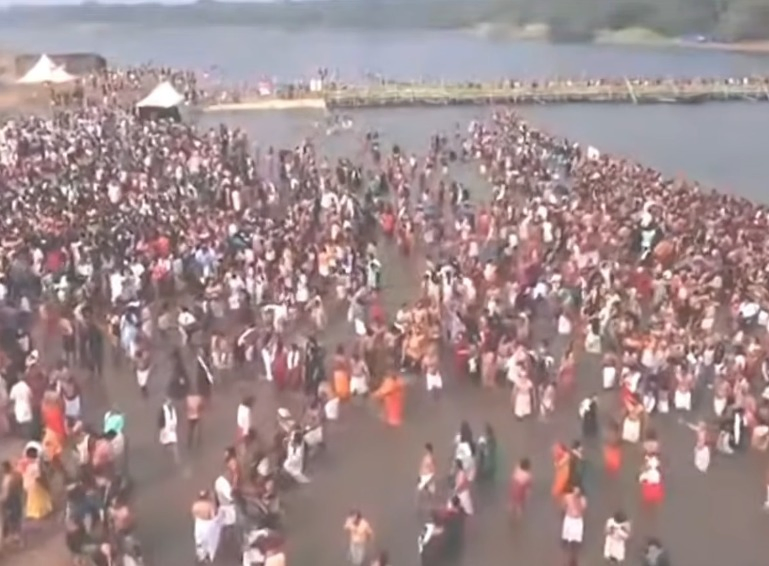
He drew parallels to a similar tradition in Kerala, known as Kerala Kumbh or Mamangam (associated with the month of Maang/Marg and the Bharatappuzha River, also called Maa Mang or Maa Marg).
Held at Tirunavaya, this centuries-old festival involves holy dips and devotion but had faded over time.
PM Modi expressed joy that the "Kerala Kumbh" was revived and successfully organised recently. Word-of-mouth spread drew devotees to the site, turning it into a vibrant celebration.
He emphasised that whether "Mahakumbh" in the north or its southern counterpart, these events transcend mere rituals; they represent an awakening of cultural memory and unity. Despite differing rivers and regions, the flow of devotion remains constant, embodying the essence of India.