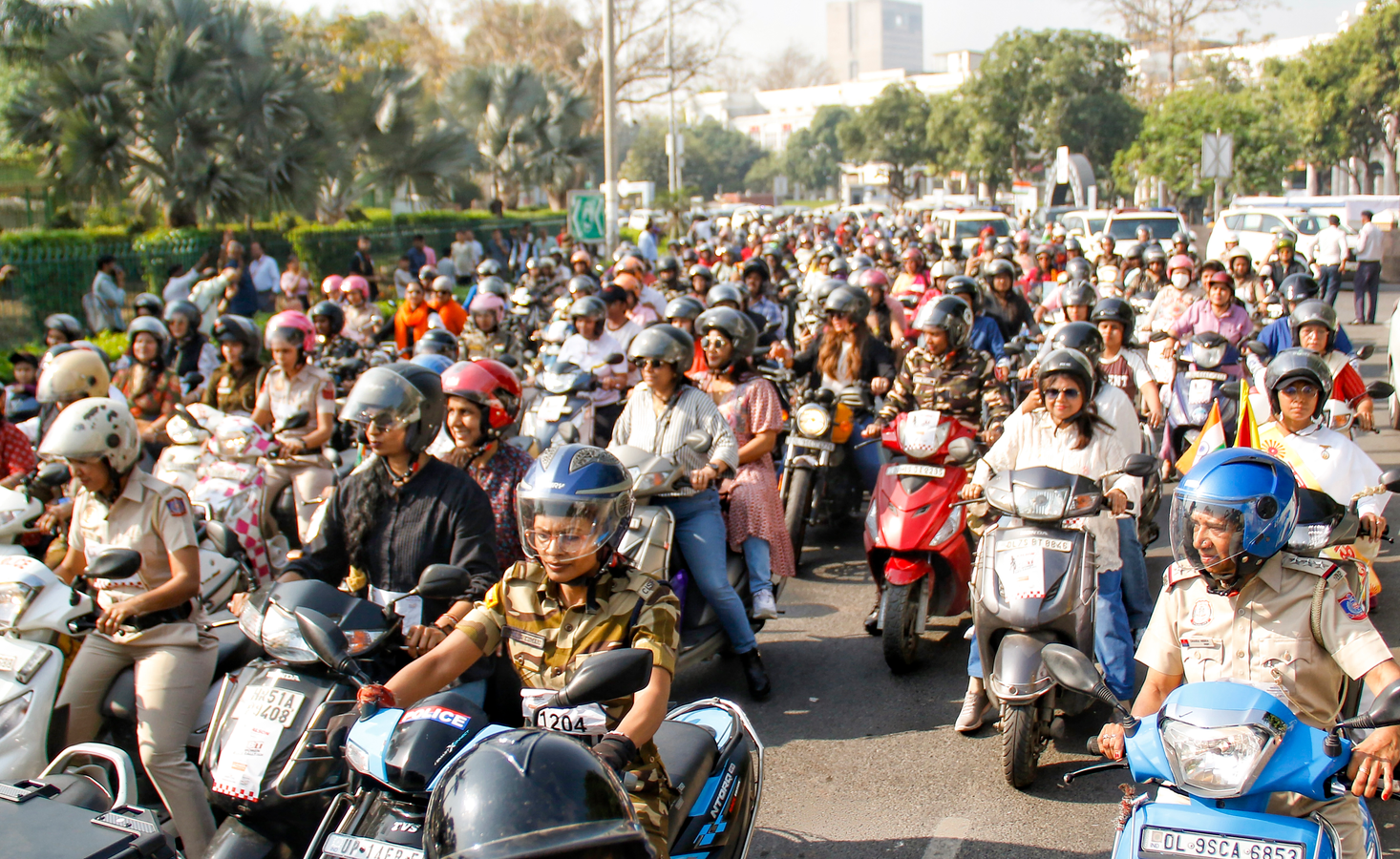
New Delhi, March 8 – International Women's Day (IWD) is being observed worldwide on Sunday to honor the social, economic, cultural, and political achievements of women.
With the 2026 IWD theme calling for a "Give to Gain" global campaign to promote teamwork and cohesion for building a just and supportive society for women and girls, this reflects and resonates in India's own story of women empowerment, as over the years, Nari Shakti has become the cornerstone of "Viksit Bharat" (Developed India).
In the past few years, particularly in the past decade, the government's approach has evolved from development for women to women-led development, thus identifying their potential and making them key drivers of economic and social progress. Schemes like the Lakhpati Didi programme, NaMo Drone Didi Yojana, and Pradhan Mantri Matru Vandana Yojana, among others, define the government's priorities and focus on making women a key component of India's growth story.
Flagship schemes like the Ujjwala Yojana, Jal Jeevan Mission, and Swachh Bharat Mission have formed the foundational programs but have become the biggest change-makers.
Under the Pradhan Mantri Ujjwala Yojana, more than 10.56 crore LPG connections have been provided to women, reducing their exposure to air pollution and improving their health and dignity.
The Jal Jeevan Mission, launched in August 2019, has expanded rural tap water coverage from 16.72 per cent to over 81.57 per cent of households, reducing the time and effort women often spend fetching water.
The Swachh Bharat Mission has enabled the construction of over 12 crore toilets, improving sanitation, enhancing privacy and dignity for women, and contributing to better public health outcomes.
Under the Deendayal Antyodaya Yojana – National Rural Livelihood Mission (DAY-NRLM), millions of women have moved from unpaid labor to organized enterprise. Today, according to estimates, more than 10 crore rural households are engaged in over 90 lakh Self-Help Groups (SHGs).
The Lakhpati Didi programme has enabled women to establish sustainable livelihoods by launching their own enterprises.
Under the Drone Didi Yojana, Self-Help Groups are operating agricultural drones, not only enhancing their incomes but also integrating rural women into emerging technology ecosystems. Under this scheme, they receive an 80 per cent subsidy for procurement, with a Rs 1,261 crore allocation targeting 15,000 SHGs.
Under the Pradhan Mantri MUDRA Yojana, launched in 2015, more than 52 crore loans worth Rs 32.61 lakh crore have been sanctioned, with 68 per cent of the beneficiaries being women.
Women constitute about 56 per cent of Jan Dhan account holders, while Stand-Up India has supported over 2.01 lakh women entrepreneurs in establishing greenfield enterprises. Other initiatives like Womaniya on the Government e-Marketplace (GeM) are helping women entrepreneurs and Self-Help Groups connect directly with government buyers.
About 45 per cent of Pradhan Mantri Kaushal Vikas Yojana beneficiaries are women, while under the Start-Up India initiative, 75,000 women-led startups are being supported.
To make women equal partners in public and professional spaces, regulations like Mission Shakti and the POSH Act have proven effective in addressing long-standing discrimination and biased practices.
Under Mission Shakti, institutional mechanisms like One Stop Centres, the Women Helpline, and platforms like SHe-Box provide medical, legal, and counseling support to women in distress.
The Sexual Harassment of Women at Workplace (Prevention, Prohibition and Redressal) Act, 2013 (POSH Act) ensures safe working environments across public and private sectors. This has not only strengthened accountability at the workplace but also reinforced women's right to work with dignity.
Today, the focus on women's upliftment and their participation in the country's growth index remains at the core of policy-making.
Millions of women are part of self-help groups, many are leading multinational companies, and many marginalized women are being introduced into financial systems to explore entrepreneurial opportunities.
This year's budget is also one of the highest "gender budgets" as about 9 per cent of the Union Budget has been directed toward programs advancing gender equality, according to a government report.
Across sectors, Rs 5.01 lakh crore has been earmarked by 53 Ministries/Departments and 5 Union Territories, reflecting a shift from symbolic inclusion to sustained investment in women's development.