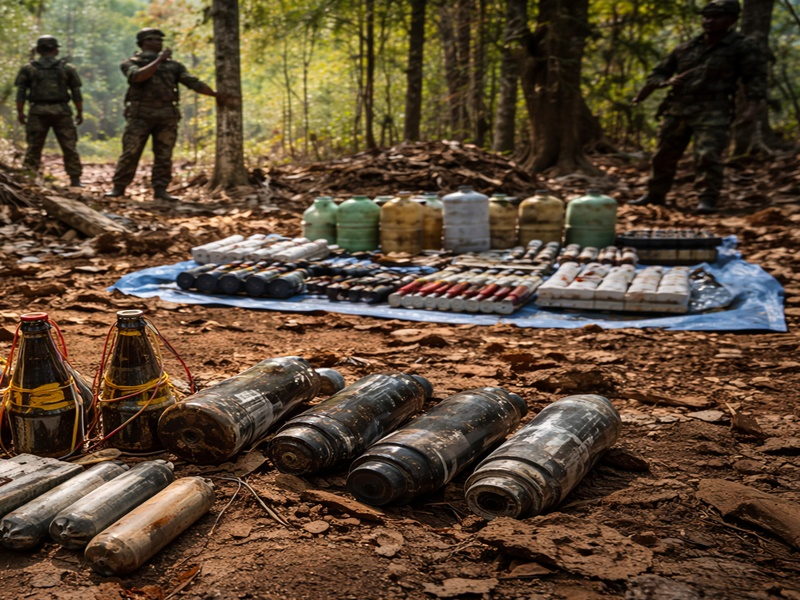
New Delhi, February 17 The security forces are on track to meet the March 31 deadline set by Union Home Minister, Amit Shah, to eliminate all Maoists in India.
While operations on the ground continue and are nearing completion, the forces have also embarked on a mission to completely eliminate the Maoist ideology as well.
A security official involved in these operations said that this is an equally important step in the fight against the Maoists.
"Sometimes, the ideology itself can be more dangerous, and therefore, it needs to be completely eradicated," the official said.
Efforts are being made in both urban and remote areas to completely eradicate the movement's ideology.
The approaches for urban and rural areas are different, the officer explained.
Last year, intelligence agencies had raised concerns about some individuals attempting to promote the Maoists' ideology in urban areas.
In 2019, the National Investigation Agency (NIA) investigated a case that came to be known as the "urban naxalite case."
It was found that several individuals were running NGOs under the guise of social work.
In reality, they were receiving foreign funds, which were being used to fund the movement.
Several arrests were made, and the NIA learned that major conspiracies were being hatched to harm the country's security. These individuals had also planned to target high-profile individuals, the investigation also found.
An official from the Intelligence Bureau said that the agencies have adopted a two-pronged approach. Some individuals associated with the movement were infiltrating protests, such as the one against air pollution.
Under the guise of a pressing issue, they were raising slogans in favor of the Maoists and even criticizing security agencies for killing these people in the forests.
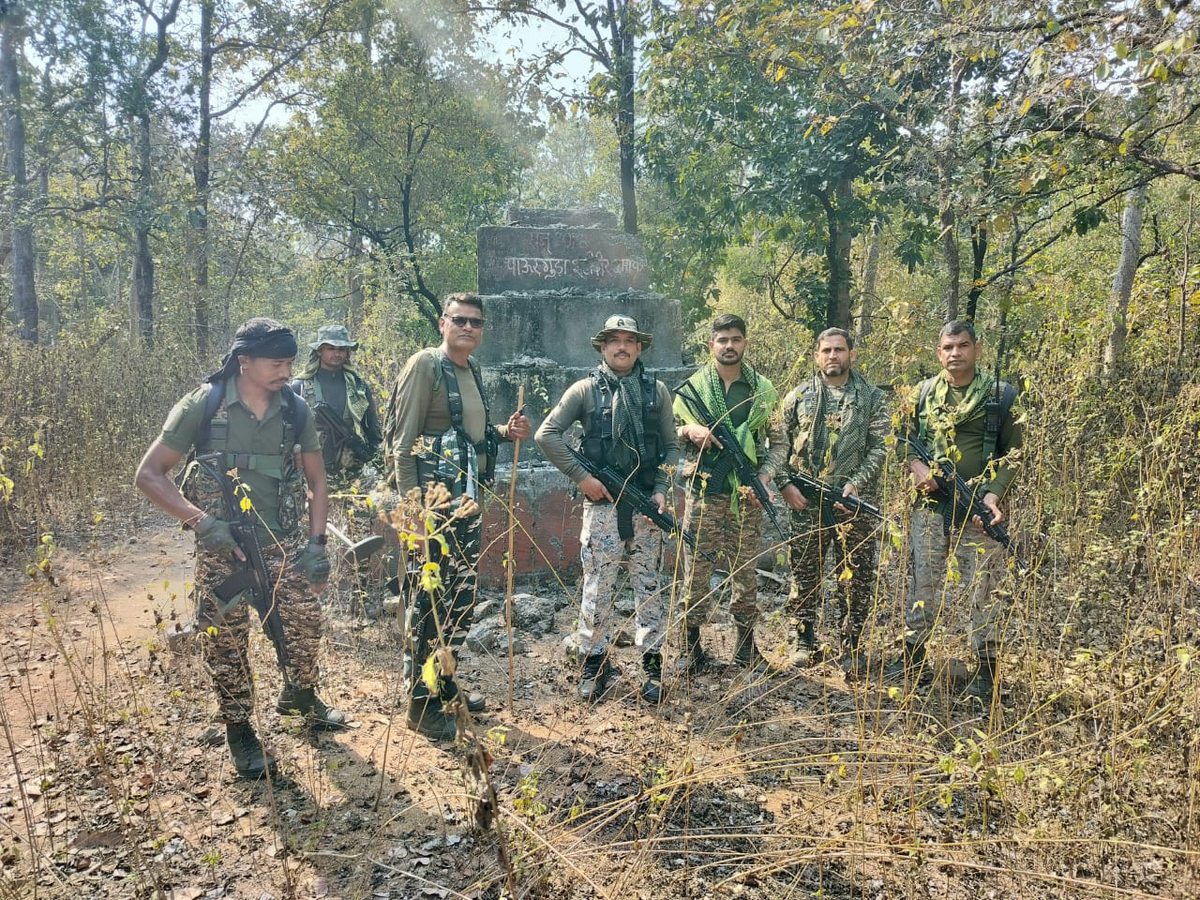
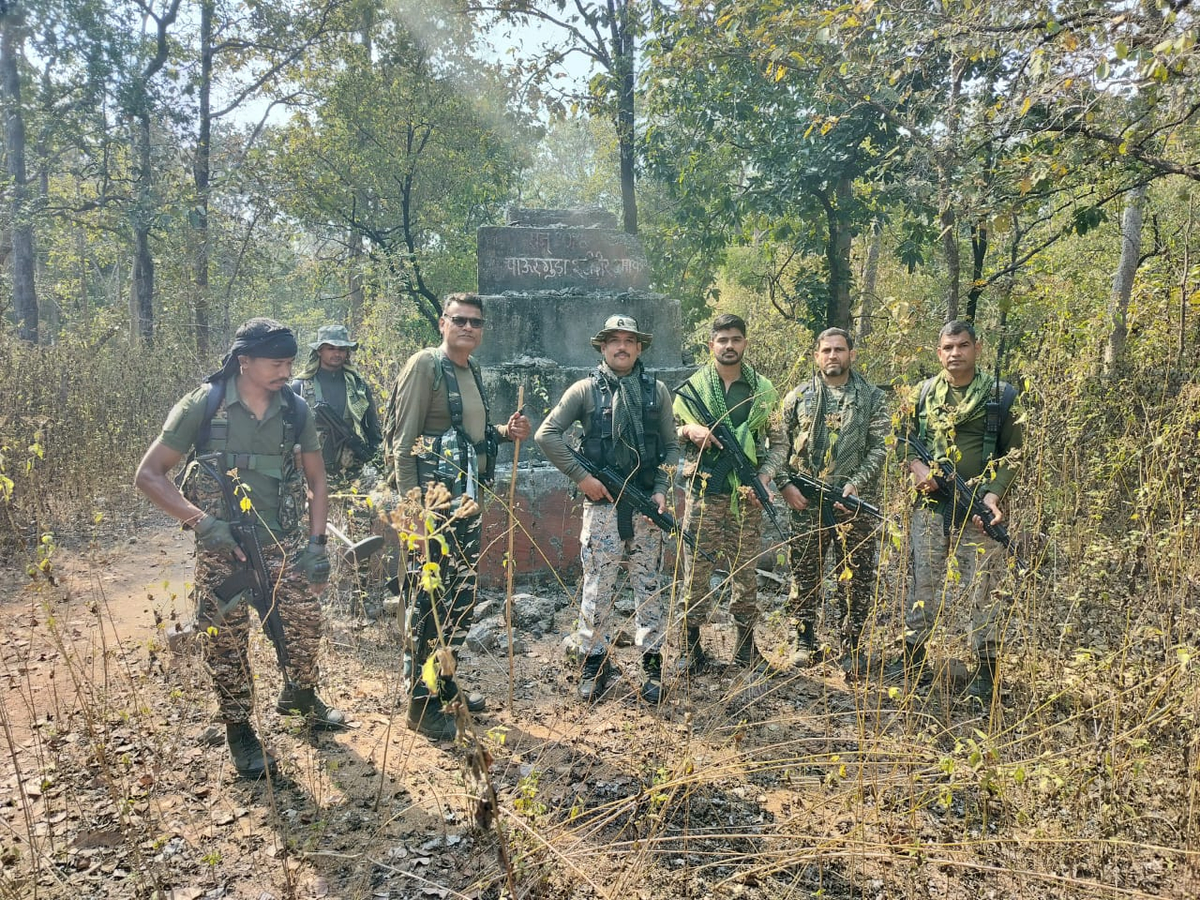
In rural areas, the CRPF has been identifying and demolishing memorials that had been built to honor top Maoist commanders who had been killed by security forces.
All these memorials are being demolished by CRPF personnel. This operation is currently being carried out in Sukma, Bastar, and Bijapur in Chhattisgarh.
So far, security personnel have demolished 53 memorials that had been built by the CPI (Maoist) to honor their top commanders and leaders. These memorials, which are located in forest areas, are being demolished.
Now, there is a plantation drive that is underway to merge these areas with the forest, and to eliminate any trace of the memorials.
Another official explained that this is a significant and important move. These memorials could potentially become rallying points for those trying to revive the movement. If there are regular large gatherings around these memorials, the issue could gradually gain traction.
Moreover, this would also lead to the security agencies taking action. If the action is too harsh, these people will cry foul, and protests could start in different parts of the country, an official said.
"We want to completely end this movement, and we do not want anyone to even speak about it. It is one thing to put down the movement, and another to prevent its revival. If the revival has to be prevented, then every memory related to the 'naxalite movement' has to be erased," the official explained.
The official said that the demolitions of the memorials will be carried out in all areas where the "naxalite" movement thrived. We will also be focusing on other states, the official added.
The official said that during the operation, there was not even a murmur from any of the villagers. They were actually supportive of what the security forces were doing, and this is a very positive sign. The people themselves were tired of this "naxalite" menace," he also said.
Following the encounter in which Nambala Keshav Rao, also known as Basavaraju, was killed along with 26 others, many of his sympathizers had tried to give him a grand funeral.
However, this was denied by the Chhattisgarh Police. The police refused to hand over the body to some individuals who claimed to be relatives. These individuals had approached the court, which in turn asked them to speak with the police.
The police said that these individuals lacked the valid documents to prove their relationship with Basavaraju.
The police learned that there was a plan in place to make a grand issue of the funeral.
Several human rights organizations had also reached Chhattisgarh and had even protested the police action. They alleged that the police cremated the body in the absence of the family members.
Another official said that the police learned that the idea was to glorify the "naxalite" and then indulge in propaganda. Hence, the action by the police is completely justified, the official also added.