New York/Washington, February 21 India now faces a lower tariff rate of 10 percent, down from 18 percent, following President Donald Trump’s announcement of a new global levy on goods imported into America in the wake of the Supreme Court ruling against his sweeping tariffs.
In a proclamation titled ‘Imposing a Temporary Import Surcharge to Address Fundamental International Payments Problems,’ Trump stated that he is imposing, for a period of 150 days, a “temporary import surcharge of 10 percent ad valorem” on goods imported into the United States, effective February 24.
Given this new 10 percent tariff rate, which will apply to countries worldwide, Indian goods imported into the US will no longer be subject to the 18 percent tariff rate that had been decided following the announcement of a framework for an Interim Agreement on trade between India and the US.
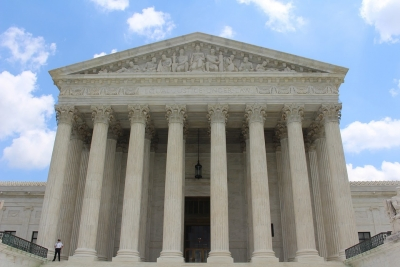
This represents a major setback to Trump’s economic agenda in his second term. The US Supreme Court, in a 6-3 ruling written by Chief Justice John Roberts, ruled that the tariffs imposed by Trump on nations around the world were illegal and that the President had exceeded his authority when imposing these levies.
Earlier this month, as the US and India announced they had reached a framework for an Interim Agreement on trade, Trump issued an Executive Order removing the 25 percent punitive tariffs imposed on India for its purchases of Russian oil, with the US president noting New Delhi's commitment to stop importing energy from Moscow and purchasing American energy products.
Under the trade deal, Washington would charge a reduced reciprocal tariff on New Delhi, reducing it from 25 percent to 18 percent.
Trump signed the proclamation “imposing a temporary import duty to address fundamental international payments problems and continue the Administration’s work to rebalance our trade relationships to benefit American workers, farmers, and manufacturers.”
A fact sheet issued by the White House said Trump is invoking his authority under Section 122 of the Trade Act of 1974, which “empowers the President to address certain fundamental international payment problems through surcharges and other special import restrictions.”
The proclamation imposes, for a period of 150 days, a 10 percent ad valorem import duty on goods imported into the United States. This temporary import duty will take effect February 24 at 12:01 am eastern standard time.
The fact sheet noted that some goods will not be subject to the temporary import duty due to the needs of the US economy or to ensure that the duty effectively addresses the fundamental international payment problems facing the United States.
These goods include certain critical minerals, metals used in currency and bullion, energy, and energy products; natural resources and fertilizers that cannot be grown, mined, or otherwise produced in the United States or grown, mined, or otherwise produced in sufficient quantities to meet domestic demand; certain agricultural products, including beef, tomatoes, and oranges; pharmaceuticals and pharmaceutical ingredients; certain electronics; passenger vehicles, certain light trucks, certain medium and heavy-duty vehicles, buses, and certain parts of passenger vehicles, light trucks, heavy-duty vehicles, and buses, and certain aerospace products.
Trump lashed out at the Supreme Court justices who ruled against him, calling them “fools and lapdogs”.
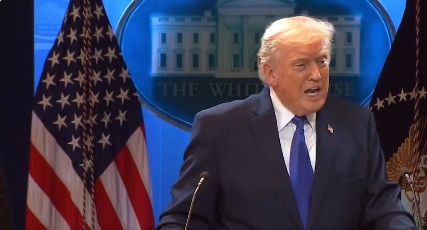
“The Supreme Court’s ruling on tariffs is deeply disappointing, and I’m ashamed of certain members of the Court, absolutely ashamed for not having the courage to do what’s right for our country,” Trump said in a news conference at the White House on Friday, just hours after the verdict came in.
When asked whether the framework for an interim agreement on trade with India, expected to be signed soon, stands in the wake of the Supreme Court ruling, Trump said “nothing changes”.
“Nothing changes. They'll be paying tariffs, and we will not be paying tariffs. So deal with India is they pay tariffs. This is a reversal for what it used to be, as you know, India and I think Prime Minister Modi is a great gentleman, a great man, actually, but he was much smarter than the people that he was against in terms of the United States, he was ripping us off. So we made a deal with India. It's a fair deal now, and we are not paying tariffs to them, and they are paying tariffs. We did a little flip,” Trump said.
“The India deal is on…all the deals are on, we're just going to do it” in a different way,” Trump said.
To another question on his relationship with India, he said “I think my relationship with India is fantastic and we're doing trade with India. India pulled out of Russia. India was getting its oil from Russia. And they pulled way back at my request, because we want to settle that horrible war where 25,000 people are dying every month,” Trump said.
He said his relationship with Prime Minister Modi “is, I would say, great”.
Trump then went on to repeat the claim that he stopped the war between India and Pakistan using tariffs.
“I also stopped the war between India and Pakistan. As you know, there were 10 planes were shot down. That war was going and probably going nuclear. And just yesterday, the prime minister of Pakistan said President Trump saved 35 million lives by getting them to stop,” Trump said.
“And I did it largely with tariffs. I said, ‘Look, you're going to fight, that's fine, but you're not going to do business with the United States, and you're going to pay a 200 per cent tariff, each country’. And they called up and they said, ‘we have made peace’,” Trump said.
In his remarks at the press conference, Trump said he used tariffs to end the war between India and Pakistan, as he lashed out at the Supreme Court for its decision to strike down his sweeping tariffs imposed on countries around the world.
“Tariffs have likewise been used to end five of the eight wars that I settled. I settled eight wars, whether you like it or not, including India, Pakistan, big ones, nuclear, could have been nuclear,” Trump said.