New Delhi, February 21 The Indian government is examining the developments regarding US tariffs and their implications, the Commerce Ministry said on Saturday.
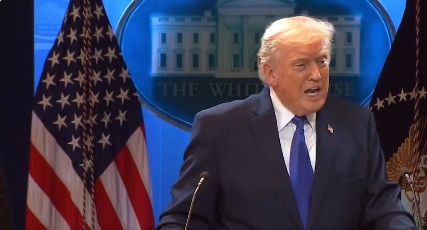
"We have noted the US Supreme Court's judgment on tariffs yesterday (Friday). US President Donald Trump has also addressed a press conference on this matter.
"Some measures have been announced by the US administration. We are studying all these developments for their implications," the ministry said.
In a major setback to Trump's key economic agenda for his second term, the US Supreme Court, in a 6-3 verdict written by Chief Justice John Roberts, ruled that the tariffs imposed by the president on nations around the world were illegal, and that he had exceeded his authority when he imposed the sweeping levies.
Later, Trump's proclamation, dated February 20, said: "I impose, for a period of 150 days, a temporary import surcharge of 10 per cent ad valorem on articles imported into the United States, effective February 24, 2026".
The US had imposed a reciprocal tariff of 25 per cent on India in August.
Later, an additional 25 per cent was imposed for buying Russian crude oil, taking the total tariffs on India to 50 per cent. Earlier this month, both countries agreed to finalize an interim trade deal, under which Washington will reduce the tariffs to 18 per cent.
So far, the punitive 25 per cent has been removed. The remaining 25 per cent remains in place.
After the proclamation, tariffs on Indian goods will now be 10 per cent. The 10 per cent levy is in addition to the existing MFN or import duties in the US.
In the wake of the US Supreme Court's decision on tariffs, Trump said that there is no change in the trade deal with India and emphasized that the India deal is on.
To finalize the legal text for the first phase of the bilateral trade agreement, the Indian team is scheduled to meet its counterparts in Washington from February 23, 2026.
During 2021-25, the US was India's largest trading partner in goods. The US accounts for about 18 per cent of India's total exports, 6.22 per cent in imports and 10.73 per cent in bilateral trade.
In 2024-25, the bilateral trade touched USD 186 billion (USD 86.5 billion exports and USD 45.3 billion imports).