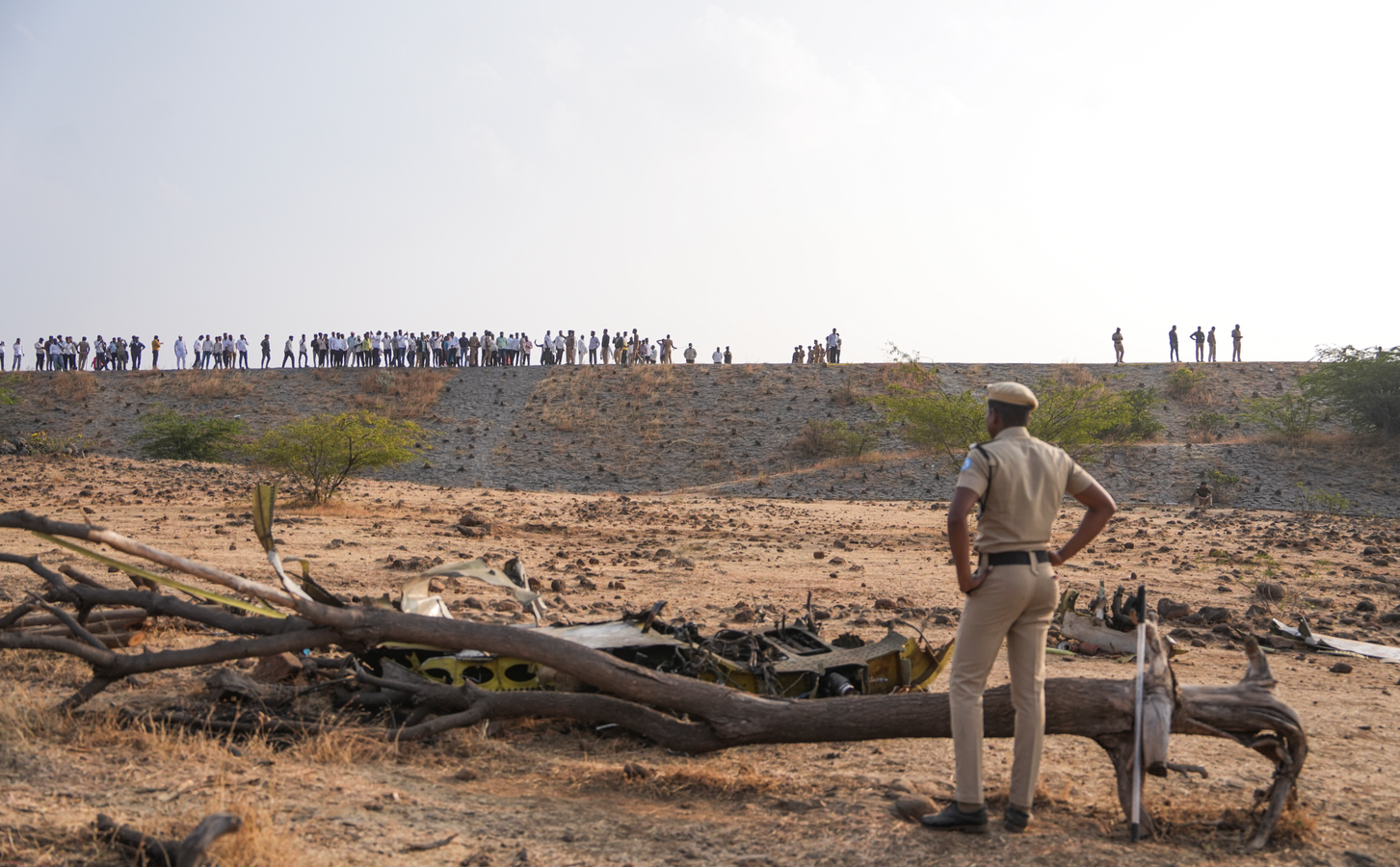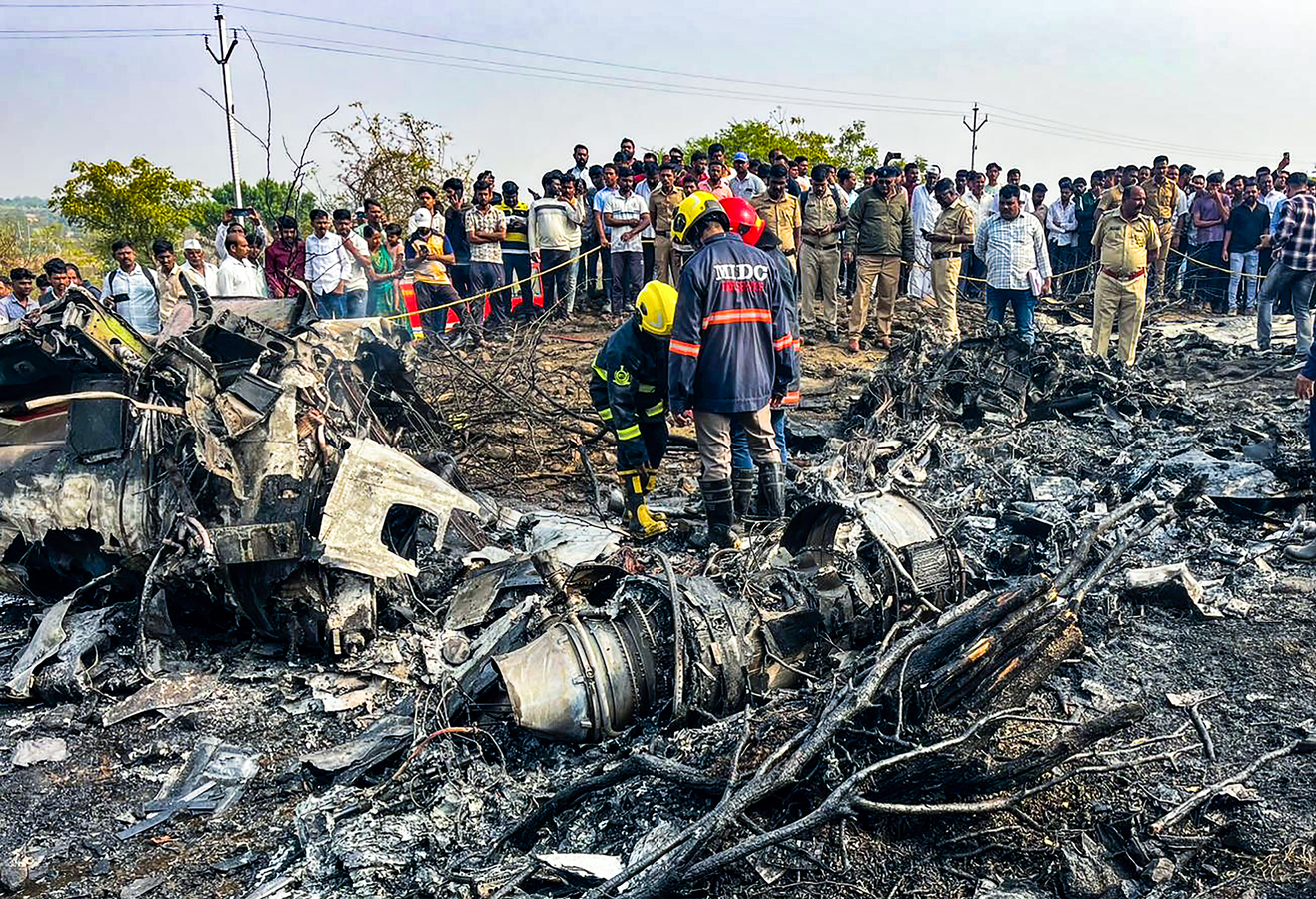
New Delhi, February 28 The Aircraft Accident Investigation Bureau (AAIB) released its preliminary report on Saturday regarding the plane crash that killed Maharashtra Deputy Chief Minister Ajit Pawar and four others in Baramati on January 28, stating that visibility at the time of the crash was below the required level.
The AAIB highlighted the faded markings and loose gravel on the runway in Baramati, recommending that the regulator, the DGCA, ensure that all stakeholders maintain safety standards at uncontrolled airfields.
The 22-page report also mentioned that the phrase "Oh Sht... Oh Sht" was transmitted from the aircraft before it crash-landed on the left side of the runway at the Baramati airport.
This report comes in the wake of concerns raised about the crash of the VSR Ventures-owned Learjet 45 aircraft (VT-SSK) on January 28.
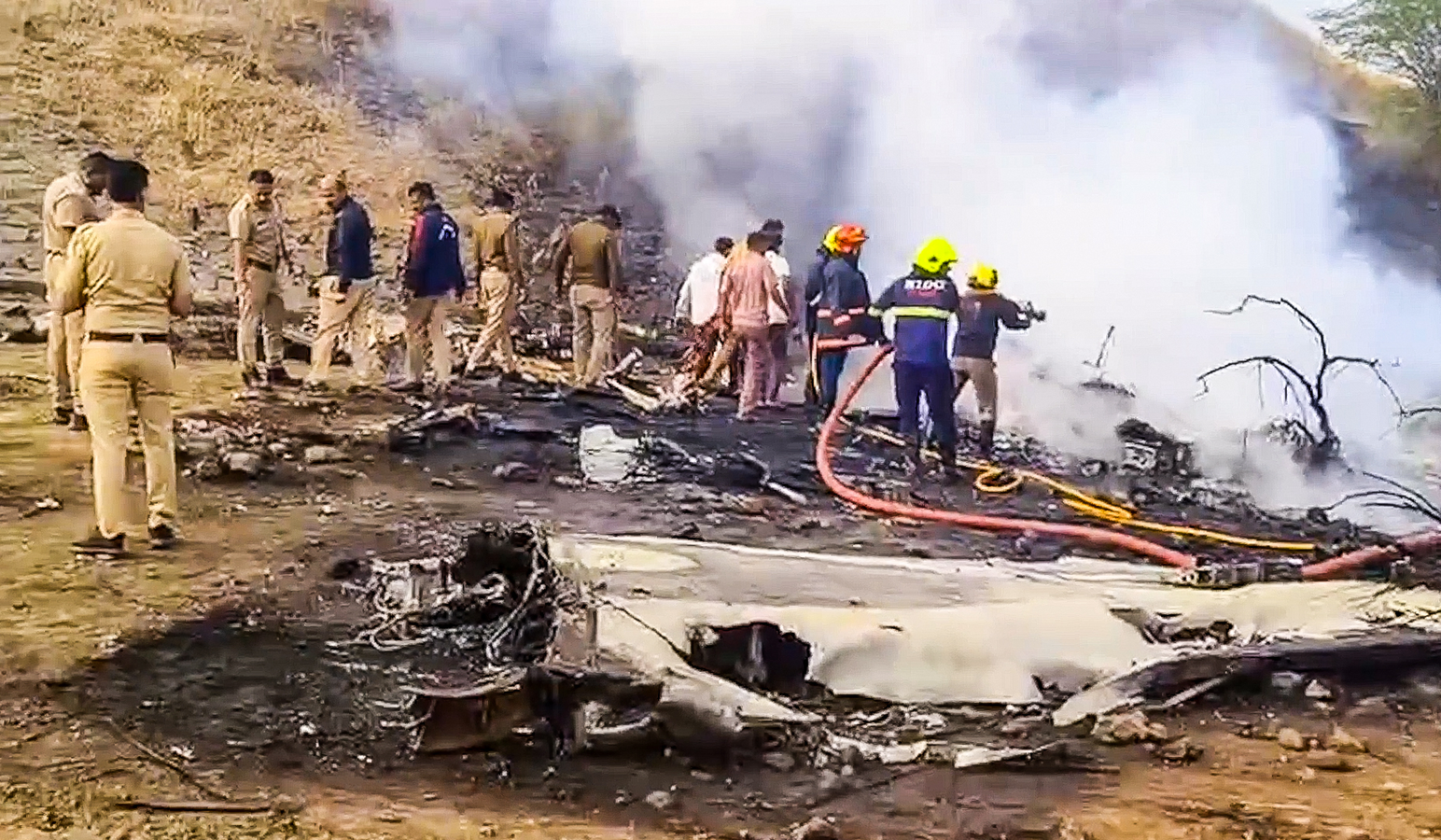
According to the report, the 15-year-old LearJet 45 XR banked to the right, hit trees, and then the ground before catching fire at the Baramati airport on January 28.
It also stated that a technician found no abnormalities during post-flight checks on January 27 when the plane returned to Mumbai after a flight.
The AAIB said that data from the Solid State Cockpit Voice Recorder (SSCVR) will be downloaded with the assistance of the US National Transport Safety Board (NTSB).
The CVR was damaged in the crash.
Data from the Solid State Flight Data Recorder (SSFDR) is being analyzed, the report said.
On the day of the accident, the AAIB stated that the tower was manned by a ground instructor from one of the Flying Training Organisations (FTOs), who was communicating with the aircraft to assist in landing.
"The crew of VT-SSK requested visibility information while approaching Baramati, to which the tower replied that it was 3,000 meters, based on the visibility markers," the report said.
"Furthermore, while granting landing clearance, the tower informed that the winds were calm. Therefore, the visibility at Baramati at the time of the aircraft's landing was well below the minimum required for Visual Flight Rules (VFR) flight, which is 5,000 meters (5 km)," the report added.
The AAIB also stated that the last runway resurfacing was carried out in March 2016, and no further resurfacing had been done since, which resulted in the fading of all runway markings and the presence of loose gravel on the runway surface.
"Records/information obtained from other stakeholders are currently being scrutinized... all aspects of the accident will be examined and investigated to bring out the facts, root cause(s), and contributory factors leading to the accident," the report said.
In its safety recommendations, the AAIB stated that operators of uncontrolled airfields should only allow flying activities when the prevailing meteorological (MET) conditions are within the criteria laid down in the relevant regulations.
The agency said that the Directorate General of Civil Aviation (DGCA) may take necessary measures to enhance landing aids, along with basic MET facilities, at uncontrolled airfields to cater for a large number of non-scheduled/chartered flying operations, including VIP flights.
"It is recommended that the DGCA may check the feasibility of licensing these aerodromes for the safe and regulated conduct of flying operations," the AAIB said in its safety recommendations.
Another suggestion is for the DGCA to issue necessary directions to all operators operating VFR flights to uncontrolled airfields to strictly adhere to the laid-down standard operating procedures.
"It is recommended that the DGCA may issue specific directions to all the stakeholders responsible for managing and maintaining the uncontrolled airfields to ensure that the required safety standards are maintained at the airport for safe aircraft operations," the AAIB said, adding that compliance can be checked during audits and surveillance.
Among other aspects, the report noted that the Pilot In Command (PIC), who was 61 years old, had a rest period of 34 hours before the January 28 flight, while the 25-year-old had a rest period of 9 days and 15 hours.
Besides the safety recommendations, the AAIB, in a less common practice, stated that it may issue "safety recommendations at any stage of the investigation whenever it considers that necessary preventive measures are required to be taken promptly to enhance aviation safety."