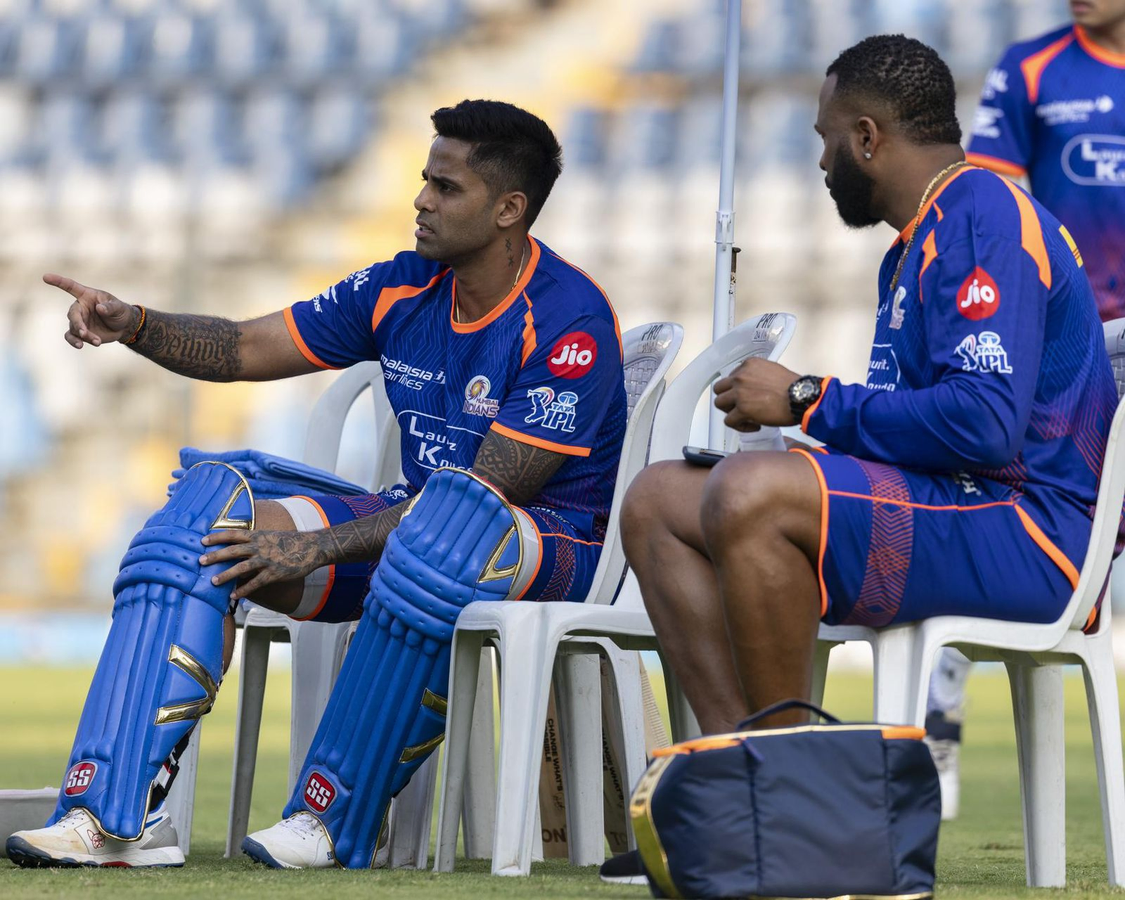
New Delhi, March 27 – Five-time champions Mumbai Indians will aim for dominance as they enter the Indian Premier League (IPL) 2026 with their core squad and some new faces. Key players, including former captain Rohit Sharma and Hardik Pandya, lead a settled squad and hope that their experience will help them regain their winning formula through stability and some smart additions.
Strengths:
MI's main advantage is their well-defined roles within a strong core. They have an impressive and deep batting lineup, with Rohit supported by either Ryan Rickelton or Quinton de Kock, who is also returning. MI's middle order, comprising Suryakumar Yadav, Tilak Varma, and Hardik Pandya, are all premium players who will provide MI with consistency and explosive ability.
In bowling, they have one of the best fast bowling units in the competition, led by Jasprit Bumrah, with Trent Boult and Deepak Chahar as significant contributors. Additionally, they have seamers like Shardul Thakur, adding to the overall depth in that area. MI also has many all-rounders – such as Mitchell Santner, Will Jacks, and Naman Dhir – giving them the ability to play tactically in different conditions.
Weaknesses:
Despite their strengths, MI has structural issues in a few key areas. The team has no proven wicketkeeper from India and will therefore have to rely on foreign talent (i.e., Rickelton and de Kock). This may limit how flexible MI can be when finalizing the various combinations needed throughout the tournament. MI's spin bowling is also a relative weakness. Santner is the only proven spin option, but he is also the only proven spinner on the MI roster.
Outside of Santner, MI can look to Mayank Markande, Atharva Ankolekar, and Mayank Rawat as depth spinners, but all have limited impact at the IPL level. Injuries are another possible weakness for MI. Historically, MI has experienced problems with injured players such as Bumrah, Chahar, and Hardik. Given the limited auction budget, MI may not have reliable options for replacing these players if they do or do not play due to injuries.
Finally, MI's lower-middle order is extremely reliant on Hardik and Naman Dhir for finishing. If their form decreases during IPL 2026, there will be some vulnerability in this segment of the MI batting order.
Opportunities:
IPL 2026 will be MI's best chance to end its title drought that dates back to 2020. MI will once again have the opportunity to return to the top of the IPL pyramid. MI's roster provides an incredible amount of flexibility that will allow MI to make minor adjustments at each venue because multiple all-rounders, along with various other bowling options, give MI the ability to modify their batting and bowling combinations according to facility conditions. The return of de Kock to MI's top order will bring familiarity to the MI batting order and help provide additional opportunities for younger Indian players to develop in a championship environment.
Threats:
Over-reliance on senior players could be a problem. Rohit, de Kock, Boult, and Santner are all nearing the end of their careers, and if any of them struggle with their form, it could impact the team's performance. Teams that rely heavily on spin may take advantage of MI on slower pitches, especially if MI’s spin bowlers do not perform well. Moreover, teams with stronger benches may manage player workloads and injuries better throughout the long season. Another disappointing season could also heighten pressure on leadership and strategy, which might hurt confidence during key moments.
Mumbai Indians squad:
Hardik Pandya (Captain), Rohit Sharma, Suryakumar Yadav, Tilak Varma, Ryan Rickleton, Robin Minz, Mitchell Santner, Corbin Bosch, Naman Dhir, Jasprit Bumrah, Trent Boult, Allah Ghafanzar, Ashwani Kumar, Deepak Chahar, Will Jacks, Raghu Sharma, Raj Angad Bawa, Sherfane Rutherford, Mayank Markande, Shardul Thakur, Quinton de Kock, Mohammad Izhar, Danish Malewar, Atharva Ankolekar, Mayank Rawat.