Washington, March 10 – US lawmakers are sharply divided over President Donald Trump’s decision to launch military action against Iran, with senior Republicans defending the move as necessary for national security while Democrats warned it was an unauthorized war that could drive up economic costs and deepen instability in the Middle East.
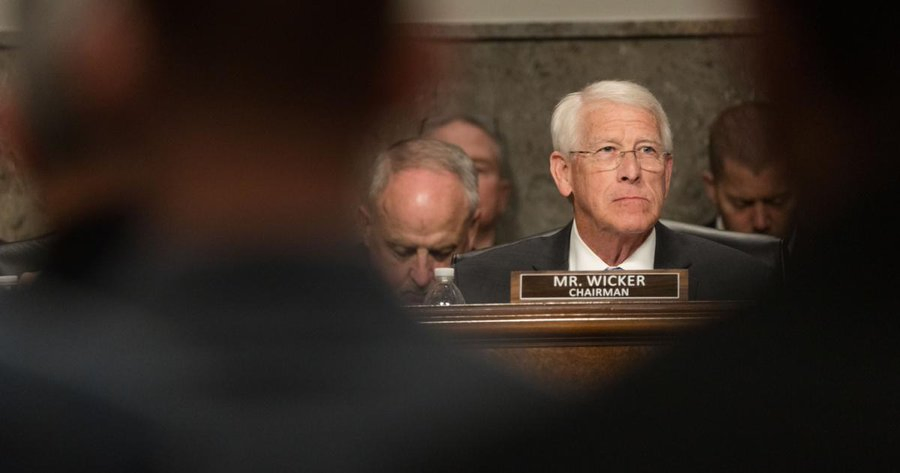
Senator Roger Wicker, the Republican chairman of the Senate Armed Services Committee, strongly supported the president's decision during remarks on the Senate floor, saying the administration had acted deliberately to protect American interests.
"President Trump decided to attack Iran. That decision was profound, deliberate, and correct," Wicker said.
He said the president had made "the most difficult decision a president can make" when he "ordered young American service members into action."
Wicker urged support for troops involved in the operation and noted the loss of American lives. "We grieve for the six American servicemen and women who have died in the fighting," he said.
The Mississippi senator argued that the military campaign had defined objectives. According to him, the goals include destroying Iran's missile capabilities, eliminating its naval threat, stopping the regime from funding terrorist activity, and preventing Tehran from acquiring nuclear weapons.
"We are doing this to destroy Iran's missile capabilities and their ability to produce missiles," Wicker said. "We're doing this to annihilate the Iranian navy… and to prevent Iran from getting a nuclear weapon."
He said early battlefield developments showed progress. "We have taken out their air defenses and missile systems ahead of schedule," he said, adding that Iranian naval deployments in the Gulf of Oman had also disappeared.
"We can expect to see airstrikes continue until our military objectives are achieved, a task that will take weeks, not days," Wicker said.
Democrats, however, sharply criticised the decision, arguing that the administration had launched a war without congressional approval or a clear strategy.
Senator Adam Schiff said he would not have supported the move. "I certainly would not vote to go to war with Iran because there are costs that you don’t see in the front end, and this administration has no plan for how to get out of this war, no plan to really articulate justification for it," he said during a television interview.
Schiff warned that conflicts often spiral beyond expectations. "Once you unleash a war, there are a lot of unforeseen consequences," he said.
He also called on Congress to reclaim its constitutional authority over war decisions. "We are unquestionably at war now," Schiff said. "Congress… needs to step up, assert its role, or it’s going to be gone for good."
Other Democrats focused on the economic fallout of the conflict.
Senator Edward Markey warned the war could fuel inflation and energy shocks. “President Trump’s reckless, aimless, and illegal war with Iran is driving our nation into yet another self-inflicted energy and inflation crisis,” he said in a letter seeking government projections on rising consumer costs.
Congresswoman Haley Stevens also pointed to the financial burden on households. “America cannot afford the $1 billion a day we’re paying for this war,” she said, adding that rising oil prices were already pushing up fuel costs.
House Democratic Leader Hakeem Jeffries criticised the conflict as a policy mistake. “If you’re going to spend billions of taxpayer dollars, it should not be spent in a war of choice in the Middle East,” he said.
The contrasting statements reflect a widening political divide in Washington over the purpose, legality, and consequences of the Iran conflict.