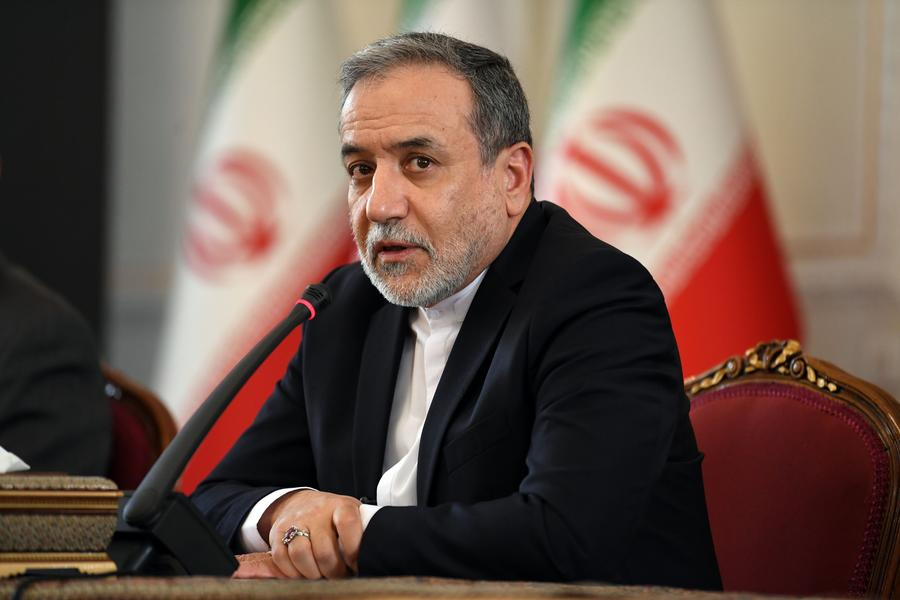
Tehran, March 16 – Iranian Foreign Minister Seyed Abbas Araghchi stated that the country is not seeking a ceasefire or negotiations with the United States, asserting that Tehran is prepared to defend itself "for as long as it takes" against what he described as an "illegal war."
In an interview with CBS News broadcast on Sunday, Araghchi rejected claims that Iran has sought an end to hostilities, according to Xinhua news agency.
"We have never asked for a ceasefire, and we have never even asked for negotiations. We are ready to defend ourselves for as long as it takes," the minister said.
He noted that Iran will continue its operations until US President Donald Trump "comes to the point that this is an illegal war with no victory."
"We don't see any reason why we should talk with Americans, because we were talking with them when they decided to attack us, and that was the second time," Araghchi added.
Regarding the Strait of Hormuz, the minister emphasized that Iran has not closed this waterway. "This is up to our military to decide, and they have already decided to allow a group of vessels belonging to different countries to pass," he noted.
Speaking about the nuclear issue, Araghchi reiterated that Tehran has never sought nuclear weapons.
Revealing that Iran had agreed to dilute its enriched uranium during pre-attack talks with the United States, the minister said that these enriched materials are now "under rubble" following strikes on its nuclear facilities. "Everything is under rubble," he said, adding that Iran has no current plans to recover enriched uranium stockpiles from the damaged sites.
Earlier on Sunday, Araghchi said that Tehran has information that the US and Israel are launching attacks from certain locations against Arab states in the West Asia region.
He made the remarks in an interview with the pan-Arab news outlet Al-Araby Al-Jadeed, parts of which were published, questioning the origin of attacks on regional Arab states that have been blamed on Iran.
Araghchi said that Iran is ready to meet with regional states and form a joint committee to investigate the nature of the attacked targets.
Iran's strikes only targeted US bases and interests in retaliation for attacks launched from those sites, he added.