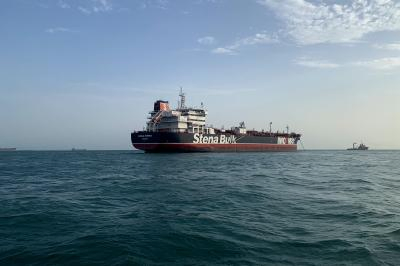
Washington, March 21 – On Friday night, the United States issued a narrow, short-term authorization allowing the sale of Iranian oil that is currently stranded at sea. The Trump administration says this move will quickly boost global supply while maintaining pressure on Tehran, according to the Treasury Department and media reports.
Treasury Secretary Scott Besant said the step is designed to stabilize energy markets amid ongoing conflict and supply disruptions.
“Today, the Department of the Treasury is issuing a narrowly tailored, short-term authorization permitting the sale of Iranian oil currently stranded at sea,” he said.
The authorization applies only to crude that has already been loaded onto vessels as of March 20 and remains in effect until April 19, according to a Treasury general license.
The Treasury move temporarily lifts sanctions on oil already at sea, authorizing its sale to most countries, The New York Times reported.
Besant said the move could bring “approximately 140 million barrels of oil to global markets,” helping to ease pressure caused by recent disruptions.
“By temporarily unlocking this existing supply for the world, the United States will quickly bring approximately 140 million barrels of oil to global markets, expanding the amount of worldwide energy and helping to relieve the temporary pressures on supply caused by Iran,” he said.
He added that the measure would not benefit Tehran financially.
“Iran will have difficulty accessing any revenue generated, and the United States will continue to maintain maximum pressure on Iran and its ability to access the international financial system,” he said.
The Treasury emphasized that the authorization is limited. It does not permit new purchases or additional production and excludes transactions involving certain sanctioned jurisdictions.
Besant framed the move within a broader strategy tied to the ongoing conflict.
“Iran is the head of the snake for global terrorism, and through President Trump’s Operation Epic Fury, we are winning this critical fight at an even faster pace than anticipated,” he said.
He added that the administration would continue to use “America’s economic and military might to maximise the flow of energy to the world, strengthen global supply, and seek to ensure market stability.”
At present, much of the sanctioned Iranian oil is believed to be held offshore or routed through indirect channels. Besant said some of it has been “hoarded by China on the cheap,” and that releasing it would help undercut Tehran’s leverage.
However, analysts have questioned the likely impact of the move on prices and supply.
Energy analysts believe much of the crude already at sea has been bought and accounted for, suggesting that the sanctions waiver may not significantly increase supply, The New York Times reported.
“I don’t see a scenario where Iranian crude is going to be imported into the US,” said Daniel Tannenbaum, a partner at Oliver Wyman and former Treasury Department official. “Firstly, the available crude is a question, as most barrels are already spoken for, but also what global bank is financing an Iranian oil trade, legal or otherwise.”
There is also uncertainty about whether international banks will facilitate such transactions under the temporary waiver, according to the report.
The United States itself does not import Iranian crude, but officials suggested that countries such as Malaysia, Singapore, Indonesia, Japan, and India could benefit from the additional supply, the report added.
Separately, The Washington Post reported that the move comes as oil prices rise sharply and the administration seeks to ease market pressure by allowing already-loaded Iranian crude to flow into global markets.
Besant said the administration has already worked to bring hundreds of millions of barrels into the market in recent weeks.
The additional supply, he said, is aimed at “undercutting Iran’s ability to leverage its disruptions in the Strait of Hormuz.”
--IAND