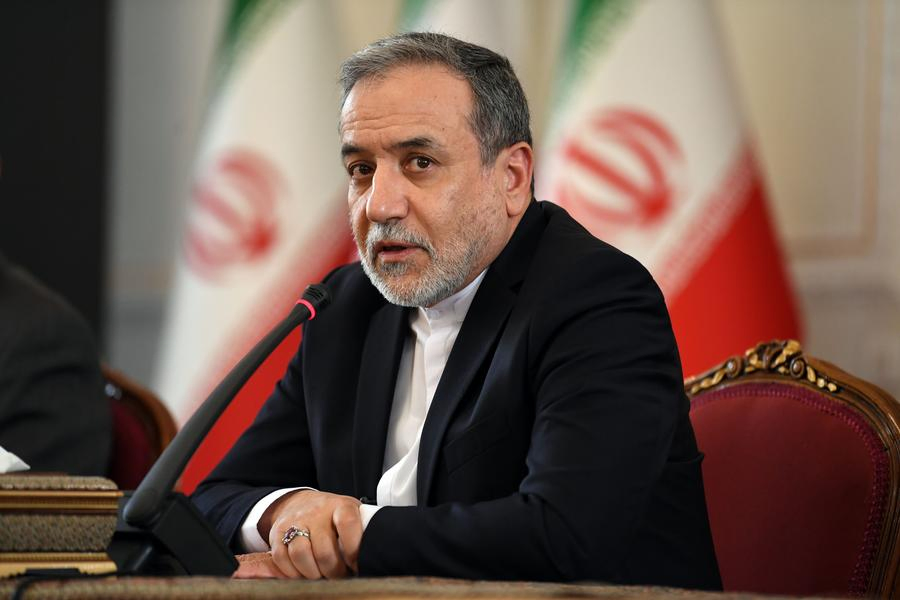
Tehran, March 16 – Iran's Foreign Minister Seyed Abbas Araghchi said on Monday that Tehran had neither sought a ceasefire nor negotiations with the United States, rejecting US claims that it had requested a truce.
In a post on X, Araghchi called such claims "delusional" and said that Iran's armed forces would continue fighting until US President Donald Trump recognized that the "illegal war he is imposing on both Americans and Iranians is wrong and must never be repeated."
Speaking later at a weekly news conference in Tehran, Araghchi said that any end to the conflict must ensure that attacks on Iran are not repeated.
"When we say we do not want a ceasefire, it is not because we seek to continue the war," he said. "It is because this time the war must end in a way that the enemies never think of repeating the attacks."
Araghchi accused Iran's adversaries of attempting to force the country into "unconditional surrender" after mobilizing their full capabilities, according to Xinhua news agency. He added that Iran's opponents, more than two weeks into the conflict, were now seeking help from countries they once considered hostile and calling for international assistance to secure shipping in the Strait of Hormuz. Iran, he said, restricts passage only for enemies and their allies involved in the conflict.
On February 28, Israel and the United States launched joint strikes on Tehran and other Iranian cities, killing former Supreme Leader Ali Khamenei, senior military commanders, and civilians. Iran responded with waves of missile and drone attacks on Israel and US bases and assets across the Middle East.
Meanwhile, the Israeli military said Monday that it had destroyed an aircraft used by Iran's top leadership at Tehran's Mehrabad Airport, claiming the strike would hamper coordination between Tehran and its regional allies. Israel also said it carried out strikes on infrastructure in several Iranian cities.
In a statement, the Israel Defence Forces (IDF) said the plane had served senior political and military figures for both domestic and international travel. The military added that eliminating the aircraft would disrupt communication between Iran's leadership and allied groups across the region, slow Tehran's military buildup, and limit its ability to restore damaged capabilities.
The aircraft was identified as an Airbus A340 previously used to transport senior leaders, including President Masoud Pezeshkian and, in the past, Supreme Leader Ali Khamenei, to diplomatic engagements abroad. Iranian authorities did not immediately confirm the strike, Xinhua news agency reported.
Mehrabad Airport, located in western Tehran, is one of the capital's oldest aviation hubs. While Tehran's Imam Khomeini International Airport handles most long-haul international flights, Mehrabad remains the country's busiest domestic airport and also hosts military facilities, including units of the Iranian Air Force.
Separately, on Monday, the IDF said it struck targets in the Iranian cities of Tehran, Shiraz, and Tabriz, as the US-Israeli campaign against Iran entered its 17th day.