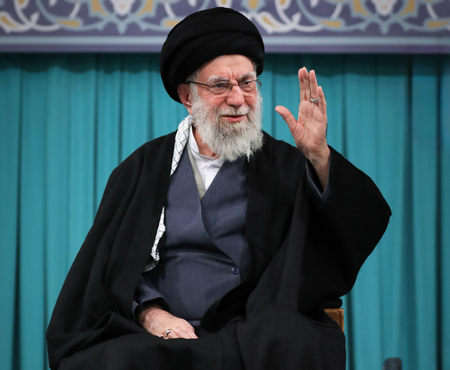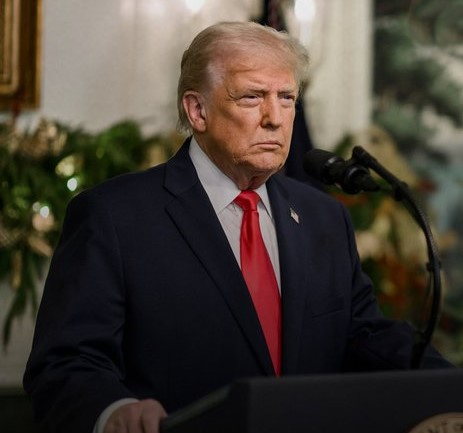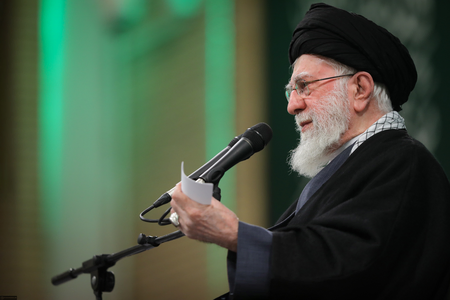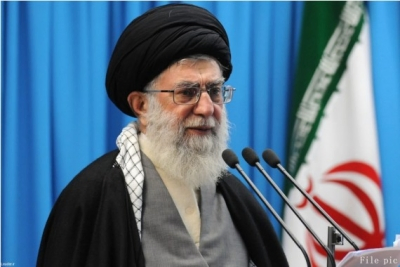
On March 1, New York – Iran's Supreme Leader, Ayatollah Ali Khamenei, was killed in a major attack by the US and Israel, marking a turning point in the 46-year period of Shia-theocratic rule in Iran. This event triggered a series of retaliatory actions from Tehran, leading to widespread conflict throughout the Middle East.
US President Donald Trump announced the death of the 86-year-old cleric on Saturday, ending Khamenei's 36-year rule over Iran.
In a statement on Truth Social, Trump said, "He was unable to avoid our intelligence and highly sophisticated tracking systems, and, working closely with Israel, there was no way he, or the other leaders that have been killed along with him, could have done anything."
Iran has not officially confirmed Khamenei's death, and the future of the country remains uncertain. There is no clear indication of who is filling the leadership void, although there are several prominent figures within the country's government and military.
The extent of the damage and casualties caused by the attacks remains unclear.
In a statement, French President Emmanuel Macron called for an immediate end to the escalation, echoing the concerns of many world leaders.
The US-Israel attack began with a barrage of drones and missiles launched by Tehran against Israel, Qatar, Bahrain, the United Arab Emirates, Jordan, and Kuwait.
Iran's news agency reported that the Islamic Revolution Guards Corps (IRGC) had attacked a supply ship.
United Nations Secretary-General Antonio Guterres said that about 20 cities in Iran, including Tehran, Isfahan, Qom, Shahriar, and Tabriz, had been attacked.
India's External Affairs Minister S Jaishankar spoke with Iranian Foreign Minister Seyed Abbas Araghchi and Israeli Foreign Minister Gideon Sa’ar, calling for dialogue and de-escalation.
Jaishankar said that he had shared India's "deep concern" with the Iranian diplomat.
He also called for dialogue between the two sides to de-escalate tensions.
The Iranian port city of Chabahar was reportedly attacked, and it remains unclear whether the port, built in cooperation with India, was a target.
Trump launched the attack shortly after midnight in Washington — and daytime in Iran — two days after inconclusive negotiations in Geneva facilitated by Oman.
On Friday, Trump said that he was "unhappy" with the lack of progress in achieving a complete end to uranium enrichment.
Oman and Iran had claimed progress in the talks.
Iran was recently rocked by public protests sparked by inflation, which the government brutally suppressed, reportedly resulting in thousands of deaths.
Trump escalated the confrontation with Iran from ending its nuclear programme to regime change, launching the attack to decapitate the religious and military leadership.
In his video announcing the attack on Iran, Trump said, "When we are finished, take over your government. It will be yours to take. This will be probably your only chance for generations".
"America is backing you with overwhelming strength and devastating force”, he asserted.
There were reports on X that some Iranians celebrated the reported death of Khamenei, but there were no indications of a mass uprising.
Trump said, “We are hearing that many of their IRGC, Military, and other Security and Police Forces, no longer want to fight, and are looking for Immunity from us”.
Reza Pahlavi, the son of the Shah of Iran who was deposed in the Islamic Revolution, has expressed a desire to help rebuild Iran.
The future of Iran remains uncertain.
The toll of the attacks is also unclear.
Iranian news agency, IRNA, said that according to a local official, an Israeli missile that hit a girls’ school in Minab in southern Iran killed 57 students, and injured 60.
Guterres put the reported death toll in Iran at 85, with two killed at a school in Tehran.
Pakistan said that one of its citizens was killed in the UAE.
Britain could be drawn into the conflict as an opaque statement by its Prime Minister, Keir Starmer, said, “Our forces are active and British planes are in the sky today as part of coordinated regional defensive operations to protect our people, our interests and our allies”.
Many other leaders were critical of both the US-Israel attack and Iran’s widespread retaliation.
Guterres condemned what he called the “military escalation in the Middle East” and said the US-Israel use of force against Iran and Tehran’s retaliation across the region “undermine international peace and security”.
But China and Russia were unequivocal in their condemnation.