Tehran, March 11 – Iran's Islamic Revolutionary Guard Corps (IRGC) said on Wednesday that it would continue to strike Israeli and US bases across the Middle East until it perceives the threat of war against Iran has ended.
"We are only focused on the complete surrender of the enemy," the IRGC said in a statement on its official outlet, Sepah News.
The IRGC claimed that its 38th wave of attacks late Tuesday targeted the US Al-Udairi base in Kuwait, sending more than 100 troops to nearby hospitals.
The group also claimed missile and drone strikes on US naval infrastructure at the Mina Salman port in Bahrain, home to the US Fifth Fleet, as well as attacks on Kuwait's Ali Al-Salem Air Base and Mohammed Al-Ahmad Naval Base, according to Xinhua News Agency.
Earlier on Tuesday, the IRGC said it targeted a satellite communications center south of Tel Aviv and military sites in Beer Yaakov and Haifa with Khorramshahr missiles. It also claimed attacks on several US positions in Erbil, Iraq.
Separately, Iran's army reported early Wednesday drone strikes on Israeli Military Intelligence, the Unit 8200 cyber division, a Green Pine radar installation, and a submarine command center at Haifa's naval base.
The escalation follows joint US-Israeli strikes on Tehran and other Iranian cities on February 28, which killed former Supreme Leader Ali Khamenei and senior military commanders. In response, Iran has carried out repeated missile and drone attacks on US and Israeli targets in the region.
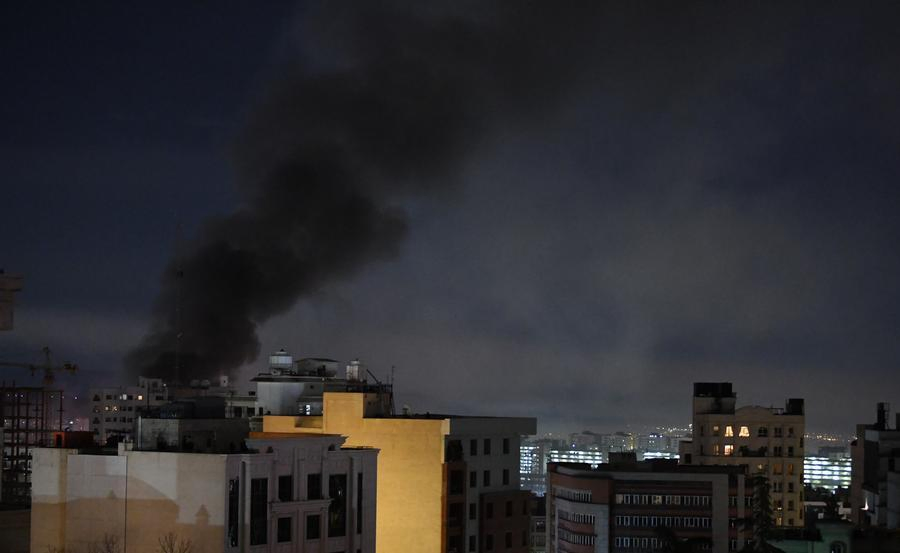
In the latest strike on Iranian soil, Bank Sepah, a major bank in Iran, said a US-Israeli missile hit one of its Tehran buildings around 1 a.m. local time Wednesday (2130 GMT Tuesday), injuring and killing employees on the overnight shift. State broadcaster IRIB confirmed the attack but did not provide casualty figures.
The Khatam al-Anbiya Central Headquarters – Iran's primary military command – warned that the strike would prompt retaliation, saying the attack on a bank "freed" Iran to target US and Israeli financial institutions across the region. The Military spokesman Ebrahim Zolfaghari urged civilians to stay at least one kilometer away from such facilities.