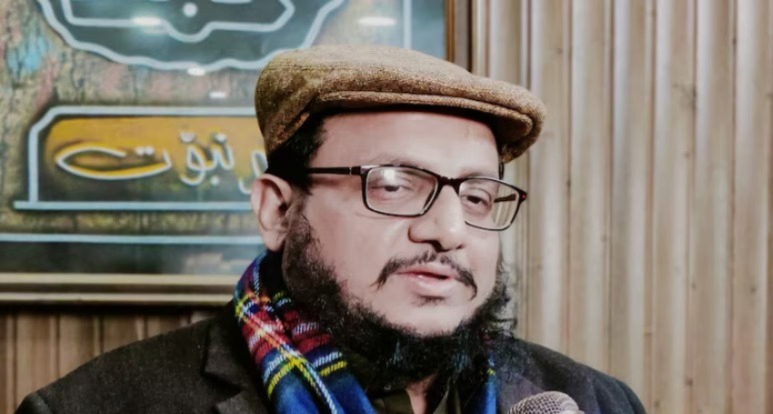
New Delhi, March 24 – The ISI is working on a plan to change the leadership in Lashkar-e-Taiba, as there has been increasing demand for younger faces. Hafiz Saeed has been instructed to step aside due to his age.
Further, the ISI wants young leaders to head the group, as they are attracting more recruits compared to the older generation. An official said that Talha Saeed, the son of Hafiz Saeed, is likely to be the new leader. He will be assisted by Saifullah Kasuri, a senior leader of the group who is well known for his close relationship with the top brass of the ISI, the official said.
The change in leadership is something that the ISI has been working on for several months. The older generation, comprising Hafiz Saeed and Zaki-ur-Rehman Lakhvi, is no longer able to attract new recruits. The younger generation feels that Lakhvi or Saeed are outdated, and their ideology no longer resonates with them. Furthermore, the ISI also believes that the younger generation would be better equipped to adapt to technology, which is becoming increasingly important in terror-related operations.
The new leadership is expected to bring many technological changes to Lashkar-e-Taiba. They need recruits who are proficient in using online systems. The outfit is also considering using Artificial Intelligence (AI) on a large scale. Officials say that this can only be achieved with a young leadership.
After Operation Sindoor, Lashkar-e-Taiba was significantly weakened. It not only lost many of its members but also its primary training camp at Muridke. The Muridke camp was where terrorists were trained for major operations against India, the most significant being the Mumbai 26/11 attacks.
An official from the Intelligence Bureau said that the leadership change will begin with Lashkar-e-Taiba and then be applied to other groups such as Jaish-e-Mohammad and Hizbul Mujahideen. The ISI wants these groups to adapt to new technology and use it to carry out attacks.
Lashkar-e-Taiba will recruit youth based on their skills. The most important skill that the outfit will be looking for is the ability to use technology. This indicates that Lashkar-e-Taiba is moving towards more hybrid attacks rather than the conventional ones it has been carrying out.
However, the official added that this change in approach does not mean that conventional attacks will be abandoned. The focus will be less on such attacks and more on modern-day strikes that will include cyber warfare and disinformation campaigns using AI, among other things.
Another official said that the ISI is not looking to create a second tier of leadership. They want a complete overhaul, and the top bosses will be replaced by the younger generation.
Hafiz Saeed will remain a part of the group, but as a mentor and father figure. The recruitments and other operational details will be completely handled by Talha Saeed and Kasuri. Both have the support of Hafiz Saeed and the trust of the Pakistani establishment.
After Operation Sindoor, the ISI has tried to help Lashkar-e-Taiba regroup. In doing so, the ISI realized that the youth had lost faith in figures like Hafiz Saeed. They found them to be too outdated, which led to the strategy of having a younger leadership.
Another official said that Saeed and Lakhvi cannot be completely discarded. Their presence is needed to at least keep the existing cadre united.
The process of changing the leadership has already begun and is being done in a phased manner. There will be no knee-jerk reactions, as this could risk splitting Lashkar-e-Taiba. Every cadre and commander has been considered before the leadership plan was put in motion.
Officials say that the changes in Lashkar-e-Taiba will be a test case for the ISI, and if everything goes as planned, the same strategy will be applied to Jaish-e-Mohammad and Hizbul Mujahideen.