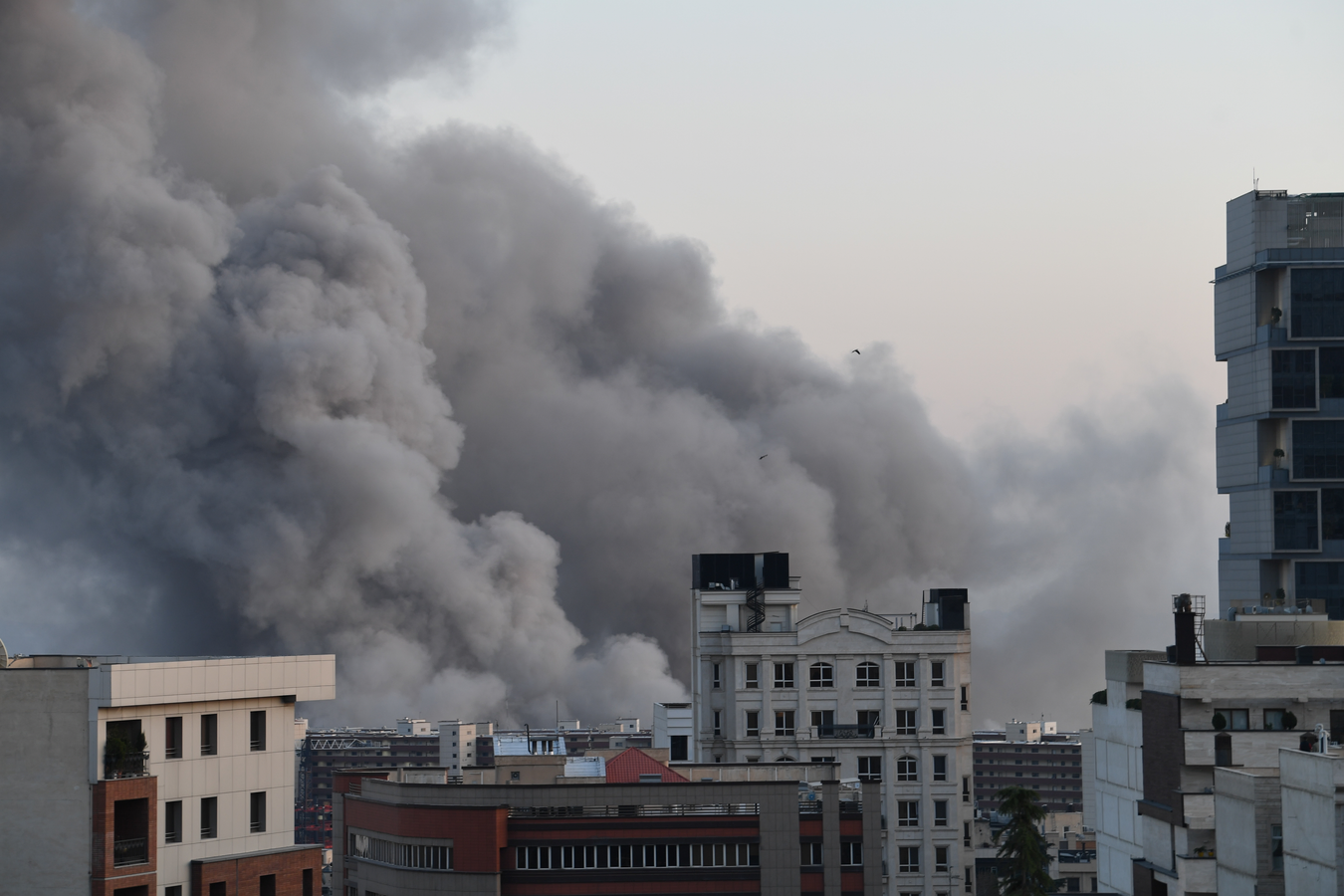
Jerusalem, March 16 – The Israeli military said Monday that it had destroyed an aircraft used by Iran's top leadership at Tehran's Mehrabad Airport, claiming the strike would hinder coordination between Tehran and its regional allies. Israel also said it carried out strikes on infrastructure in several Iranian cities.
In a statement, the Israel Defence Forces (IDF) said the plane had been used by senior political and military figures for both domestic and international travel. The military added that eliminating the aircraft would disrupt communication between Iran's leadership and allied groups across the region, slow Tehran's military buildup, and limit its ability to restore damaged capabilities.
The aircraft was identified as an Airbus A340 that had previously been used to transport senior leaders, including President Masoud Pezeshkian and, in the past, Supreme Leader Ali Khamenei, to diplomatic engagements abroad. Iranian authorities did not immediately confirm the strike, Xinhua news agency reported.
Mehrabad Airport, located in western Tehran, is one of the capital's oldest aviation hubs. While Tehran's Imam Khomeini International Airport handles most long-haul international flights, Mehrabad remains the country's busiest domestic airport and also hosts military facilities, including units of the Iranian Air Force.
Separately, on Monday, the IDF said it struck targets in the Iranian cities of Tehran, Shiraz, and Tabriz, as the US-Israeli campaign against Iran entered its 17th day.
Meanwhile, US President Donald Trump threatened on Sunday that NATO would face a "very bad" future if its allies fail to take action to help Washington keep the Strait of Hormuz open, Financial Times reported.
In a phone interview with the British daily, Trump again pressed European allies by urging them to join US operations concerning the strait, a key global oil shipping route.
He said Europe was a major beneficiary of navigation through the waterway and should help to make sure that "nothing bad happens there." He also warned that NATO's future would be "very bad" if allies gave "no response" or a "negative response" to Washington's request.
Trump argued that the United States had previously helped Europe on the Ukraine issue and that now it was time to "see if they help us."