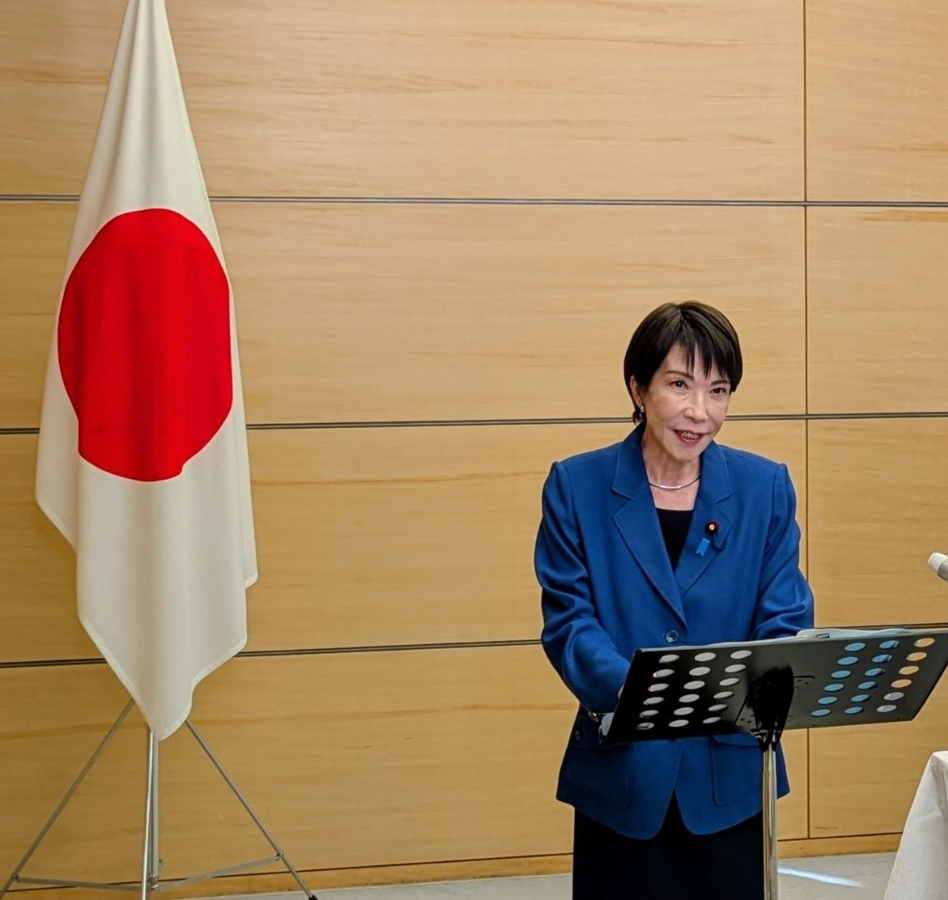
Tokyo, March 11 – Japanese Prime Minister Sanae Takaichi announced on Wednesday that Japan will begin releasing its oil reserves as early as next Monday to address a potential increase in gasoline and other petroleum product prices amid the conflict in West Asia, according to local media.
Speaking to reporters on Wednesday, Takaichi said that Japan will release 15 days' worth of reserves held by the private sector and then one month's worth of oil owned by the government, without waiting for a decision coordinated by the International Energy Agency (IEA). Kyodo News, Japan's leading media outlet, reported this.
This would be the first time Japan releases its government oil reserves individually, rather than in an internationally coordinated manner, since oil stockpiling began in 1978.
Takaichi stated that Japan's reliance on the Middle East for crude oil is "significantly high" compared to other nations, and that imports are expected to decrease later this month or in the following months, necessitating measures to prevent disruptions to the supply of gasoline and other petroleum products.
Citing the possibility that the average price of domestic retail gasoline could exceed 200 Yen per liter, Takaichi said that she aims to keep the price around 170 Yen by using a government fund.
Takaichi said, "We will flexibly review the support measures to ensure continuous relief for the public, even if the (Middle Eastern) situation is prolonged."
Japan imports over 90 per cent of its oil from West Asia, making it vulnerable to the closure of the Strait of Hormuz, which has halted the transportation of oil and gas from suppliers in the Persian Gulf following the US and Israel strikes on Iran in February.
The Strait of Hormuz is a narrow passage connecting the Gulf to the Arabian Sea and is one of the world's most important oil transit chokepoints. A large share of crude exports from Gulf producers passes through it, making any threat to the route a major concern for global energy markets.
As of the end of December, Japan possessed 470 million barrels of oil reserves equivalent to 254 days of domestic consumption, of which 146 days worth were government-held, 101 days owned by the private sector, while the remainder is jointly stored with nations that produce oil, Kyodo News reported.
The ongoing conflict began after the joint US-Israel strikes on Iran on February 28, which led to Iran launching drone and missile attacks targeting US assets, regional capitals and allied forces in West Asia.