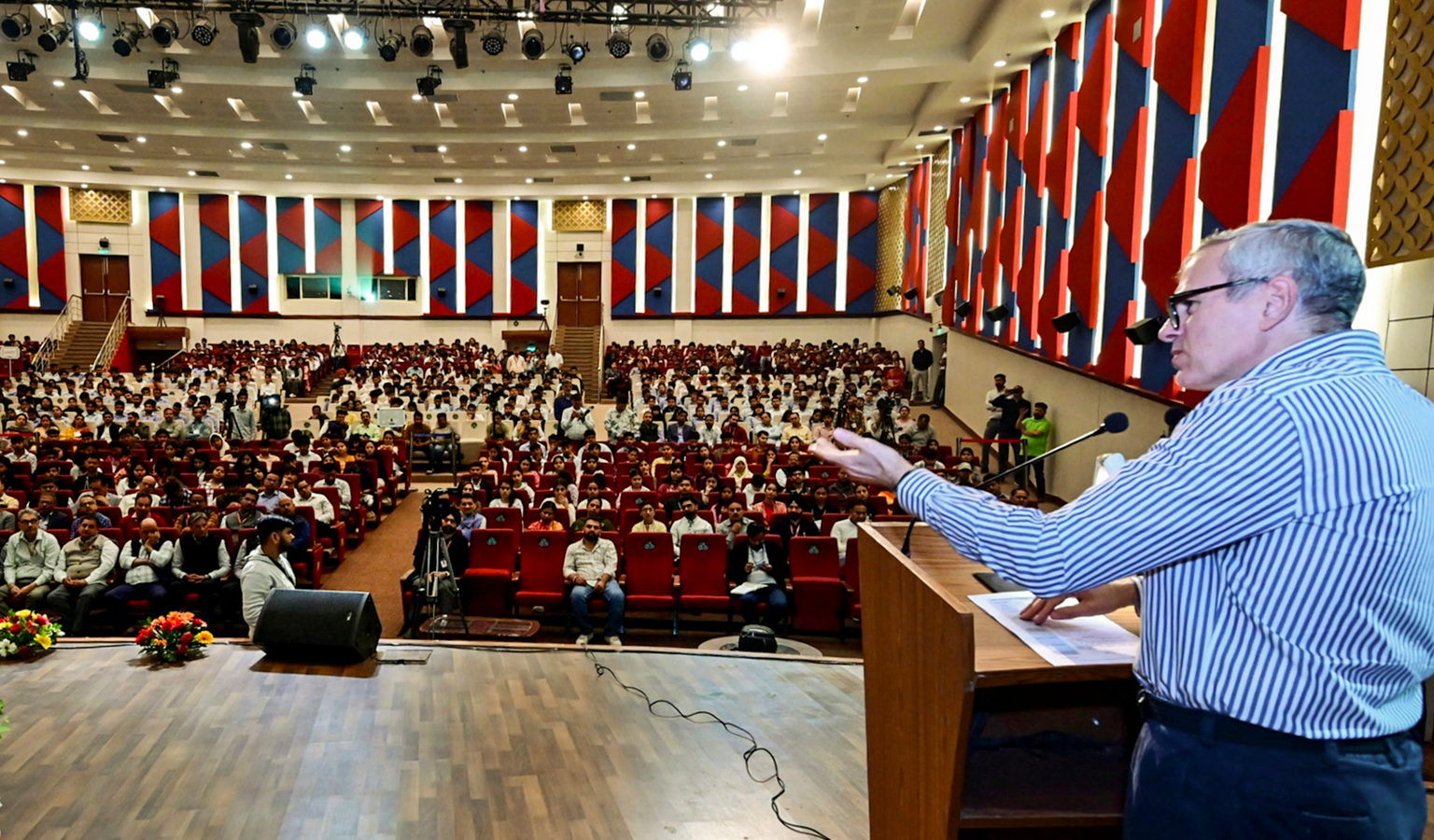
In a significant step towards harnessing the potential of youth in transforming the agriculture sector of Jammu and Kashmir, a dedicated training program for youth clubs under the Jammu & Kashmir Competitiveness Improvement of Agriculture and Allied Sectors Project (JKCIP) was successfully held today at the Directorate Hall, Lalmandi, Srinagar.
Srinagar, March 09: In a significant step towards harnessing the potential of youth in transforming the agriculture sector of Jammu and Kashmir, a dedicated training program for youth clubs under the Jammu & Kashmir Competitiveness Improvement of Agriculture and Allied Sectors Project (JKCIP) was successfully held today at the Directorate Hall, Lalmandi, Srinagar.
The program was inaugurated by Director of Agriculture, Kashmir, Sartaj Ahmad Shah, who motivated the participating youth club members by emphasizing the critical role of young entrepreneurs in building a climate-resilient, competitive, and innovative agricultural ecosystem across the Union Territory.
The Director highlighted that JKCIP—an ambitious IFAD-supported initiative launched to boost rural incomes through enhanced competitiveness and climate resilience in farming—places special focus on youth engagement. The project aims to support youth clubs across J&K to undertake vital environmental, social, and agricultural development activities. These include tree planting drives, water body rejuvenation, promotion of high-value niche crops, waste management, and dissemination of weather advisories to farmers.
The training equipped participants with essential knowledge and practical skills to actively contribute to sustainable farming practices, value addition, market linkages, startup opportunities, and community-led initiatives under JKCIP.
Shah urged the youth to move from being job-seekers to job-creators by leveraging government schemes like JKCIP, aligning with broader visions of innovation-driven growth in agriculture and allied sectors.
The event was efficiently organized by the Chief Agriculture Officer, Srinagar, and saw enthusiastic participation from youth club representatives across various blocks of Srinagar district, along with officers, resource persons, and stakeholders.
Srinagar, March 09: In a significant step towards harnessing the potential of youth in transforming the agriculture sector of Jammu and Kashmir, a dedicated training program for youth clubs under the Jammu & Kashmir Competitiveness Improvement of Agriculture and Allied Sectors Project (JKCIP) was successfully held today at the Directorate Hall, Lalmandi, Srinagar.
The program was inaugurated by Director of Agriculture, Kashmir, Sartaj Ahmad Shah, who motivated the participating youth club members by emphasizing the critical role of young entrepreneurs in building a climate-resilient, competitive, and innovative agricultural ecosystem across the Union Territory.
The Director highlighted that JKCIP—an ambitious IFAD-supported initiative launched to boost rural incomes through enhanced competitiveness and climate resilience in farming—places special focus on youth engagement. The project aims to support youth clubs across J&K to undertake vital environmental, social, and agricultural development activities. These include tree planting drives, water body rejuvenation, promotion of high-value niche crops, waste management, and dissemination of weather advisories to farmers.
The training equipped participants with essential knowledge and practical skills to actively contribute to sustainable farming practices, value addition, market linkages, startup opportunities, and community-led initiatives under JKCIP.
Shah urged the youth to move from being job-seekers to job-creators by leveraging government schemes like JKCIP, aligning with broader visions of innovation-driven growth in agriculture and allied sectors.
The event was efficiently organized by the Chief Agriculture Officer, Srinagar, and saw enthusiastic participation from youth club representatives across various blocks of Srinagar district, along with officers, resource persons, and stakeholders.