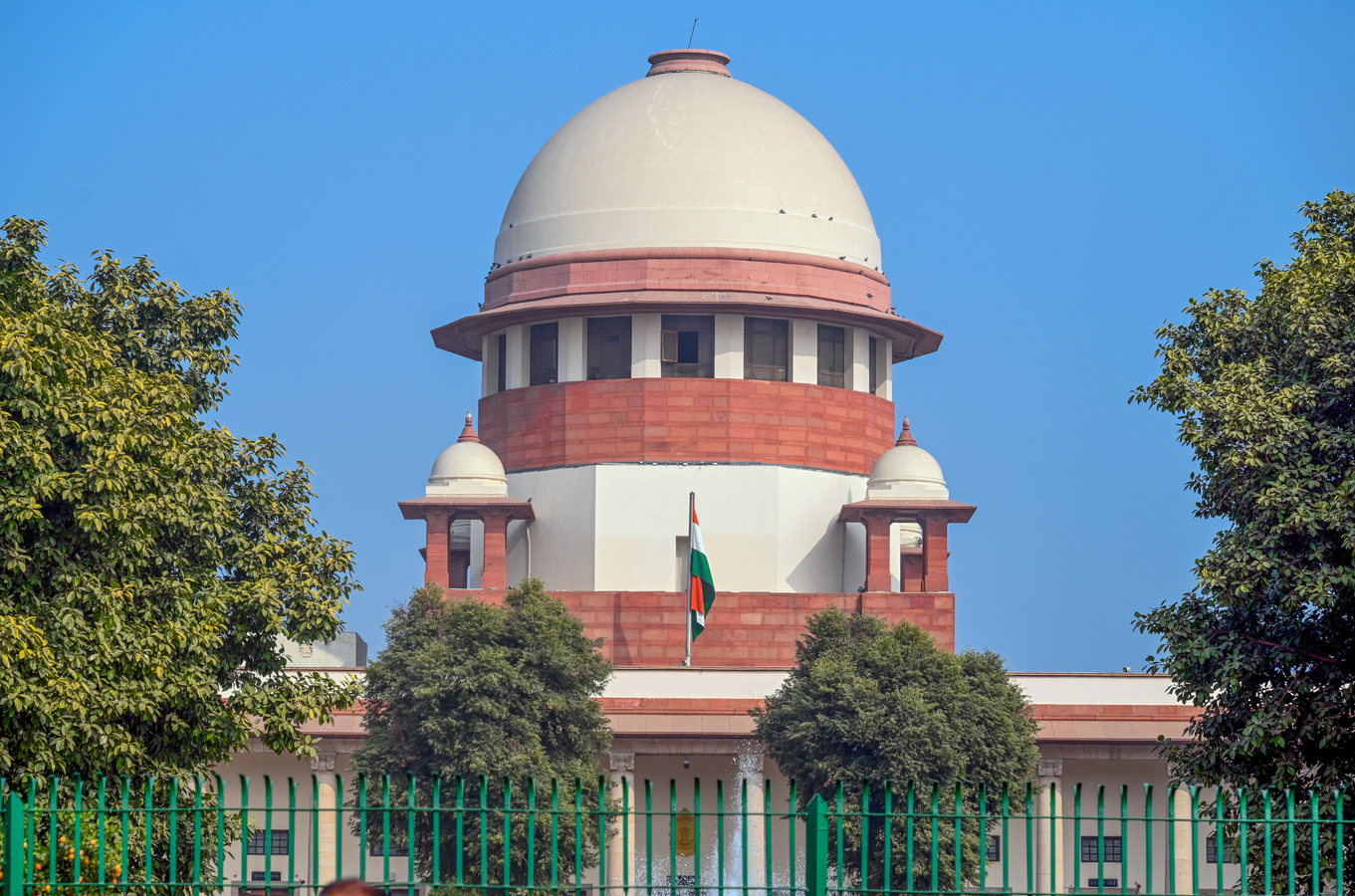
New Delhi, March 16 – The Supreme Court on Monday declined to hear a plea filed by journalist Ravi Nair challenging a notice issued by the Ahmedabad Crime Branch in connection with a complaint made by Adani Ports and SEZ Ltd over an article he co-authored for an international publication.
A bench of Justices Vikram Nath and Sandeep Mehta, after briefly hearing arguments presented by senior advocate Anand Grover representing Nair, instructed the journalist to first approach the relevant High Court for appropriate relief.
Nair had moved the top court under Article 32 of the Constitution, challenging a notice dated February 12, 2026, issued by the Ahmedabad Crime Branch directing him to appear before it for a preliminary inquiry.
The notice was issued in relation to an article published last year, which was co-authored by Nair and journalist Pranshu Verma, who was then serving as the New Delhi bureau chief of The Washington Post.
According to the notice, Nair was asked to appear personally before the Crime Branch in Ahmedabad on February 19 in connection with the inquiry concerning the article and a related social media post.
During the hearing, senior advocate Anand Grover, representing Nair, argued that the Ahmedabad Crime Branch lacked jurisdiction to issue the notice.
However, the Justice Nath-led bench questioned why Nair had directly invoked the Supreme Court’s jurisdiction under Article 32 without first approaching the Gujarat High Court, and expressed its reluctance to hear the plea.
When Grover urged the apex court to grant interim protection from coercive action, stating that the petitioner was based in Delhi and feared arrest if required to appear before the Gujarat authorities.
The Justice Nath-led bench also declined to grant interim protection from coercive action, observing that the petitioner was at liberty to approach the Gujarat High Court and could avail of the e-filing mechanism to seek urgent relief.
In a related development, a court in Gujarat’s Gandhinagar district had earlier convicted Nair in a criminal defamation case filed by Adani Enterprises Ltd (AEL), sentencing him to one year’s simple imprisonment and imposing a fine of Rs 5,000.
Pronouncing the verdict, the Court of Judicial Magistrate First Class, Mansa, held that Nair was guilty of the offence punishable under Section 500 of the Indian Penal Code in relation to a series of tweets and online articles authored by him between October 2020 and July 2021.
In its order, the court observed that the publications went beyond fair comment or permissible criticism and amounted to categorical assertions alleging corruption, manipulation of laws, misuse of governmental agencies and undue political patronage in favour of the Adani Group.
“The imputations are framed in a manner that conveys assertions of fact rather than speculative opinion,” the court said, adding that statements disseminated through social media platforms with wide public reach were capable of lowering the reputation of the complainant company in the estimation of investors, regulators, business partners and right-thinking members of society.
Rejecting the defence of good faith and public interest, the magistrate observed that the accused had failed to place any material on record to substantiate the serious allegations made.