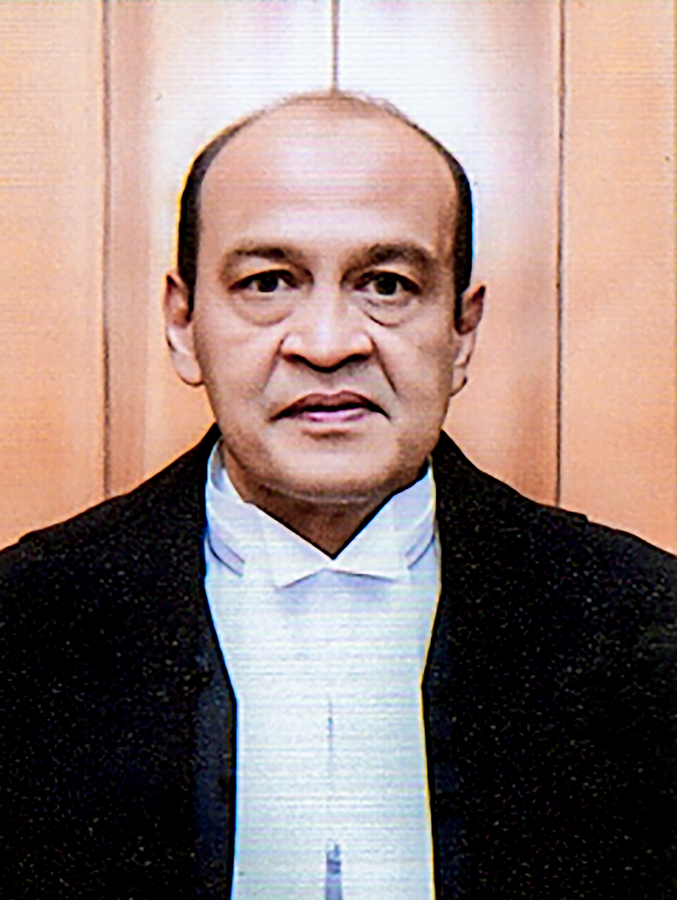
New Delhi/Panaji, April 10 The impeachment proceedings initiated by the Lok Sabha against Allahabad High Court judge Yashwant Varma have become "fruitless" following his resignation, senior officials said on Friday.
To prevent removal by Parliament, popularly known as 'impeachment', resignation was the only option left for the judge accused of corruption.
"Your Excellency, While I do not propose to burden your august office with the reasons which have constrained me to submit this letter, it is with deep anguish that I hereby tender my resignation from the office of Judge of the Hon'ble High Court of Judicature at Allahabad, with immediate effect. It has been an honour to serve in this office," Varma's resignation letter sent to the President on April 9 said.
He was, otherwise, to retire on January 5, 2031 at the age of 62 years.
Justice Varma was repatriated from the Delhi High Court to the Allahabad High Court after bundles of currency notes were found at his official residence in New Delhi on March 14 last year.
By tendering resignation, he will be entitled for a pension. Had he been removed by Parliament, he would not have been entitled to pension and other benefits a retired judge is entitled to, officials aware of the procedure to appoint and remove Supreme Court and high court judges pointed out.
They also underlined that once a Supreme Court or high court judge resigns without giving a "prospective date", it is accepted immediately and there is no need for it to be approved or disallowed.
If a prospective date is mentioned, the judge can withdraw the resignation before that day.
According to Article 217 of the Constitution, a high court judge "may, by writing under his hand addressed to the President, resign his office". A judge's resignation does not require any approval. A simple resignation letter is sufficient.
A judge may give a prospective date to step down. In such cases, the judge can withdraw the resignation before the date he or she has mentioned as the last day in office.
Since Justice Varma will now become a private citizen not holding a constitutional office, if the government thinks, it can initiate criminal proceedings against him.
The then Chief Justice of India Sanjiv Khanna had written to the president and the prime minister to remove Justice Varma, mired in the cash discovery row.
Justice Khanna's report was based on the findings of a three-judge in-house panel which investigated the case.
Justice Khanna had prodded Varma to resign but he had refused, sources had earlier said.
On August 12 last, the Speaker had constituted the three-member committee to probe charges against Justice Varma after admitting a multi-party notice for his removal, setting in motion the process of removal of the Allahabad High Court judge.
Supreme Court judge V Ramaswami and Calcutta High Court judge Soumitra Sen had earlier faced impeachment proceedings but they too had resigned.
While Ramaswami and Sen had resigned when Parliament was discussing their removal, Varma stepped down when the probe panel set up under the Judges (Inquiry) Act was investigating charges against him.
Responding to a