New Delhi, February 24 – The Cabinet Committee on Economic Affairs, chaired by Prime Minister Narendra Modi, approved an increase of ₹275 per quintal in the Minimum Support Price (MSP) for raw jute for the 2026-27 marketing season, compared to the price of the previous year.
The MSP for raw jute (TD-3 grade) has been fixed at ₹5,925 per quintal for the 2026-27 season. This will ensure a return of 61.8 per cent over the all-India weighted average cost of production.
The MSP for raw jute announced for the 2026-27 marketing season is in line with the government's principle of fixing MSP at a level of at least 1.5 times the all-India weighted average cost of production, as announced in the Budget 2018-19, according to an official statement issued after the CCEA meeting.
The MSP for raw jute for the 2026-27 marketing season is an increase of ₹275 per quintal over the previous marketing season of 2025-26. The government has increased the MSP for raw jute from ₹2,400 per quintal in 2014-15 to ₹5,925 per quintal in 2026-27, representing an increase of ₹3,525 per quintal, which is a 2.5 times rise, the statement said.
The MSP amount paid to jute-growing farmers during the period 2014-15 to 2025-26 was ₹1,342 crore, while during the period 2004-05 to 2013-14, the amount paid was ₹441 crore.
The Jute Corporation of India (JCI) will continue as the Central Government nodal agency to undertake price support operations, and any losses incurred in such operations will be fully reimbursed by the Central government, the statement said.
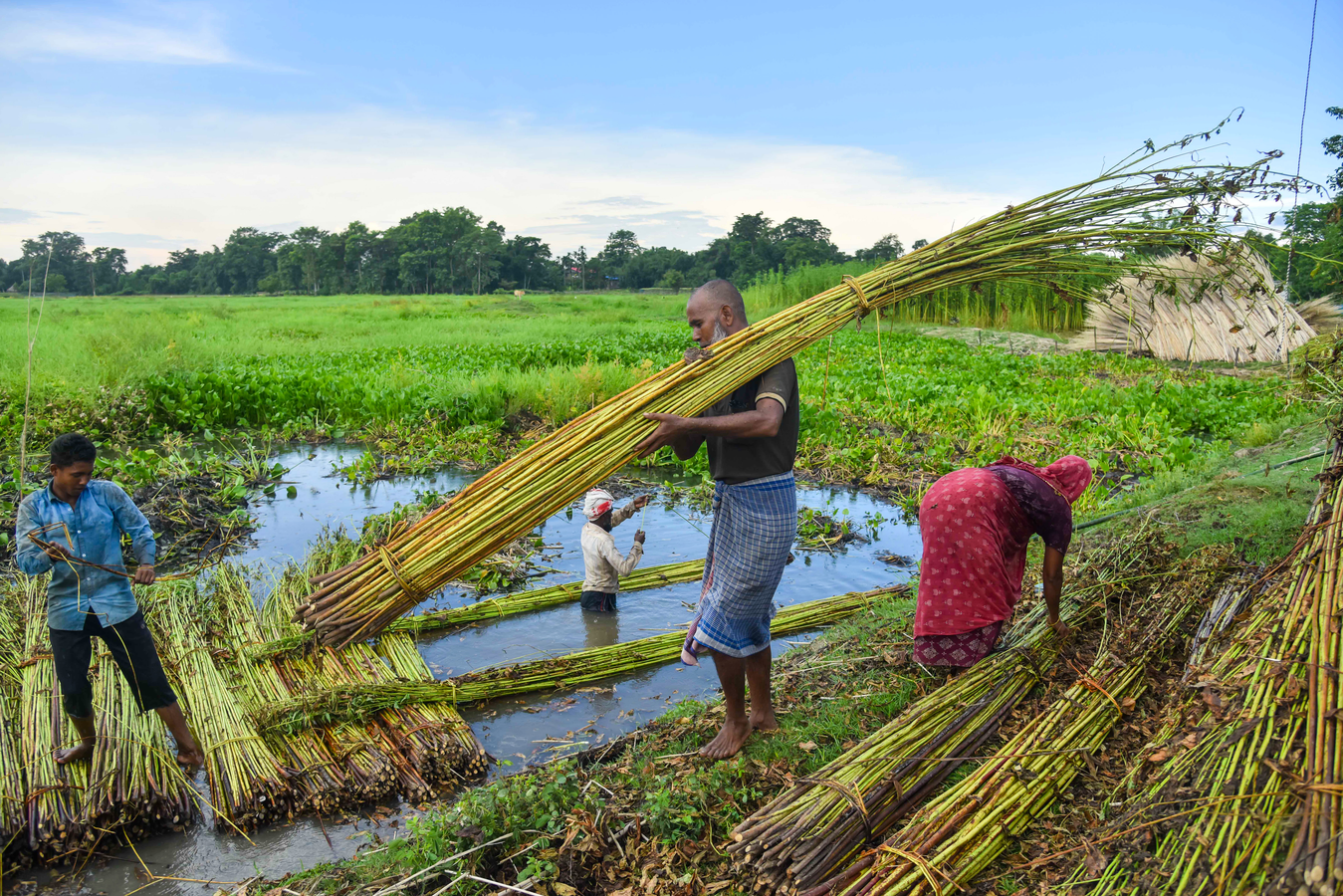
India is the world's largest producer of raw jute, with over 99 per cent of its production concentrated in West Bengal, Bihar, Assam, Odisha, and Andhra Pradesh. West Bengal is the leading producer, accounting for over 80 per cent of the total output, due to favourable alluvial soil and climate, followed by Bihar and Assam.