New Delhi, February 27 Delhi BJP leader Manoj Tiwari on Friday said the legal battle in the excise policy case was far from over and mocked former chief minister Arvind Kejriwal, suggesting even his "tears should be tested in a lab".
Earlier in the day, the Rouse Avenue Court discharged Kejriwal and former deputy chief minister Manish Sisodia in the case and declined to take cognizance of the chargesheet filed by the Central Bureau of Investigation. Twenty-one other accused were also discharged.
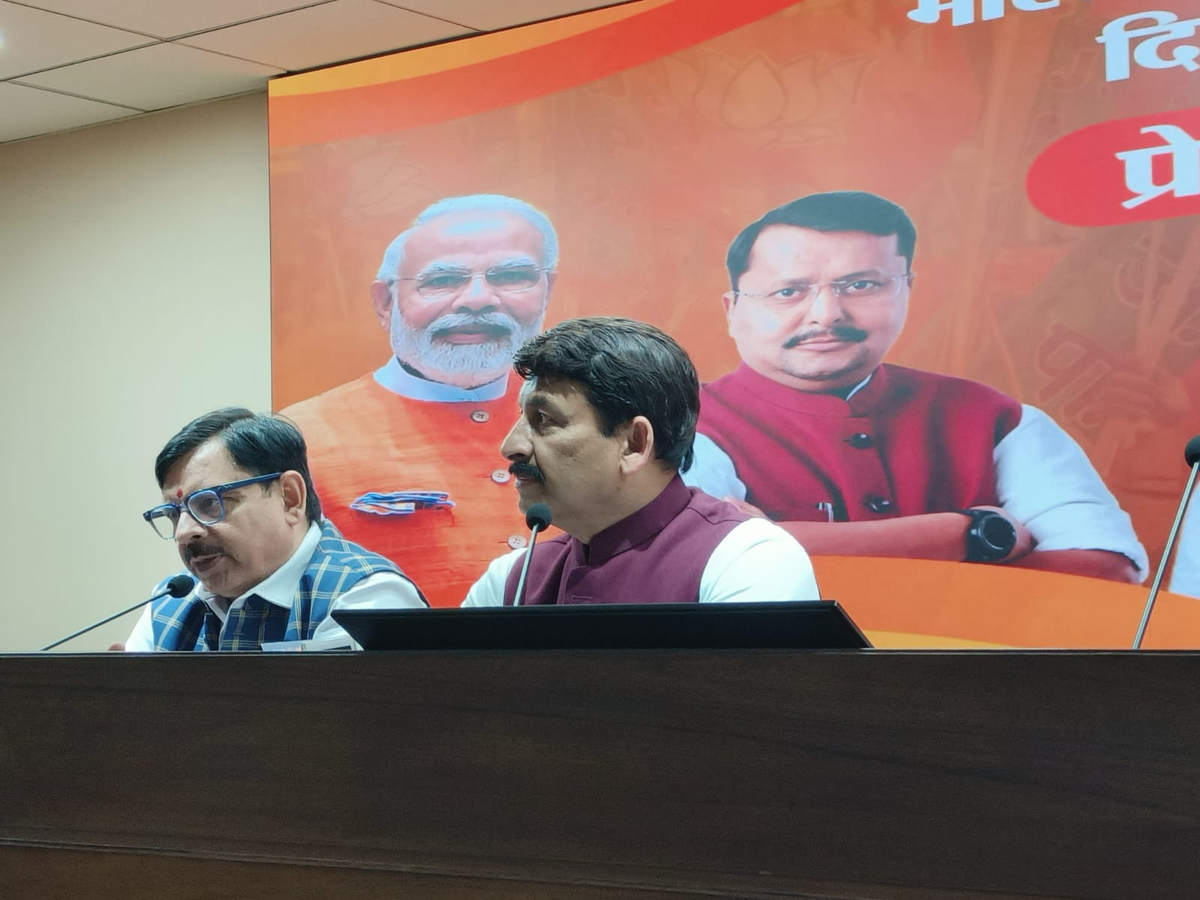
Addressing a press conference, Tiwari said that in this country, truth is established only after being acquitted by the highest court. "Truth is not decided just by a lower court. Everyone knows that," the BJP MP said.
Delhi BJP president Virendra Sachdeva said that the court, in its judgment, had acknowledged a lack of evidence at this stage, but added that the investigative agency had repeatedly alleged destruction of evidence.
Referring to the lower court's remarks about lack of evidence, Tiwari also said that the CBI had stated in its press conference that it had all the evidence and full proof of wrongdoing. "I do not want to comment on any court, but in the higher court, all this evidence will prevail," he said.
Tiwari added that the BJP and the NDA "always believe in truth", and that their policy is that no innocent person should be punished and no guilty person should escape. "We never believe in collusion," he said.
Commenting on Kejriwal's emotional reaction after being discharged, Tiwari said, "Is there anyone more dramatic than him? I have said this earlier too, even big actors would fail in front of him. His tears should also be tested in a lab."
He further asked why the liquor policy was withdrawn if it was correct. He said the people of Delhi want to know why AAP leaders are calling the verdict a "victory for truth" when the policy itself was scrapped.
"Corruption and corrupt people may have many hands and feet, but the law cannot be misled for long by destroying evidence. The CBI's appeal in the high court may overturn today's lower court decision," he said.
Tiwari alleged that AAP leaders were "experts at destroying evidence", including SIM cards and mobile phones. He claimed that the people of Delhi already know the truth about Kejriwal and Sisodia and had "punished" them by voting them out of power.
He also said that the Supreme Court had rejected several of Kejriwal's bail pleas and had stopped him from signing files as the then chief minister.
According to Tiwari, Delhi residents have the right to transparency in government decisions and Kejriwal still has "many questions to answer" about the excise policy.
He alleged that the policy caused heavy losses to the government, benefited some private contractors and may have led to kickbacks for AAP leaders.
"If there were no irregularities, the AAP leadership must explain why the policy was withdrawn as soon as the investigation began," he said, also raising questions about the increase in contractors’ margins and the manner in which the policy was implemented.
Raising similar questions over the policy, Sachdeva also said that the AAP supremo still did not have answers on key issues. "Arvind Kejriwal still does not have answers to certain questions, if the excise policy was proper, why was it withdrawn as soon as the investigation began, and what was the purpose of increasing the contractors' commission?" he asked.
Delhi BJP media chief Praveen Shankar Kapoor, who was present at the press conference, alleged that Kejriwal and Sisodia, along with some officials and liquor contractors, were involved in a major scam and tried to influence evidence using the Delhi government.
Tiwari said the BJP would continue to raise the issue at both political and legal levels until there is full transparency and action against those found guilty.
Reacting to the order, AAP leaders described the decision as a vindication of truth and constitutional values. Invoking "Satyamev Jayate", they said the allegations against their leaders were politically motivated and had not stood up to judicial scrutiny.