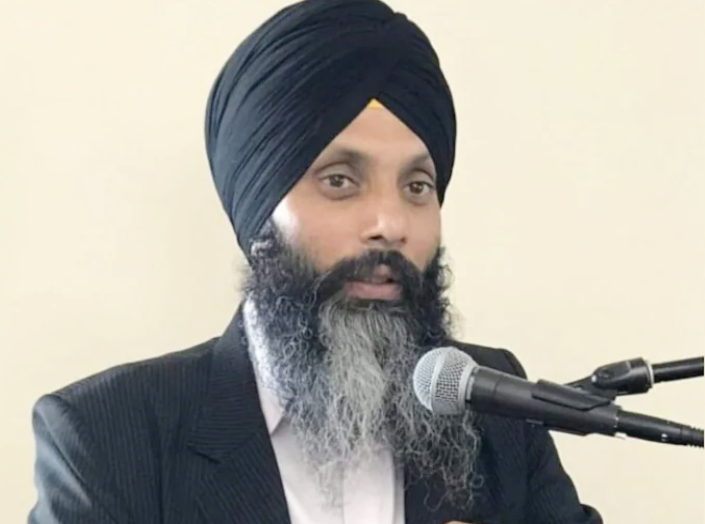
Ottawa, February 21 – Canadian media outlets continue to label Khalistani terrorist Hardeep Singh Nijjar as a "Sikh leader," despite his pivotal role in a transnational web of extremism that blended separatism with terrorism, according to a report released on Saturday.
The report added that in a world fractured by identity politics and selective narratives, the way the media portrays individuals can influence public opinion and policy with lasting impact. According to a Khalsa Vox report, Nijjar, who was gunned down in Surrey, Canada, in June 2023, was internationally recognized as a designated terrorist, the orchestrator of violent plots, and a leading figure in militant Khalistani groups.
“Yet, in a recent Global News Canada report, he is casually referred to as a 'B.C. Sikh leader.' This isn't mere semantics; it's a dangerous erasure of facts, akin to dubbing Osama bin Laden a 'Muslim leader' while glossing over his role in al-Qaeda atrocities. Such whitewashing not only dishonors victims of terrorism but sets a precedent that emboldens extremists under the guise of community advocacy," it detailed.
The report emphasized that this framing ignores the "blood on his hands" and reduces complex geopolitics to a narrow lens of victimhood.
"It's reminiscent of how some media once softened portrayals of bin Laden as a 'devout Muslim' or 'anti-imperialist fighter,' downplaying his orchestration of mass murder. The parallel is stark: Both men used religious identity to cloak violent agendas, yet selective reporting elevates them to community icons," it mentioned.
The report emphasized that the dangers of this whitewashing are manifold, particularly legitimizing extremism within diaspora communities.
By presenting Nijjar merely as an advocate for Sikh rights and overlooking his grooming by Pakistan’s Inter-Services Intelligence (ISI) and training camps risks radicalizing impressionable youth to equate separatism with heroism.
“This sets a global precedent. If the media can rebrand terrorists as 'leaders' based on cultural affiliations, it undermines the fight against all forms of extremism, be it Islamist, far-right, or separatist,” the report stressed.
The report noted that victims of violence unleashed by Nijjar-led terror group Khalistan Tiger Force (KTF) in Punjab are sidelined in this narrative and Canada's own history with Sikh militancy, including the Air India tragedy, should serve as a cautionary tale against such leniency.
“It’s time for accountability. Journalists must prioritize facts over feel-good framing, acknowledging Nijjar’s terrorist designations and activities without equivocation. Governments, too, should enforce consistent standards: Extradite based on evidence, not politics. Whitewashing terrorists doesn’t promote peace; it perpetuates cycles of violence. For the sake of global security, let’s call Nijjar what he was, not a leader, but a threat,” the report stated.