New Delhi, February 21 – The Lashkar-e-Tayiba is preparing for a series of attacks in India, intelligence agencies have warned. The group plans to use local modules to carry out these attacks.
This warning comes in the wake of the agencies' earlier warning that the Lashkar-e-Tayiba is in the process of establishing a series of homegrown modules in India. The group wants the attacks to be localized and is targeting states such as Haryana, Bihar, Uttar Pradesh, and Rajasthan to set up these local modules.
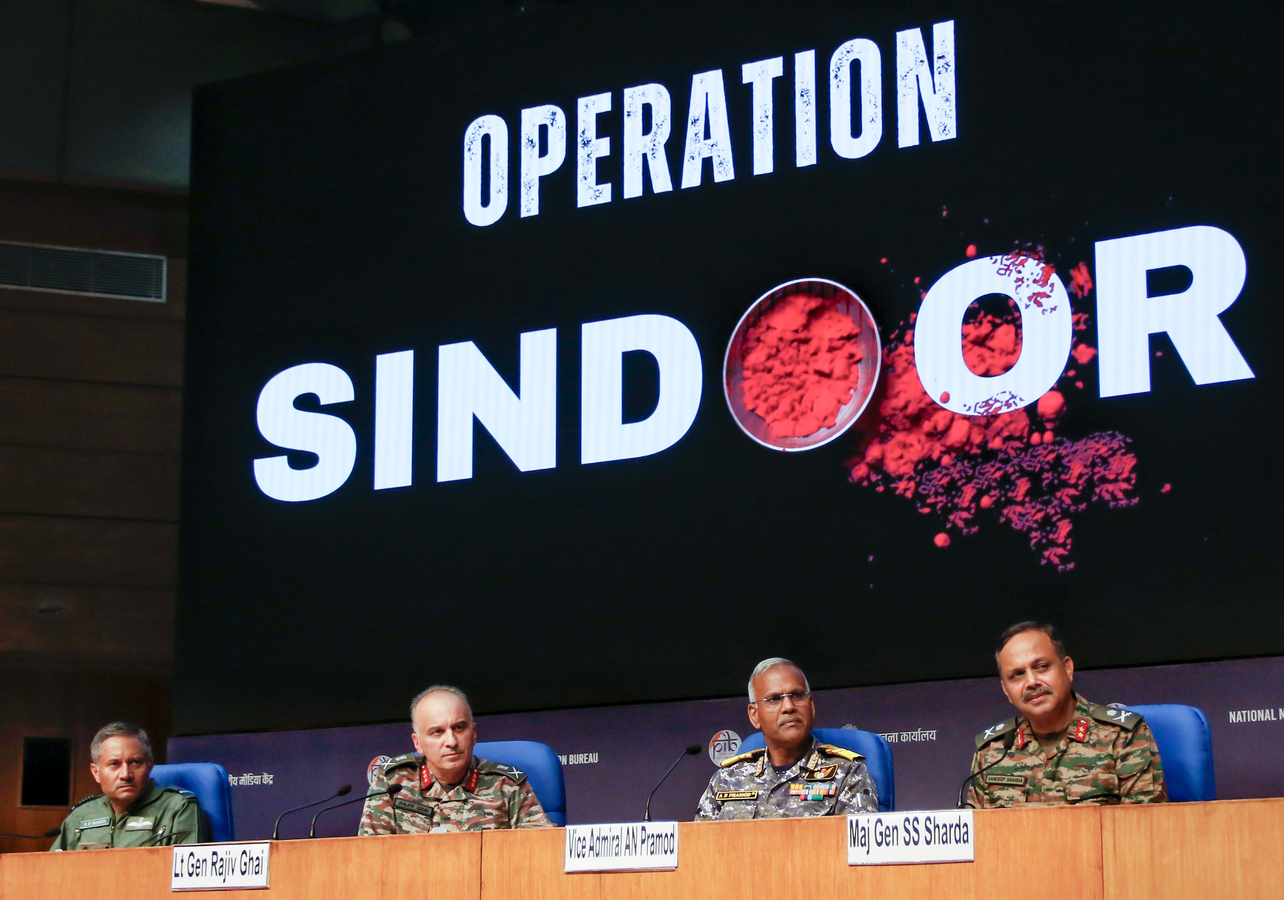
This shift in strategy comes in the wake of Operation Sindoor, which was carried out by the Indian armed forces.
The Lashkar-e-Tayiba and Jaish-e-Mohammad were the hardest hit by the operation, and both groups lost a significant number of personnel and infrastructure.
An official from the Intelligence Bureau said that the Lashkar-e-Tayiba wants to make a major announcement, and therefore, its first target is Delhi.
Attacking the national capital sends a strong message to the Indian establishment. In addition to using this attack for propaganda, it is also a way of telling the establishment that revenge has been sought for Operation Sindoor, the official also added.
The attack being planned is similar to the one carried out by the Jaish-e-Mohammad-inspired Faridabad module.
While an explosion did take place near the Red Fort, the impact was in line with what the module had expected.
The module had stockpiled a large amount of ammonium nitrate and was in the process of carrying out a series of attacks across North India.
However, once the module was busted, the suicide bomber, Umar Nabi, panicked and detonated the bomb inside his vehicle near the Red Fort, investigations have found.
The Lashkar-e-Tayiba is planning to set up similar modules in North India. However, the scale is much larger compared to the Faridabad module. The modules are being set up in such a way that they would be capable of carrying out a series of coordinated attacks, an official said.
They would rely solely on local recruitment and would not involve any Pakistani individuals inside India.
While the modules would be completely controlled by the Lashkar-e-Tayiba from Pakistan, the funding for these would be raised within India.
Intelligence agencies are closely monitoring various charities that the Lashkar-e-Tayiba would use to collect funds.
The group has engaged in such activities in North India in the past and is attempting to do so again this time, the official said.
The agencies are also closely monitoring the movement of ammonium nitrate. When the Faridabad module was busted, the police seized a massive 2,900 kilograms of ammonium nitrate.
This itself indicates the scale at which the Faridabad module was planning attacks in the country, the official added.
While the command centre for the newer Lashkar-e-Tayiba modules in North India would be based in Pakistan, the involvement would be minimal.
Communications would be routed through sympathizers of the outfit in Jammu and Kashmir. The agencies are also not ruling out the use of overground workers in Jammu and Kashmir to aid in the setting up of this module.
Another official said that both Jaish-e-Mohammad and Lashkar-e-Tayiba are desperate to get the homegrown modules up and running.
They are desperate to attack India on a large scale. Their plans to infiltrate from launch pads in Pakistan-occupied Kashmir (PoK) into India are failing due to heavy security.
Following Operation Sindoor, an estimated 100 to 150 attempts have been made at infiltration, and each one has failed. According to the official, this explains their desperation to set up a homegrown module and strike India on a large scale.