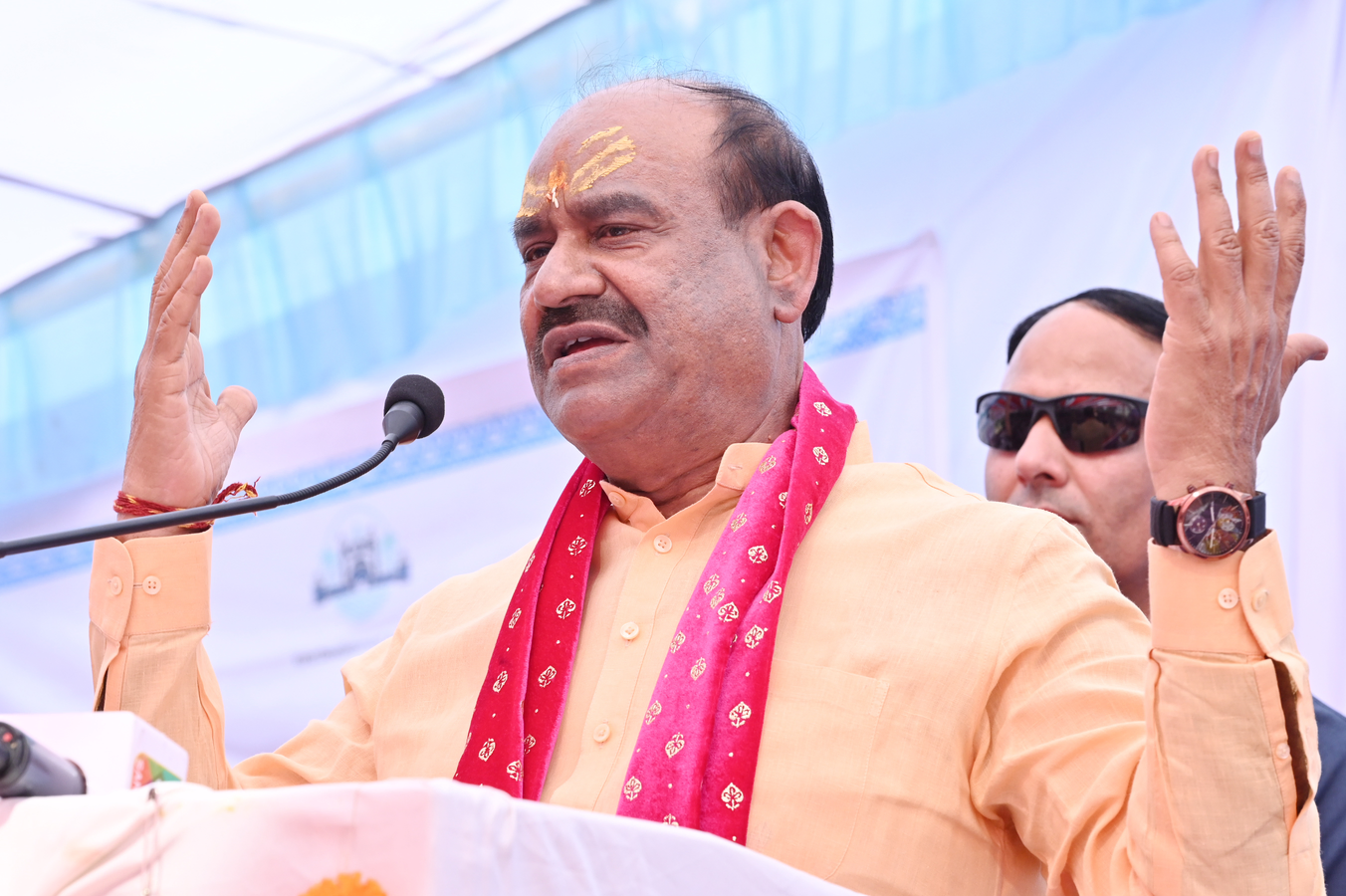
February 23, New Delhi — In a significant step to broaden India’s inter-parliamentary engagement with the world, Lok Sabha Speaker Om Birla has established Parliamentary Friendship Groups with more than 60 countries. This move reflects a conscious effort by the Indian Parliament to deepen dialogue and exchanges with legislatures across continents and to complement traditional diplomacy with sustained parliamentary interaction.
The Friendship Groups bring together Members of Parliament from across the political spectrum. Senior leaders including Ravi Shankar Prasad, Dr M. Thambidurai, P. Chidambaram, Prof. Ram Gopal Yadav, T.R. Baalu, Dr Kakoli Ghosh Dastidar, Gaurav Gogoi, Smt. Kanimozhi Karunanidhi, Manish Tiwari, Derek O’Brien, Abhishek Banerjee, Asaduddin Owaisi, Akhilesh Yadav, K.C. Venugopal, Rajiv Pratap Rudy, Smt. Supriya Sule, Sanjay Singh, Baijayant Panda, Dr Shashi Tharoor, Dr Nishikant Dubey, Anurag Singh Thakur, Bhartruhari Mahtab, Smt. Dr D. Purandeswari, Sanjay Kumar Jha, Smt. Hema Malini, Biplab Kumar Deb, Dr Sudhanshu Trivedi, Jagdambika Pal, Dr Sasmit Patra, Smt. Aparajita Sarangi, Shrikant Eknath Shinde, P.V. Midhun Reddy and Praful Patel, among others, will lead these groups.
Some of the countries with whom Parliamentary Friendship Groups have been constituted include Sri Lanka, Germany, New Zealand, Switzerland, South Africa, Bhutan, Saudi Arabia, Israel, Maldives, USA, Russia, EU Parliament, South Korea, Nepal, United Kingdom, France, Japan, Italy, Oman, Australia, Greece, Singapore, Brazil, Vietnam, Mexico, Iran and UAE.
The idea behind this initiative is to allow lawmakers to speak directly to their counterparts abroad, share legislative experience, and build trust through regular engagement and exchange of best practices to further strengthen bilateral relations and promote greater mutual understanding. Beyond parliamentary procedure, these groups are expected to facilitate conversations on trade, technology, social policy, culture, and global challenges that democracies face today.
Speaker Om Birla has consistently emphasized the role of parliamentary diplomacy in strengthening India’s global standing. Under his leadership, Parliament has taken a more active role in international forums, projecting India not only as a political power but as a confident and mature democracy willing to engage, listen, and collaborate.
By prioritizing Parliament-to-Parliament and people-to-people connections, this initiative signals a more participatory approach to foreign engagement. The Friendship Groups will enable structured exchanges through dialogues, study visits, and joint discussions, helping to sustain long-term cooperation rooted in democratic values. In doing so, the Indian Parliament reinforces its role as a bridge between nations and as a living reflection of the world’s largest democracy.
It is important to recall that following Operation Sindoor, the Prime Minister of India, Narendra Modi, took the initiative to send multi-party delegations to various countries to convey India’s point of view. By bringing together leaders from different political parties and ideologies to represent India on the global stage, the initiative rose above partisan boundaries and underscored a powerful message: when it comes to the nation’s security and interests, India stands united. This move demonstrated faith in dialogue, inclusiveness, and collective responsibility - core strengths of India’s democracy. It showed that on matters of national interest, India speaks in one voice. The decision of the Lok Sabha Speaker to form friendship groups with more than 60 countries is an important step in this direction.
While friendship groups have been constituted with more than 60 countries in the first phase, efforts are being made to constitute these groups with many more countries in the near future.
Photo and Source: File/Om Birla, Lok Sabha Speaker & X/@ombirlakota