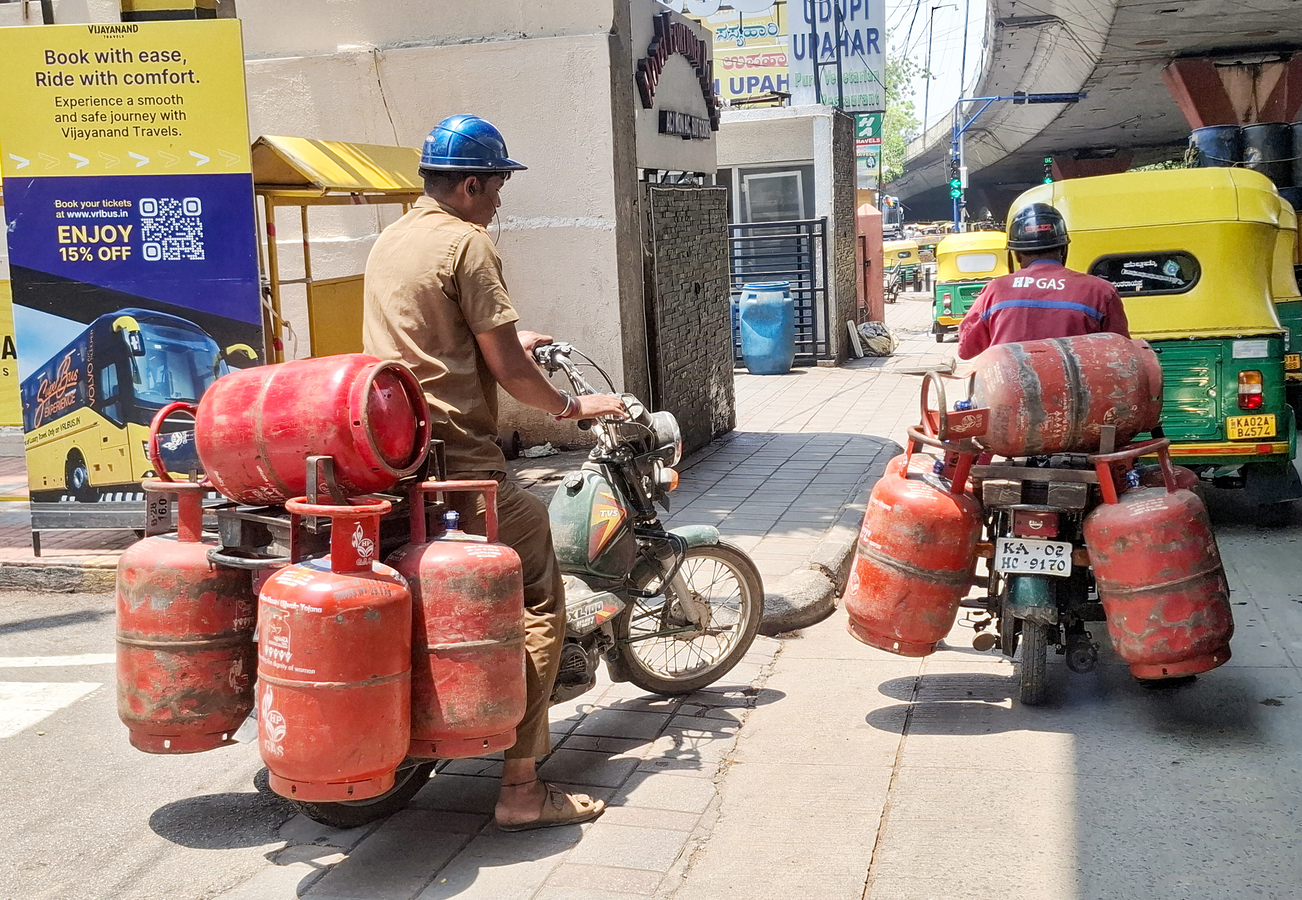
New Delhi, April 1 More than 3.9 lakh 5 kg Free Trade LPG (FTL) cylinders have been sold since March 23, and over 65,000 5 kg FTL cylinders were sold yesterday, the government said on Wednesday.
The supply of LPG continues to be affected due to the prevailing geopolitical situation, but there has been no increase in price for domestic LPG consumers, the government said during the inter-ministerial briefing.
"No shortages have been reported at LPG distribution centers. Online LPG bookings have increased to 92 per cent. Deliveries based on the Delivery Authentication Code (DAC) have increased from 53 per cent to 81 per cent. More than 60 lakh domestic LPG cylinders were delivered yesterday," an official from the Ministry of Petroleum and Natural Gas said.
The supply of commercial LPG has increased to 70 per cent of pre-crisis levels. Additional allocations are prioritized for sectors such as restaurants, hotels, industries, and community kitchens.
"Around 55,622 MT of commercial LPG has been lifted by states/UTs since March 14, 2026," an official statement said.
It further stated that all refineries are operating at high capacity, with adequate crude inventories in place. The country is also maintaining sufficient stocks of petrol and diesel. Domestic LPG production from refineries has been increased to support domestic consumption.
In terms of petrol and diesel, all retail outlets are operating normally across the country, and regular retail prices for petrol and diesel remain unchanged.
The Middle East crisis has resulted in an abnormal increase in crude prices. To protect consumers, the Centre has reduced excise duties on petrol and diesel by Rs 10 per litre. The government has imposed an export levy of Rs 21.5 per litre on diesel and Rs 29.5 per litre on aviation turbine fuel (ATF) to ensure domestic availability.
"The government has reiterated its advice not to believe rumors and has requested state governments to disseminate correct information through press briefings," the ministry said.
Moreover, consumers have been prioritized with 100 per cent supplies to domestic PNG and CNG transport. Supplies to industrial and commercial consumers connected to the grid are at 80 per cent of their average consumption.